|
 |
|
KAMANDI,
BATMAN & JIMMY OLSEN
BACK
TO BACK IN THE
JULY
1973 B-7 DC SUPER PAC
|
|
|
|
| |
|
| |
|
| |
|
| |
| At the same
time as the superhero genre was enjoying a hugely
successful comeback in the early 1960s, the comic book
industry was rapidly losing its traditional sales points.
Small stores that had carried comic books were being
pushed out of business by larger stores and supermarkets,
and newsagents started to view the low cover prices and therefore
tiny profit margins comics
had to offer as a
nuisance. Comic book
publishers desperately needed to open up new sales
opportunities and tap into new customer bases, and some
of these potential buyers could be found at the very
supermarkets and chain stores that were threatening the
traditional sales points. But in order to be able to sell
comic books at these locations, the product had to be
adjusted. |
| |
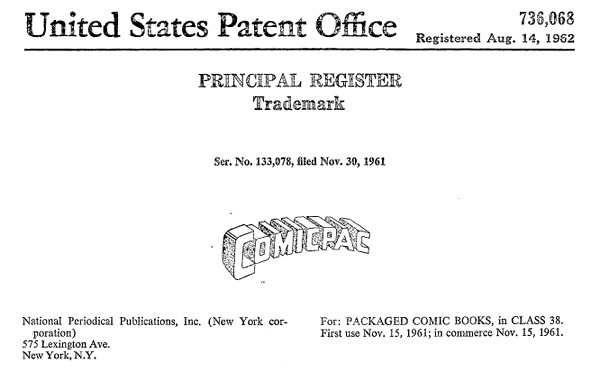
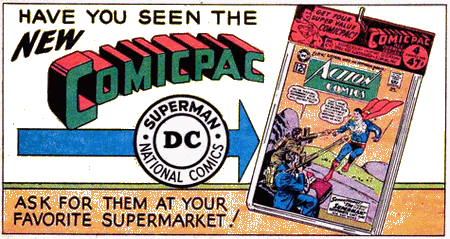
| Handling
individual issues clearly was no option for these
outlets, but by looking at their logistics and
display practices, DC Comics found that the
answer to breaking into this promising new market
was to simply package several comic books
together in a transparent plastic bag - so they
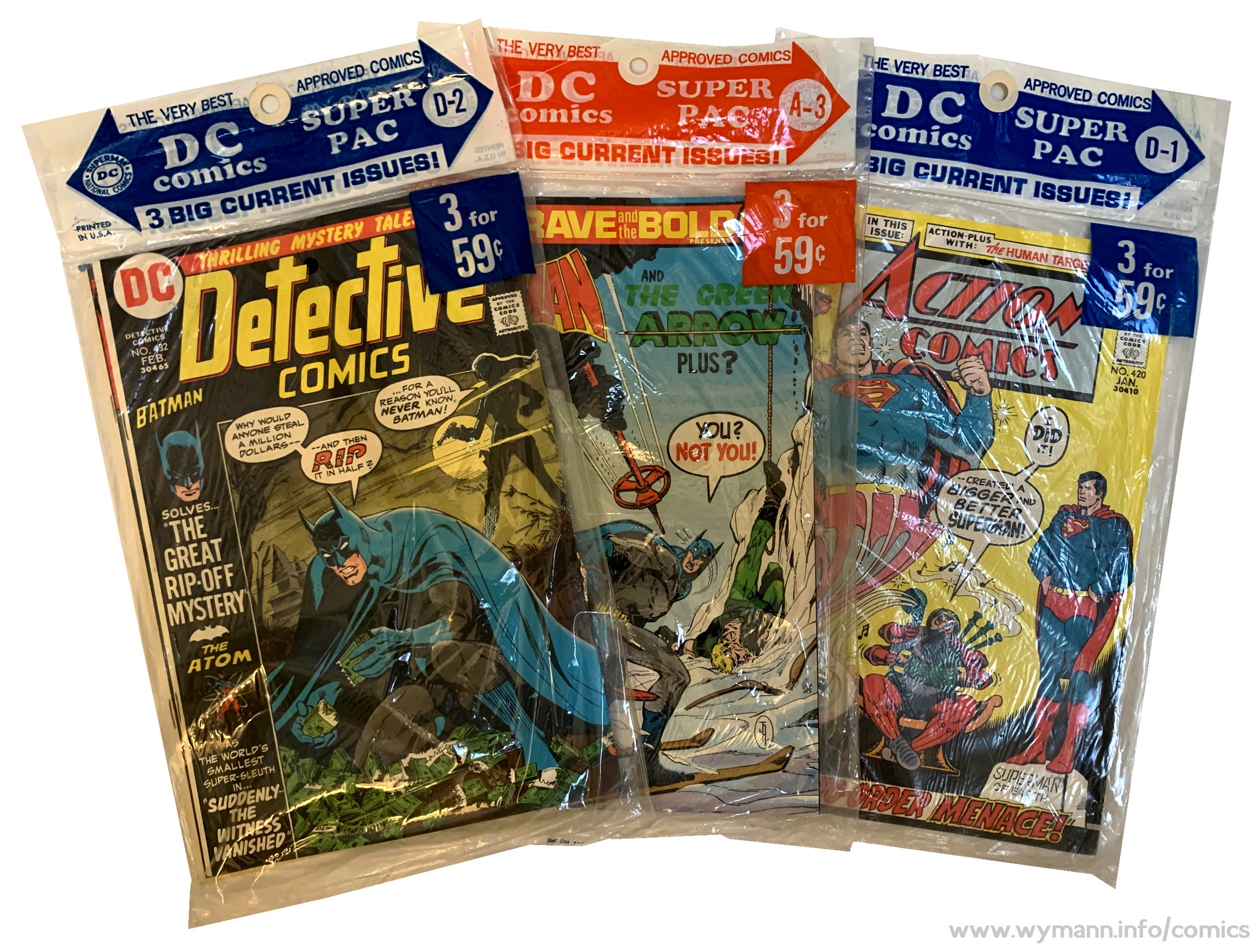
came up with the Comicpac concept in
1961). This resulted in a higher price
per unit on sale, which made the whole business
of stocking them much more worthwhile for the
seller. The simple packaging was also rather
nifty because it clearly showed the items were
new and untouched, while at the same time
blending in with most other goods sold at
supermarkets, which were also conveniently
packaged.
|
|
 |
|
| |
| Supermarkets were even supplied
with dedicated Comicpac racks, which enhanced
the product appeal even more since the bags containing
the comic books could be displayed on hooks in an orderly
and neat fashion. |
| |
|
|
It almost
became an entirely different class of
commodity, and offered parents
(and their kids) the
opportunity and convenience to pick up a
few comics at the same time they were
doing their general shopping.
"DC's focus
[for the Comicpac] was on both the
casual reader and the parents and
grandparents who were looking for
gifts." (Wells, 2012)
DC's
"comicpacks" were a success,
and other publishers quickly started to
copy the concept.
"The
DC [comic packs] program lasted well
over a decade, with pretty high
distribution numbers."
(Paul Levitz, in Evanier 2007)
By the early
1970s, DC relaunched their comic packs,
calling them DC Super Pacs, and
they continued to sell well, containing
regular news stand editions.
|
|
|
| |
|
| |
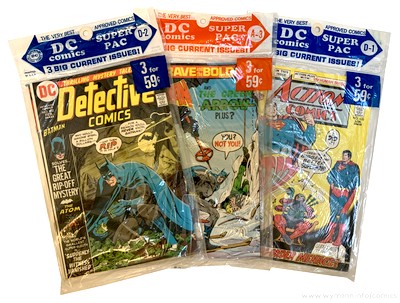
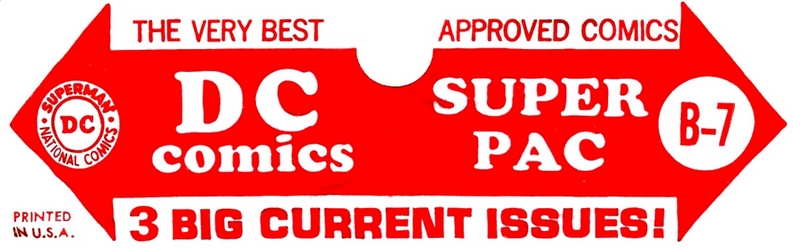
| DC handled
its multi-comic packs in a very structured and organised
manner, and a specific pack would always carry the same
titles and issues no matter where or when it was sold
(rare packaging errors aside). The digits (1-12) referred
to the month and the letters (A through D) marked the
four different packs produced each month. "B-7"
therefore denotes the second July SUPER PAC, in this case
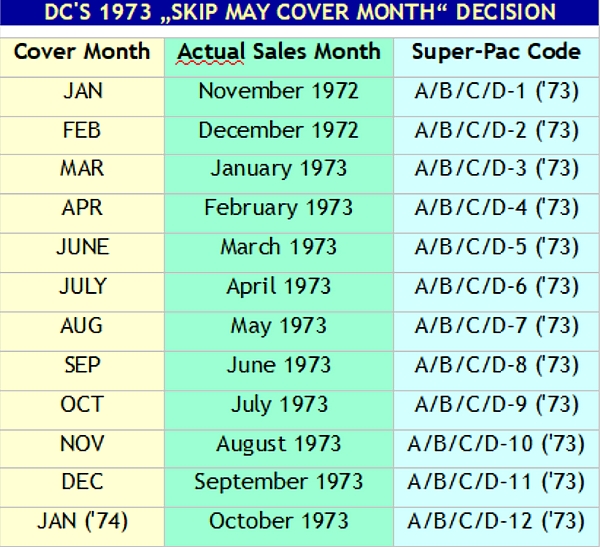
from 1973. Up until April 1973 the cover dates of comic
books would match up - a March SuperPac would contain
comic books with a March cover date (or either a
February/March or March/April cover date for bi-monthly
titles). But the 1973 B-7 SuperPac was different - it contains
Kamandi #28 with a July cover date along with Brave
and the Bold #108 and Jimmy Olsen #159,
both with a cover date of August 1973. |
| |
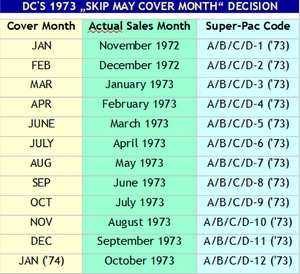
Cover dates had always
been a tricky thing, being around two to three
months ahead of the actual month of publication
in order to provide a longer shelf life at the
newsagents, but things got even more confusing at
DC when the May 1973 production run rolled
around.
"Cover dates on comics didn't
match magazine dating norms, and by 1973
Marvel's cover dates made them appear newer
than DC's, so DC decided to skip using May
1973 and go straight to June."
(Levitz, 2010)
By dropping May
cover dates completely, DC extended the gap
between cover month and actual sales month from
two to three months (as was the case with
Marvel's titles). This little tweaking procedure
of course meant that there were only 11 monthly
cover date slots for 1973 titles - the SuperPac
coding, however, continued without any change and
thus made it fall out of sync with the
cover months as of SuperPacs A/B/C/D-5..
|
|
 |
|
| |
| The SuperPac coding sequence was
in fact never adjusted, creating a continuous ripple
effect which meant that as of the May 1973 SuperPacs the
code referring to the month was off by one month - a
situation that would continue until April 1975, when DC,
after a four month hiatus, relaunched its SuperPac
comicpacks as "DC Super Stars". |
| |
| No
titles had permanent slots in the SUPER PACs, although
there was a high level of consistency with DC's flagship
characters (the SUPER PACs of 1973 contained complete runs
of Superman and Batman as well as the
Batman team-up title Brave and the Bold). But since sales points could vary a
lot with regard to their supplies and selection of SUPER
PACs, the availability of specific titles was never
guaranteed - but that was something many comic book readers in the 1970s had
to put up with anyway, whether their comic books came
packaged in a plastic bag or as single issues from a
display or spinner rack. But since DC's editorial at
large still very much embraced the "single issue,
done in one" storyline principle during the early
1970s (rather unlike their major competitor Marvel), it
often didn't even matter in which sequence you read your
copies of Batman or Superman. |
| |
|
| |
|
|
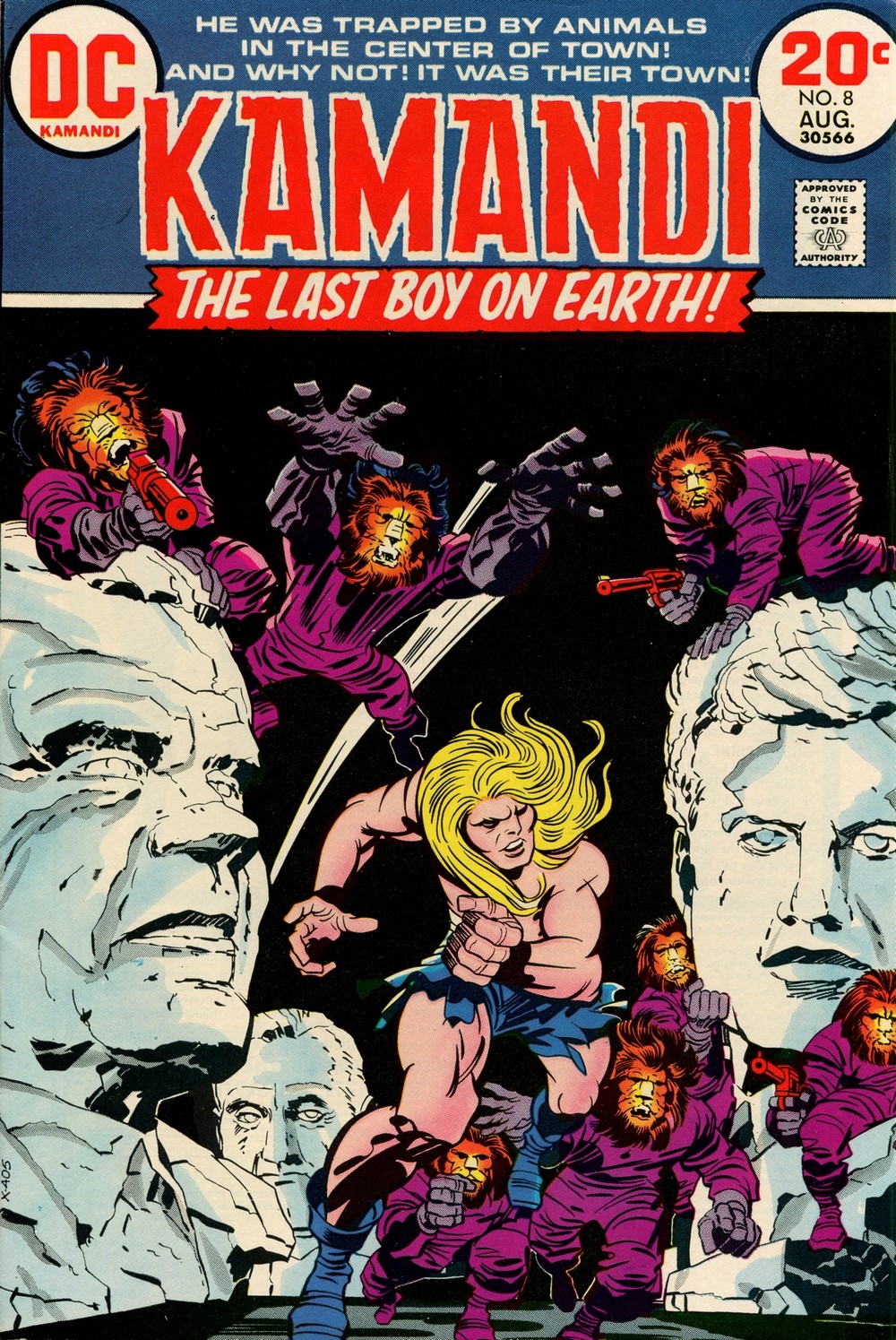
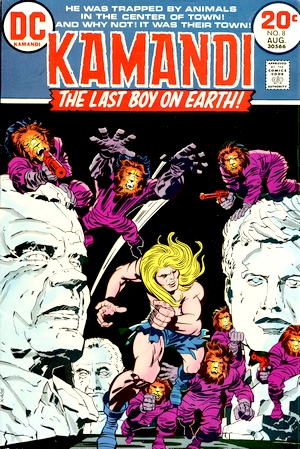
KAMANDI
#8
August 1973
(monthly)
On Sale: 10 May 1973
"Beyond Reason" (20
pages)
Story - Jack
Kirby
Pencils - Jack Kirby
Inks - Mike Royer
Colours - Jerry Serpe*
Lettering - Mike Royer
Editor
- Julius Schwartz
Cover - Jack Kirby (pencils) & Mike
Royer (inks)
*suggested
by letters page in Our Fighting
Forces #159 (September 1975)
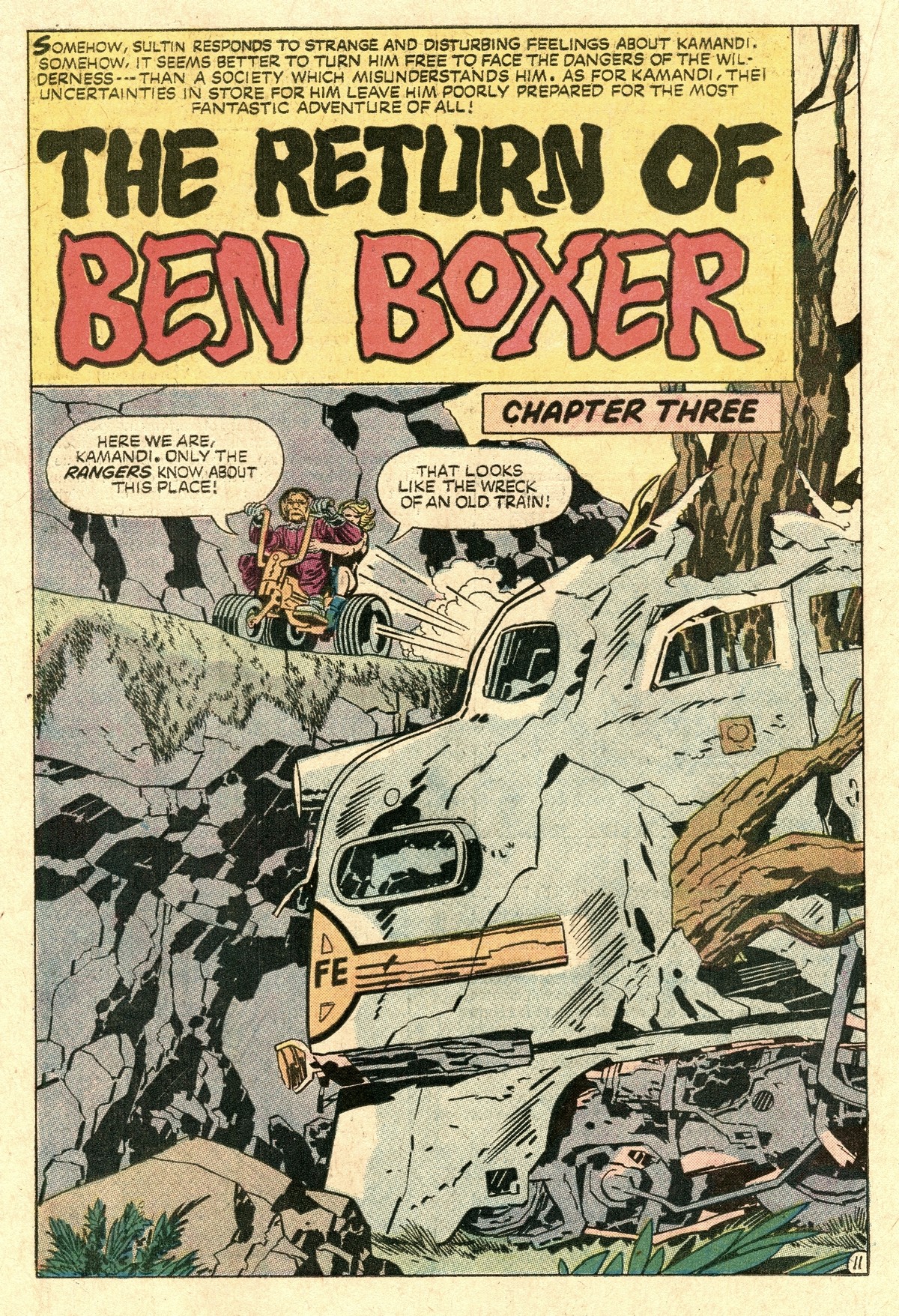
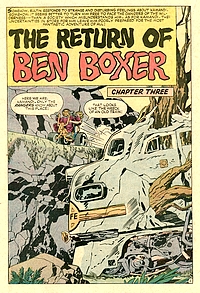
PLOT SUMMARY - Kamandi
encounters a captive human being treated
as a pet, which provokes his angered
frustration - and also puts him on the
wrong side of authority in the Lion-Men's
realm. Sent away, Kamandi meets a
marauding bear-man...and old friend Ben
Boxer.
|
|
|
| |
|
| |
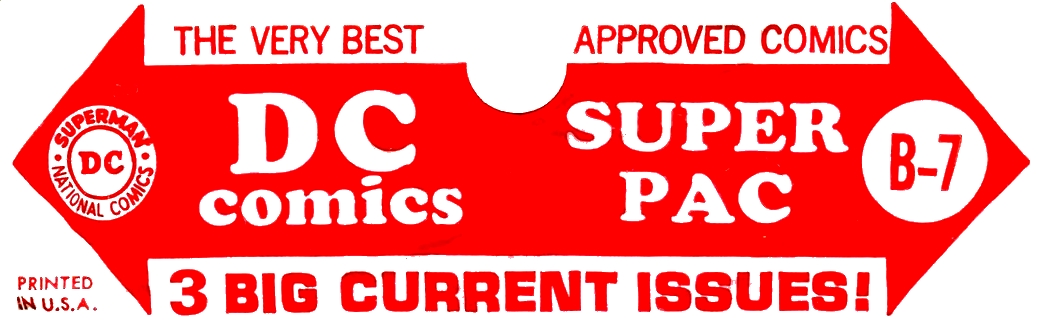
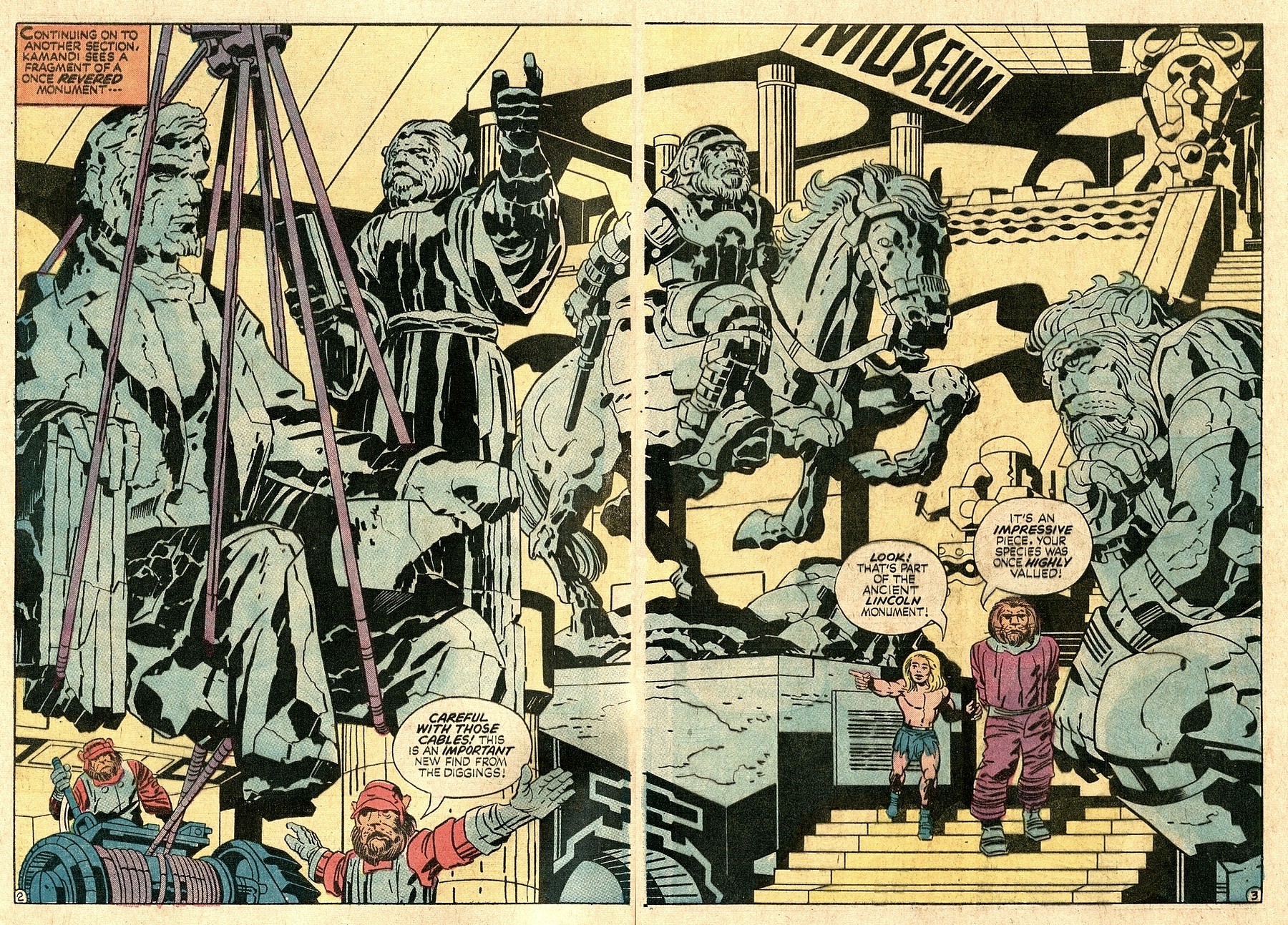
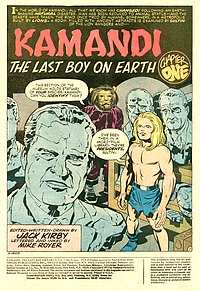
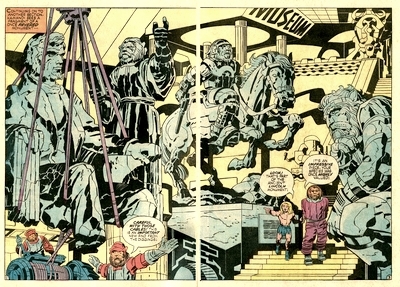
| Jack Kirby's post-apocalyptic
epic adventure featuring "the last boy on
Earth" portrays a world devastated by a
largely unspecified "Great Disaster"
which thereafter is ruled by bipedal animals
altered by radiation and the after-effects of
previous genetic experiments. Whilst a few
scattered groups of mankind remain, they have
regressed into savagery and lost both language
and intelligence, and are now mostly kept as
slaves or pets by apes, tigers, dogs, rats and
others. Kamandi and a few others have survived in
shelters and retain the traits of homo
sapiens - but face an alien and dangerous
new world. The concept
proved a great framework for presenting stories
which were at the same time almost stand-alone
and yet set in a developing overall saga.
"The
sprawling, innovative series is a real gem,
one of the most creative and underrated
comics of the 1970s, and perhaps the best of
Kirby's DC canon." (Parker, 2011).
It certainly was the
longest running of Kirby's DC titles, lasting
from October 1972 to September 1978 over the
course of 59 issues before falling victim to the
infamous DC Implosion.
|
|
|
|
| |
|
|
Jack
Kirby had left Marvel Comics in 1970 for
DC Comics, increasingly frustrated and
ultimately angered by what he perceived
to be an intentional and continuous
denial of credit for his share in
creating much of the Marvel Universe. DC
promised him not only full credit but
also full artistic freedom, the result of
which was Kirby's "Fourth
World" meta-series, a blend of
classic mythology and science fiction. For
some it was the ultimate comic book saga,
whilst others perceived it to be overly
convoluted and confusing. Ultimately, the
latter group seemed to be in the majority
at the time, as Kirby's work didn't sell
near as well as DC needed it to (Stump,
1996).
Kamandi however was popular
and a good seller from the get go (Sacks
& Dallas, 2014), and the title went
from bi-monthly to monthly publication as
of issue #3.
|
|
|
| |
Also right
from the start, Kamandi's overall
concept was likened by many to the core elements
of Planet of the Apes, sometimes leading
to accusations that Kirby had plagiarised the
movie - which were entirely unfounded, as Mark
Evanier (Kirby's California-based assistant and
adjunct script writer at the time) points out.
"I was actually in the room for
most of the creation of Kamandi and I wrote
up the presentation and first issue plot
synopsis based on Jack Kirby's ideas - and
they were Jack Kirby's ideas. Carmine
[Infantino] asked Jack to give him something
similar to Planet of the Apes, Jack hauled
out an unsold newspaper strip he'd done in
the fifties called Kamandi of the Caves and
proceeded to alter it to suit Infantino's
request." (Evanier, 2013)
Using the famous Statue of Liberty scene from
the movie on the cover of the first issue didn't
help in any way, but this was entirely
Infantino's idea (Evanier, 2022). Jack Kirby had
initially planed Kamandi to be a title
he would edit, produced by another writer and
another artist (Evanier, 2022), but by the time Kamandi
#8 rolled around, Kirby was still doing both -
and would continue to do so up to Kamandi
#37 (January 1976).
|
|
|
|
| |
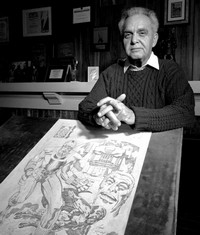
Jack
Kirby
(1917-1994)
|
|
Having witnessed the
cancellations of his Fourth World titles, Kirby's
disappointment with DC grew, and in March 1975 he
signed a contract to return to Marvel once he
would have fulfilled his remaining obligations
with DC. Aware that Kirby
was leaving, DC assigned Gerry Conway as editor
as of Kamandi #34 before making him
full writer/editor on Kamandi #38-40,
which would be Kirby's last three issues on the
title. DC would also no longer commission covers
from Kirby from this point on, most likely to
lower any association of Kirby with DC on
newsstands and keep his deaprture as silent and
low-key as possible.
Kamandi #59
(September–October 1978) was the final issue to
be published, whilst two additional issues,
completed but not released due to the DC
implosion (which saw 40% of the publisher's line
cancelled), were ultimately included in Cancelled
Comic Cavalcade #2 (Fall 1978).
|
|
| |
 |
|
Kamandi
was an ideal candidate
for DC's comic packs and
was included regularly.
10 issues of the title
were published in 1973
(#3-12), of which seven
(#4 and #8-13) were
included in a DC
SuperPac. |
|
|
|
|
| |
|
| |
|
|
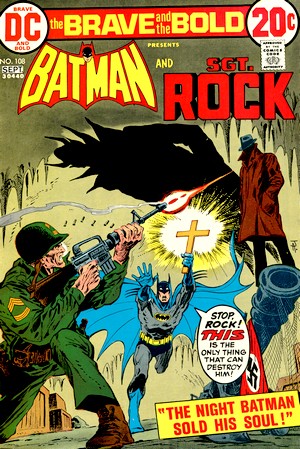
BRAVE &
THE BOLD #108
August/September
1973
(bi-monthly)
On Sale:
8 May 1973
Editor - Murray
Boltinoff
Cover - Jim Aparo (pencils &
inks)
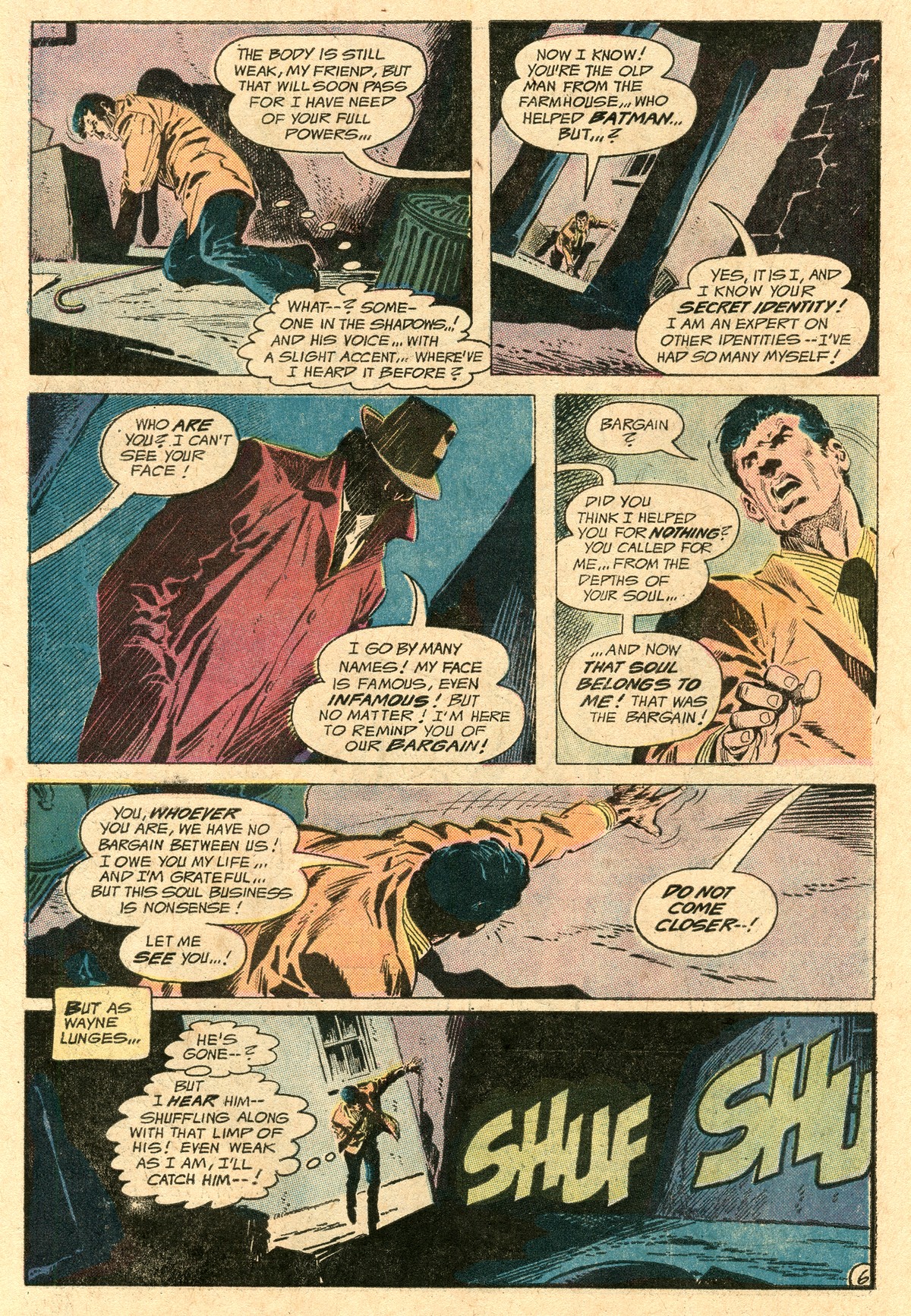
"The
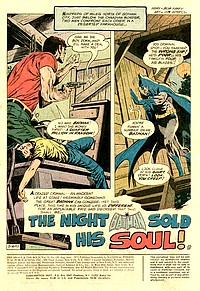
Night Batman Sold His Soul!" (22.5
pages)
Story
- Bob Haney
Pencils. Inks & Lettering -
Jim Aparo
Colours - Tatjana Wood
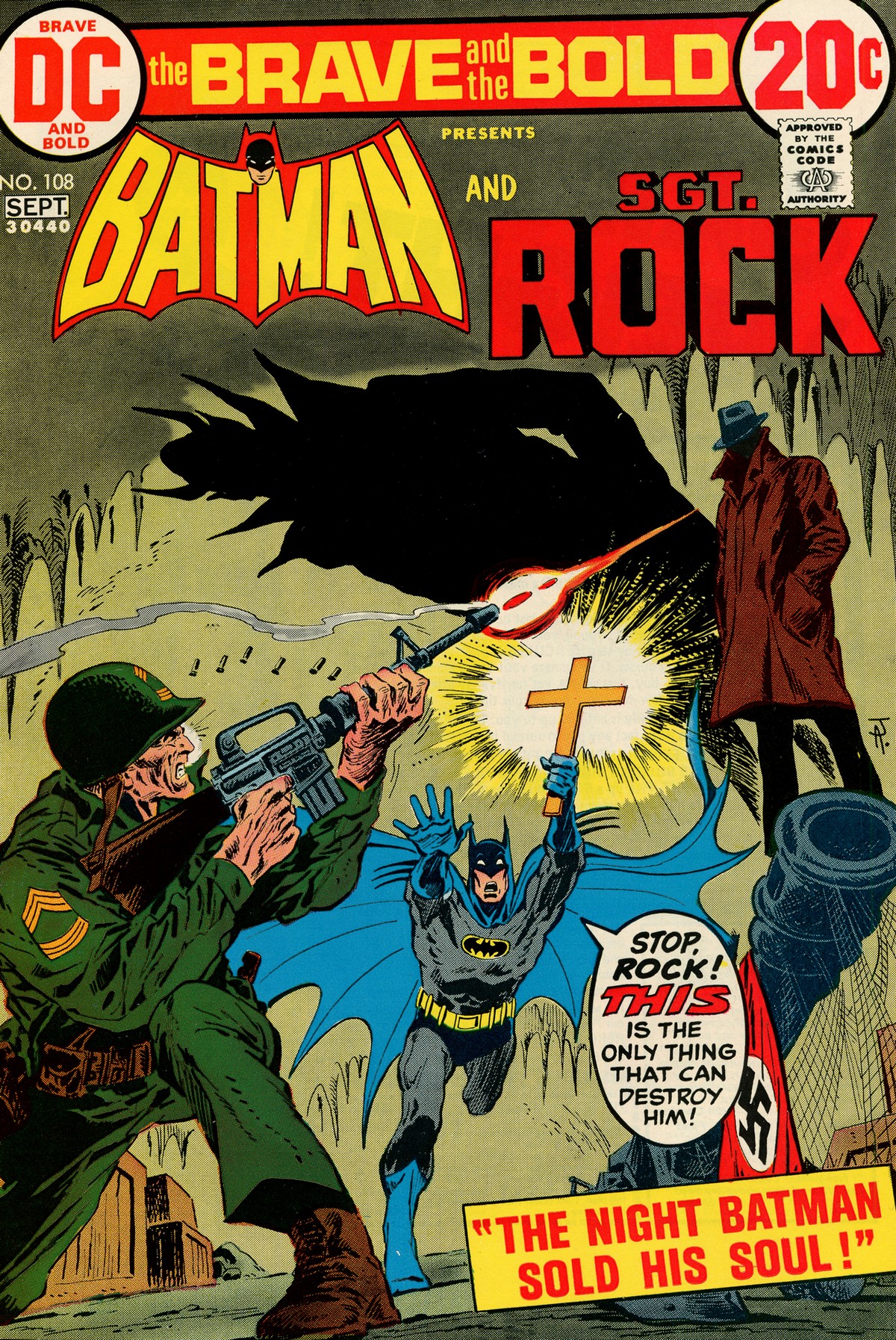
PLOT
SUMMARY -
During a hostage situation at a
farm far away from Gotham, Batman
is shot and left for dead in a
well - from which he is however
saved by a mysterious shadowy
being right after Batman had
thought he would give his soul to
get out of the situation alive.
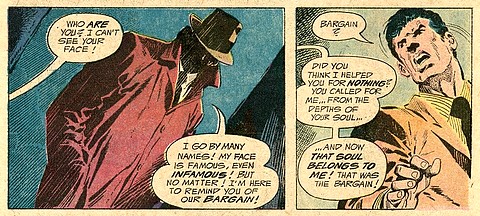
When he meets the mysterious old
man - whose face he cannot see
clearly - again in Gotham as
Bruce Wayne, he is not only told
that the shadowy figure knows his
secret identity, but that a
bargain was struck at the farm
and that he now owes his soul to
evil.
|
|
|
|
| |
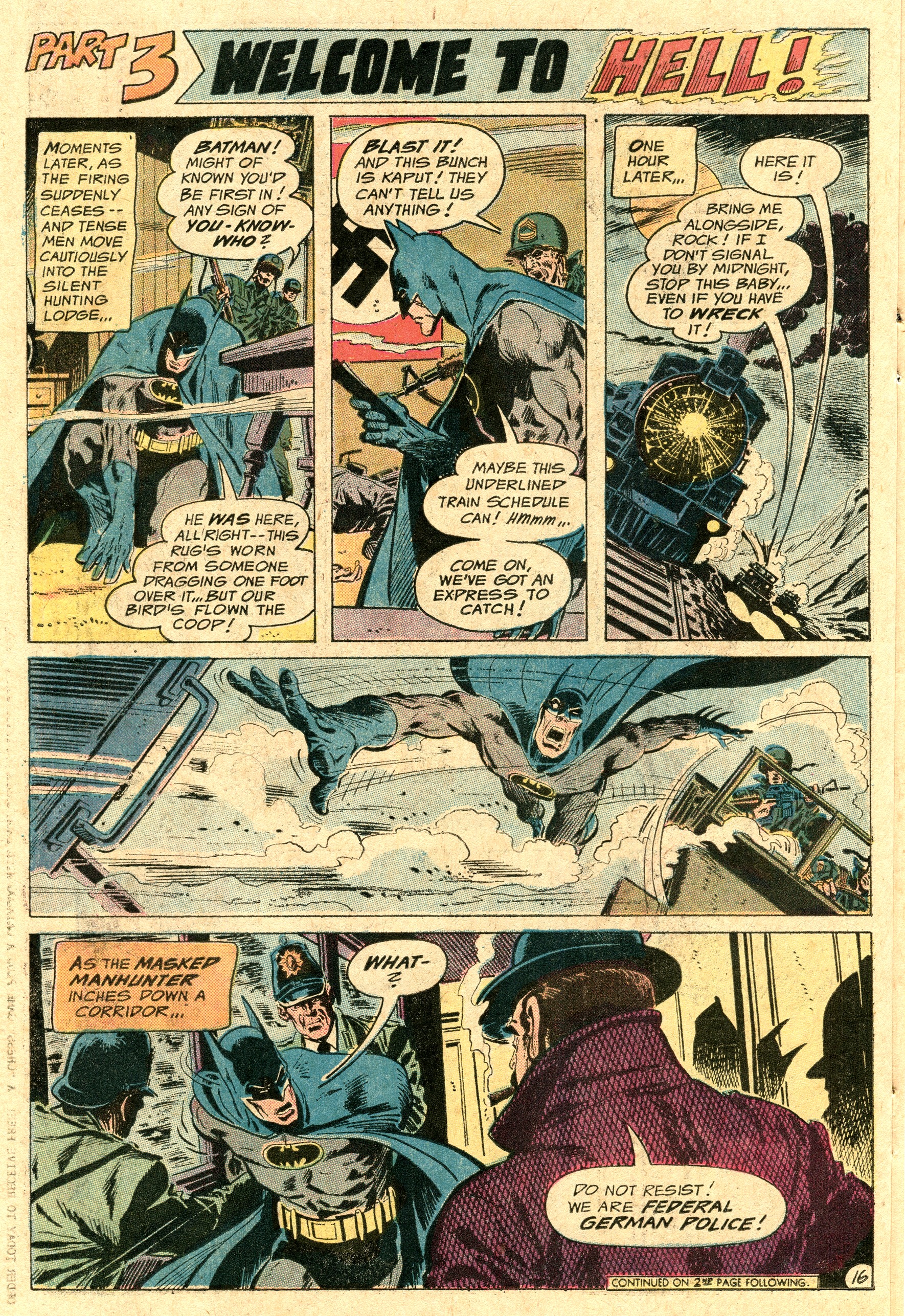
| Chasing down the limping
figure (who nevertheless moves very fast) down an
alleyway he bumps into a now silver-haired Sgt. Rock -
who to Bruce Wayne's utter disbelief reveals that he
believes that Adolf Hitler is still alive - and that he
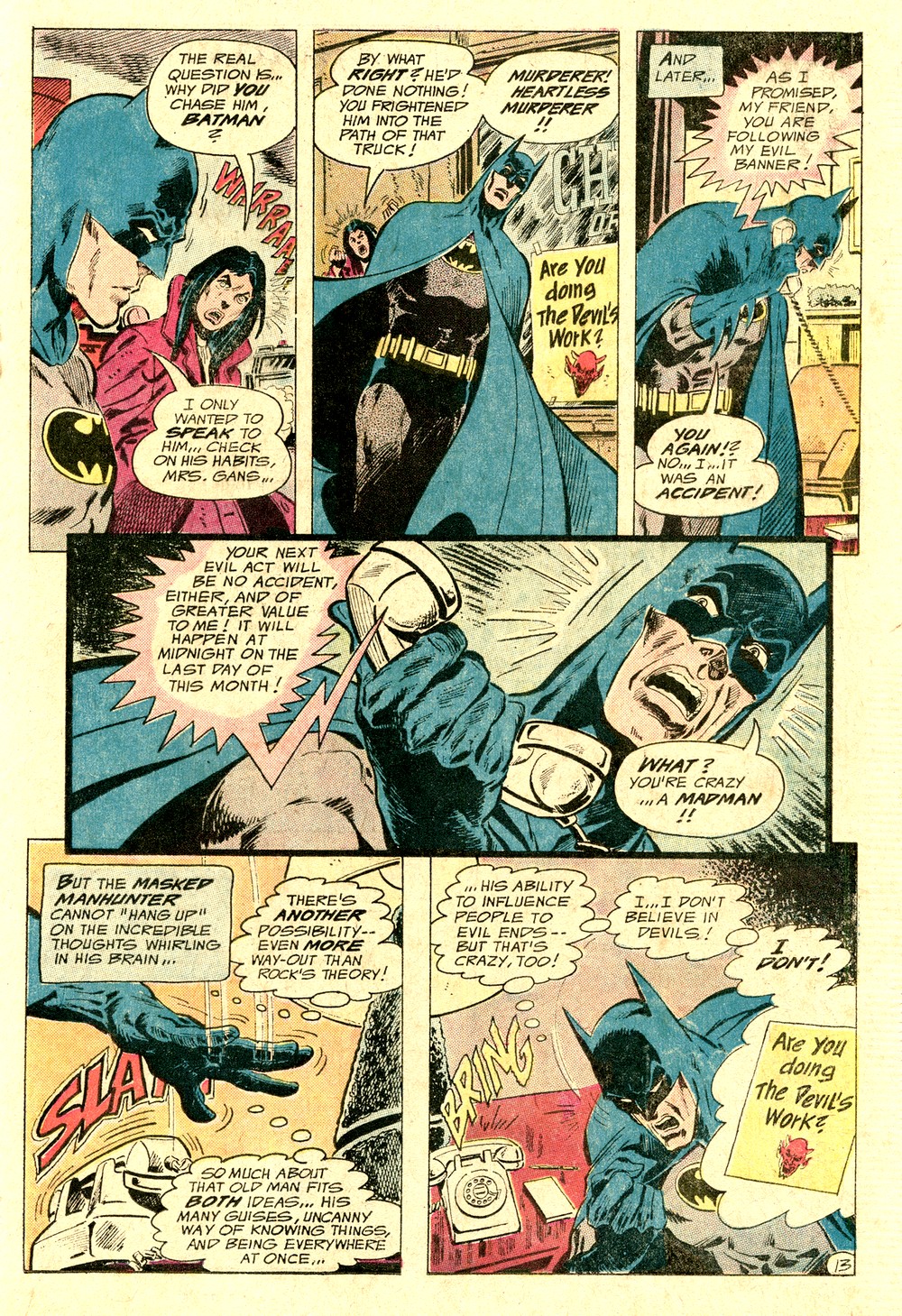
is in fact that shadowy figure. Batman and Rock track him
down to Germany, but although the two manage to destroy
his operations and a secret hideout, the mysterious
figure manages to make his escape, leaving a frustrated
Rock to continue his hunt - and having a broody Batman
wonder if it wasn't Hitler but rather the Devil
himself... |
| |
|
| |
| Robert G. "Bob" Haney
started working in the comic book industry in 1948 and
joined DC in 1954, where over the next 30 years he
scripted just about every sort of comic book DC published
(Evanier, 2004). |
| |
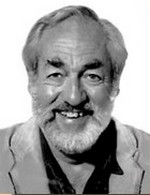
Bob Haney
(1926-2004)
|
|
Sometimes called
"Zany" Haney, he was actually
one of the few people at DC who already
by the mid-1960s
"understood
that Marvel was successfully
reinventing the super-hero comic for
the current generation"
(Evanier, 2004)
Haney tried to
bring some of that "Marvel
flavour" to the stories he was
writing for DC, and that included his
very own (and sometimes completely
off-beat) version of Stan Lee's
hyperbole. But most importantly he
understood that readers expected the
comic books they were buying to connect
with them. Whilst he could not make DC
look like an exclusive secret club the
way Marvel portrayed itself, addressing
readers as "faithful ones" was
definitely a step in the right direction.
|
Haney was also keenly aware
of the fact that the content itself had to
change, and as a result his stories often cared
very little about the conventionalities of the DC
Universe and would sometimes even write stories
which outright contradicted them.
|
|
 |
|
| |
| In doing so, Haney could whip up
tightly plotted scripts just as easily as throwing out
extremely loose plots with more holes in them than
overall sense. The yarn he conceived for Brave and
The Bold #108, however, is undoubtedly a showcase
piece highlighting both his unconventional ideas and the
prowess he could apply to pull off something completely
outside of the box.. |
| |
|
|
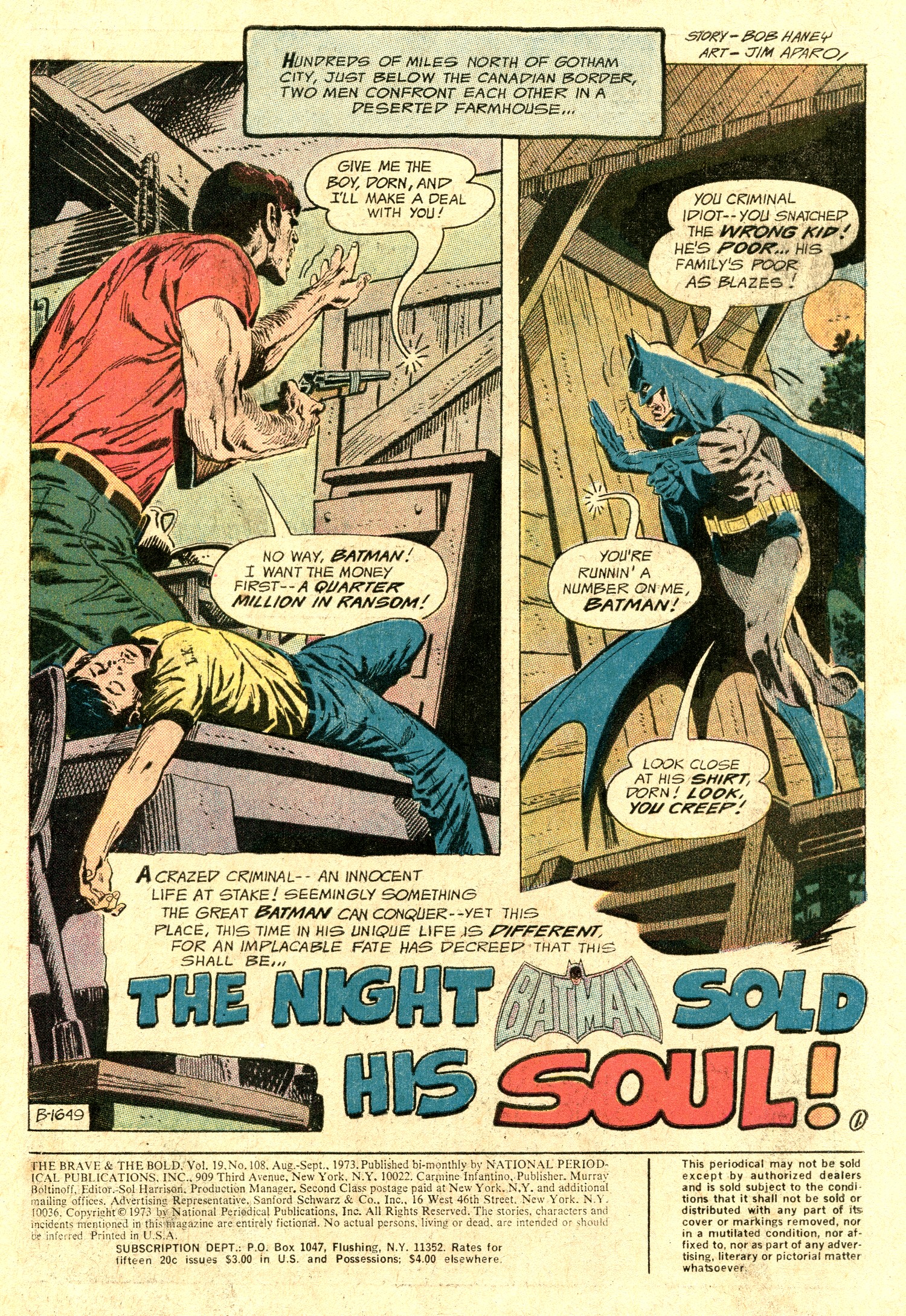
"The Night Batman Sold His
Soul!" (spread out over the three
chapters "The Old Man from Nowhere", "Under
Evil's Banner",
and "Welcome to Hell!") starts out with
a conventional Batman situation, but then quickly
turns into a fog-shrouded mystery.
Haney then sends the
Batman and Sgt Rock on a wild chase with plenty
of punch and action, before finally not really
ending at all, as the Batman ponders the
philosophical and moral question of whether we
sometime do the devil's work with the best of
intentions - and evil therefore never really goes
away.
|
|
| |
| It is, of course, slightly ludicrous, but
Haney keeps the plot tight and carries the
mystery and the suspense at the core of this
story right up to the final panel: who is this
mysterious figure? Could it really be Hitler, as
Rock has us all believe? Or is it some
manifestation of evil (perchance even the devil),
as Batman seems to think? Haney doesn't supply
readers with an actual answer, but this never
feels like a cheap way out of a plot corner - it
actually elevates it. |
|
| |
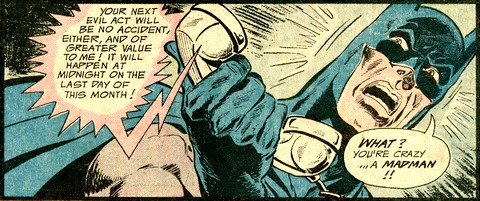
It was also the way Haney felt
readers wanted the Batman to be, and he found the
perfect artist for this venture in Jim Aparo.
"I wanted the spooky dark night
Batman image of his original days. Such
artists as Neal Adams and the redoubtable Jim
Aparo brought this vision to panelled
reality." (Bob
Haney in Best of the Brave and the
Bold #5, 1988)
|
|
 |
|
| |
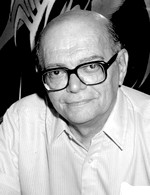
Jim
Aparo
(1932-2005)
|
|
Haney was always greatly
helped by Jim Aparo, who provided
reliably stellar artwork which made the
stronger plots shine and often rescued
the weaker ones. Brave
and The Bold #108 was definitely
different in terms of settings and
storytelling, but since Aparo was no
stranger to mysteries (illustrating, for
example, the Phantom
Stranger) it all came together just
perfectly.
Jim Aparo had
started working for Charlton Comics in
1966 (as one of very few artists who
would pencil, ink, and letter their work)
before moving on to DC in 1968 (where he
worked almost exclusively for the
remainder of his career).
What started out
as a fill-in job for Brave and the
Bold #98 (October 1971) turned into
an impressive run as the principal artist
for the title throughout the Bronze Age -
ultimately pencilling almost all of the
second one hundred issues of the title.
|
|
|
| |
 |
| |
|
|
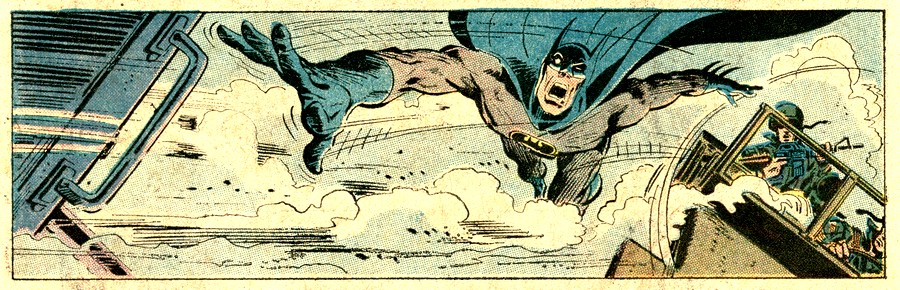
Brave
and the Bold was
included regularly in
DC's SuperPacs, and all 6
issues of the title
published in 1973
(#105-110) could be found
in a DC SuperPac,
potentially providing a
full 1973 run if you
could find the
corresponding comic packs
(A-1, A-3, A-5,
B-7, A-9, and A-11). |
|
|
|
|
| |
|
| |
|
|
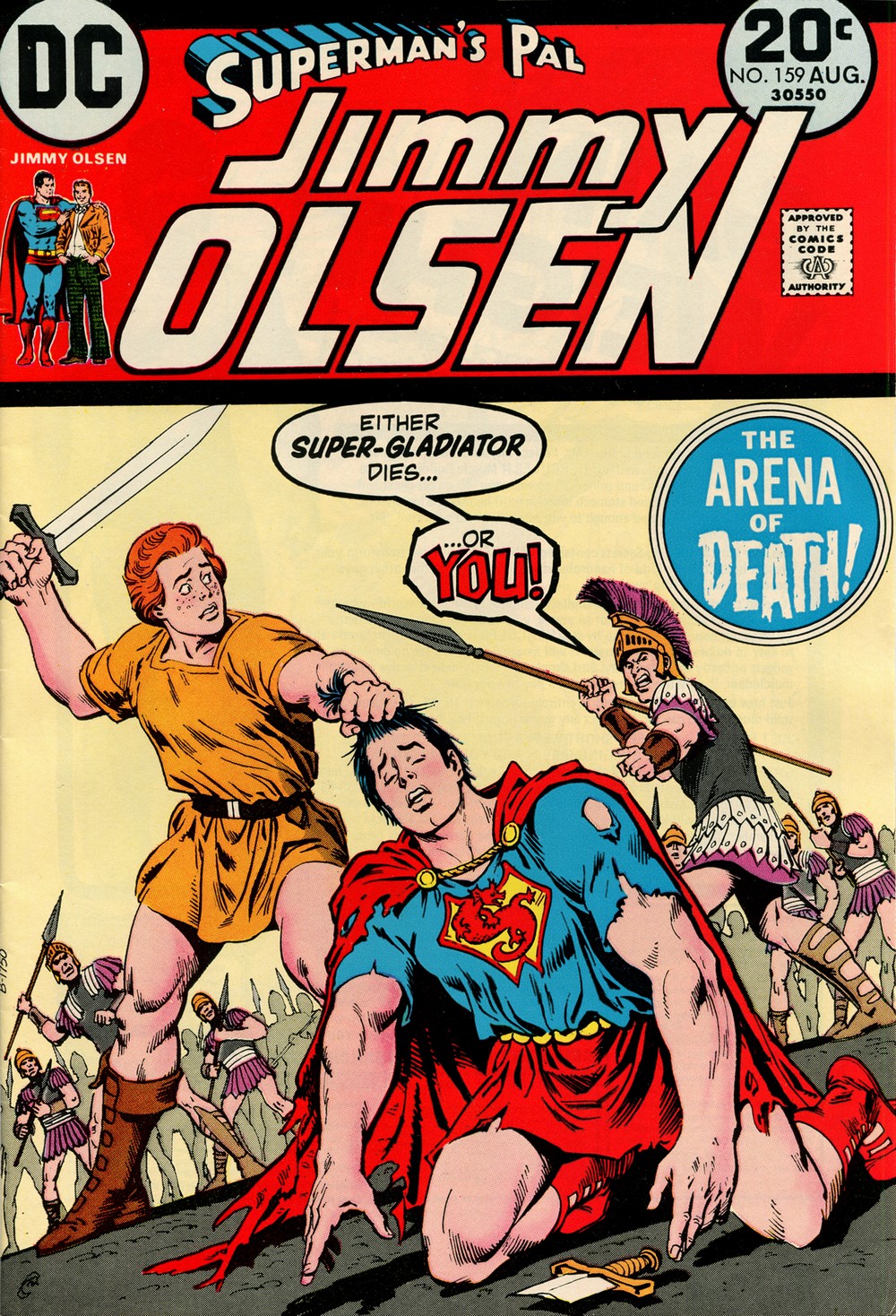
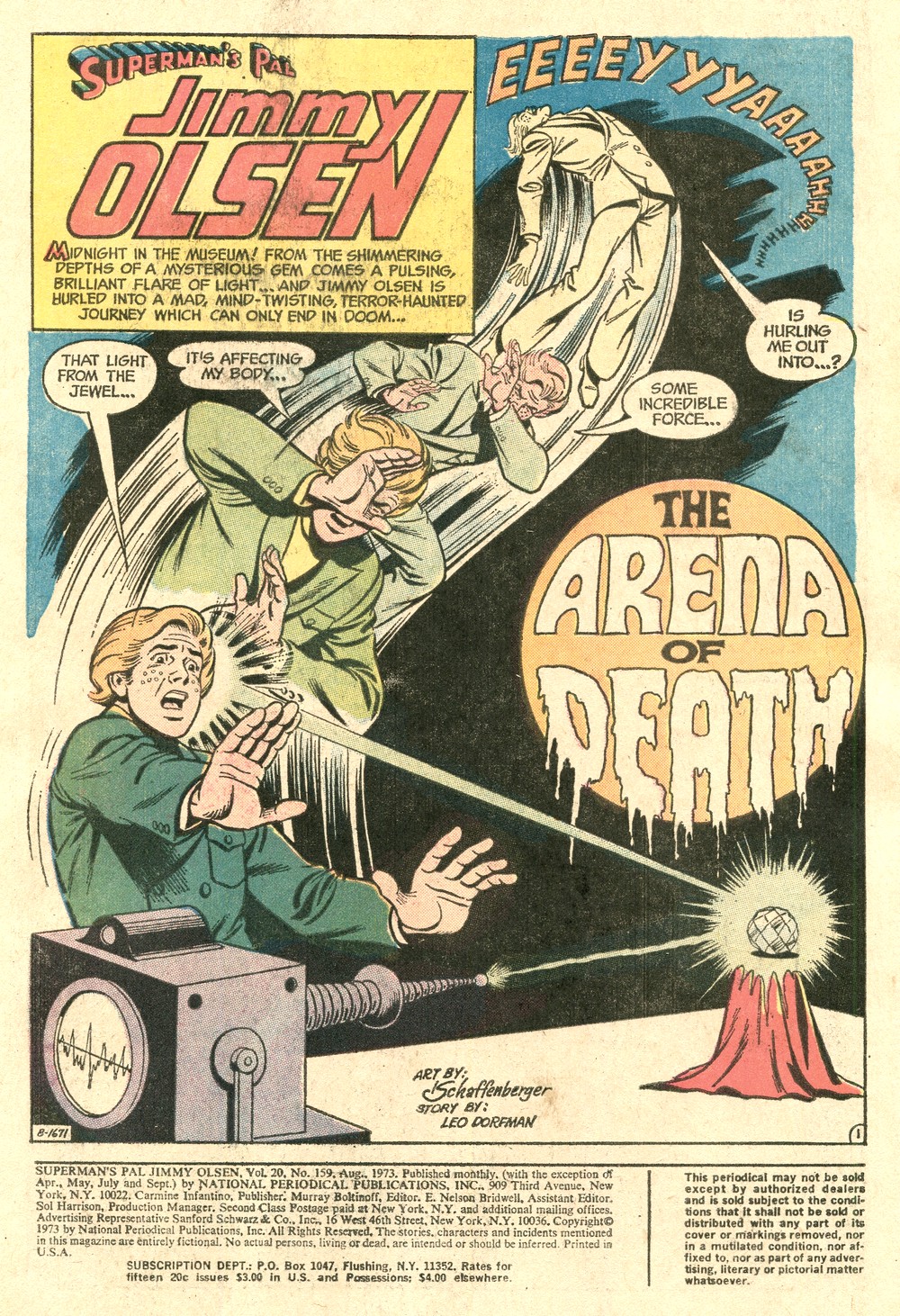
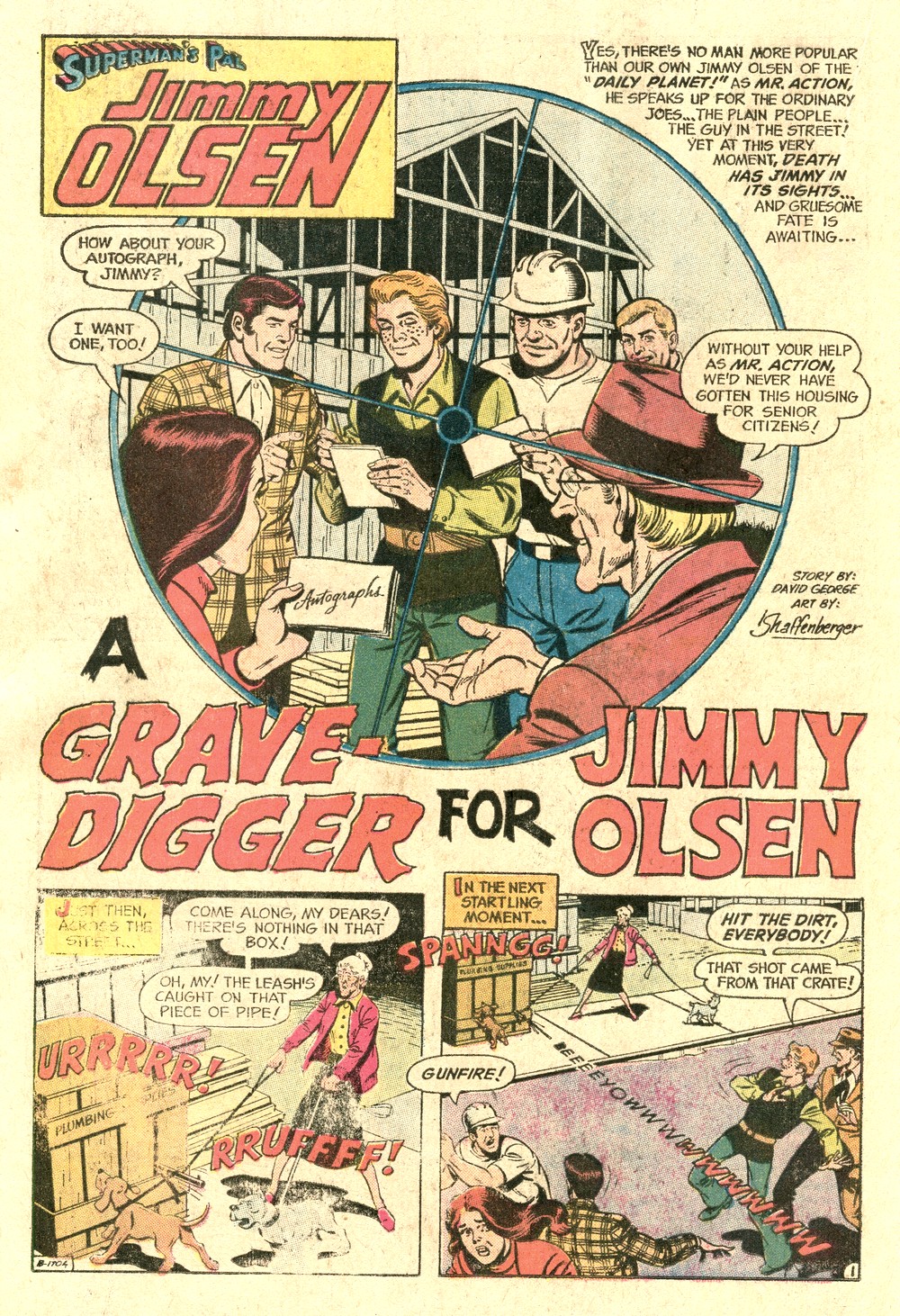
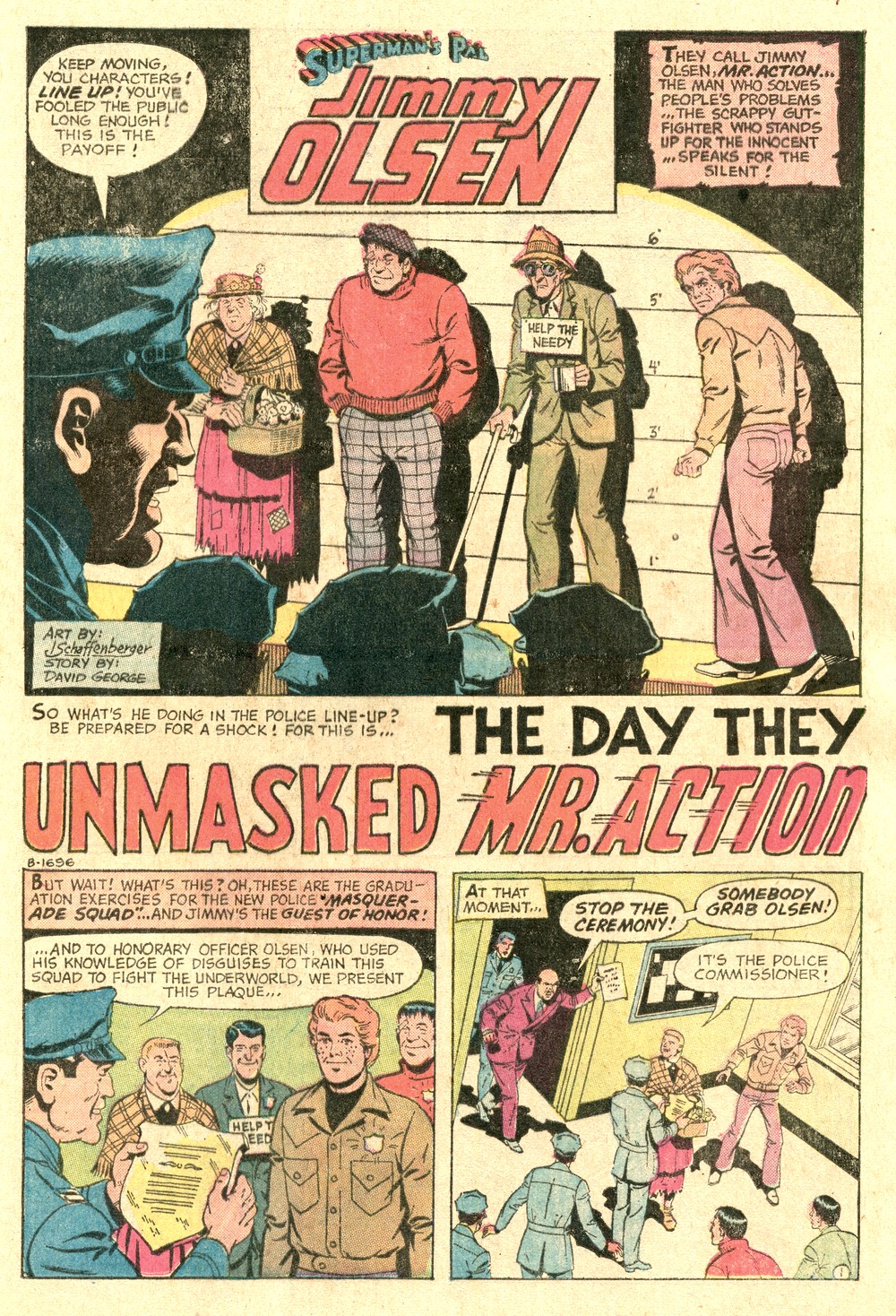
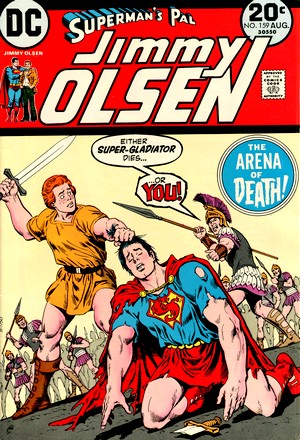
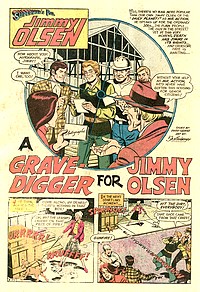
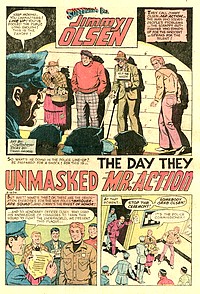
JIMMY OLSEN #159
August
1973
(monthly, with the
exception of April, May, July and
September)
On Sale: 10 May 1973
Editor -
Murray Boltinoff
Cover - Nick Cardy (pencils &
inks)
"The
Arena Of Death"
(10.5 pages)
Story - Leo Dorfmann
Pencils - Kurt Schaffenberger
Inks - Kurt Schaffenberger
"A
Grave-Digger For Jimmy
Olsen"
(5 pages)
Story - Leo Dorfmann (as David
George)
Pencils - Kurt Schaffenberger
Inks - Kurt Schaffenberger
"The
Day They Unmasked Mr.
Action"
(7 pages)
Story - Leo Dorfmann (as David
George)
Pencils - Kurt Schaffenberger
Inks - Kurt Schaffenberger
|
|
|
|
| |
|
| |
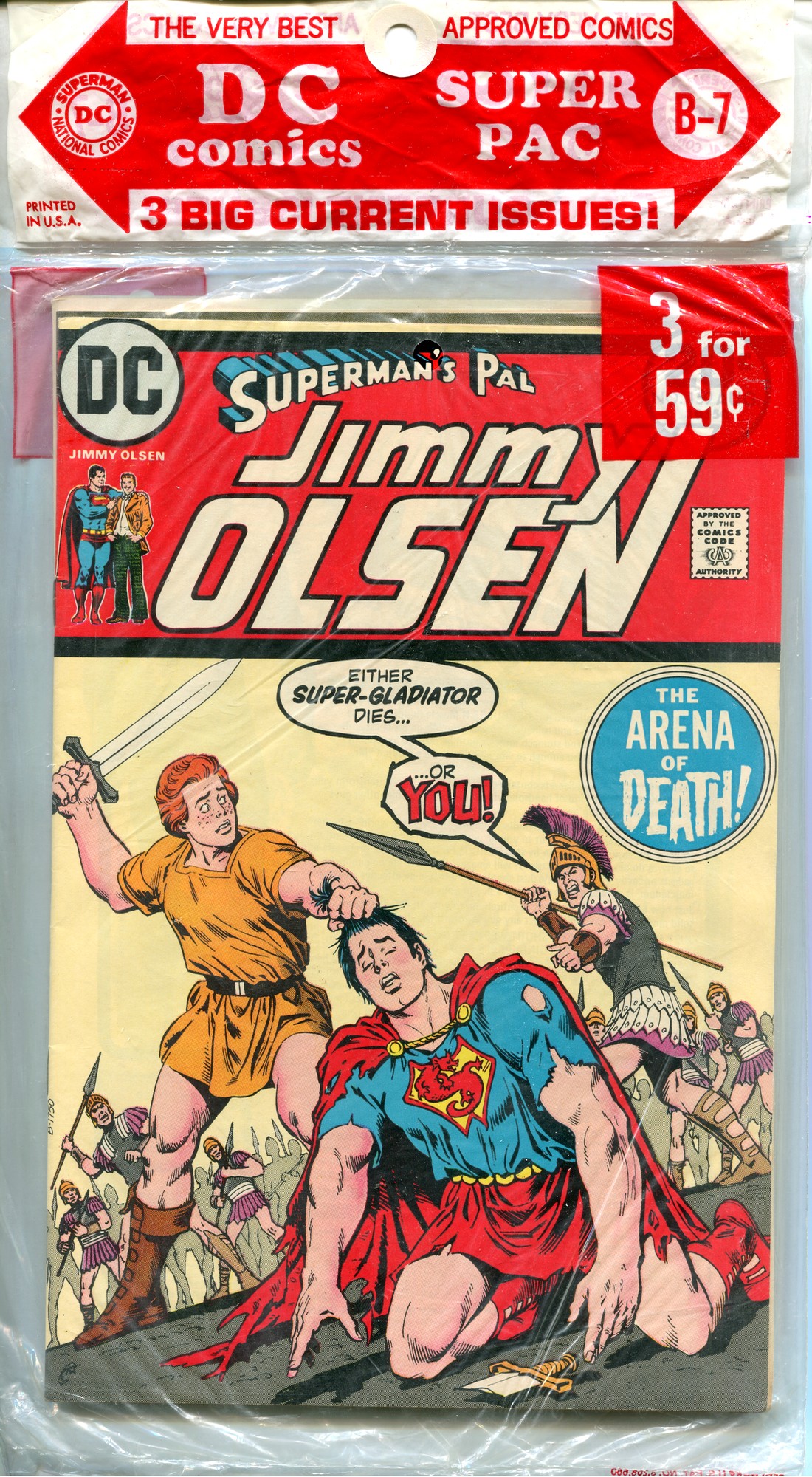
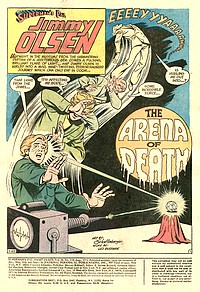
PLOT
SUMMARIES - (1)
The Star of Cathay magically transports
Jimmy back to ancient Rome where he
becomes Spartacus and leads a gladiator
revolt. (2) Jimmy Olsen is accidentally
saved from three different attempts to
end his life by a gang named Gravediggers
Inc. (3) Jimmy Olsen and the Masquerade
Squadron capture Max the Actor.
Jimmy Olsen made his debut not in a
comic book but the Superman radio show in
1940, before appearing for the first time
in Superman #13
(November-December 1941). In September
1954 he got his own title, Superman's
Pal Jimmy Olsen, which ran for a
total of 163 issues up until March 1974.
In tune with the period, the series
initially revolved around its protagonist
undergoing all kinds of transformations,
including Elastic Lad and Giant Turtle
Man.
"Superman’s Pal Jimmy
Olsen is a resolutely strange series,
albeit one that was incredibly
successful for two decades thanks to
the lasting appeal of Superman (...)
In keeping the series vital for so
long, editor Mort Weisinger steered
directly into the strangeness of
things, regularly deforming his lead
character in absurd ways and having
him face plots whose dreamlike logic
doesn’t stand up to even a cursory
examination." (Brevoort,
2023)
Rather famously, Superman's Pal
Jimmy Olsen was the lowest selling
DC title of all when Jack Kirby came to
DC from Marvel in early 1971, prompting
Kirby to pick it for himself because the
series was without a stable creative team
and he did not want to cost anyone a job
(Wallace & Dolan, 2010).
Kirby had hoped to give his new Fourth
World concepts greater exposure to
potential buyers through Jimmy Olsen.
But it also proved to be the first of
many instances where Kirby came to realise
the limitations which DC would put on his
(promised) artistic freedom, as all of
the Superman and Jimmy Olsen faces were
redrawn by Al Plastino and later by
Murphy Anderson:
"Infantino
authorized re-drawing Superman’s
head as drawn by Kirby, claiming that
it was necessary to preserve the
value of the licensed Superman
characters, and noting that Kirby
himself had no qualms with DCs
decision to change his work."
(Stump, 1996)
This evidently all
happened before Superman's Pal Jimmy
Olsen #159, at which moment in time
Kirby had been off the book for a good
year (he left the series with issue #148
in April 1972). DC then tried to get Jimmy
Olsen back on track, because
"The sales of the Kirby
issues plummeted and we hastened to
revert to our traditional artists."
(Carmine Infantino, in Stump, 1996)
|
|
|
|
| |
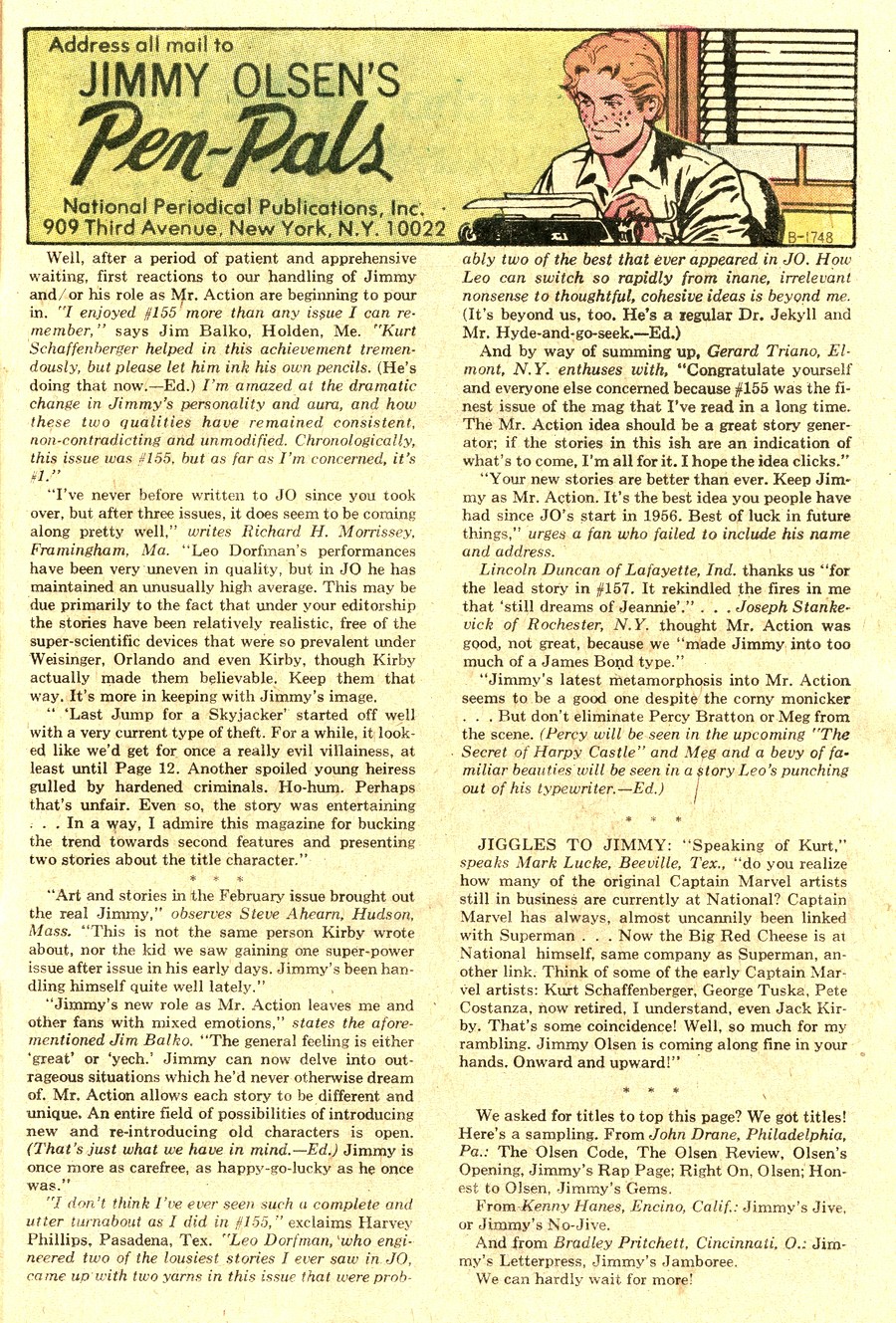
| Judging by the letter pages of that period,
most readers wanted Jimmy Olsen to move away from
both the pre-Kirby "gets himself in trouble,
is saved by Superman" mould and the
extravagant Kirby plots, and Leo Dorfman (who
also used the name David George to hide the fact
that he penned almost all Jimmy Olsen stories at
the time) did seem to consciously try and move
the stories back to a more conventional DC style.
It did work for readers to some degree, but
not enough for the sales figures, and in less
than a year's time Superman's Pal Jimmy Olsen
#164 (April-May 1974) would be merged with Superman's
Girl Friend, Lois Lane (launched in 1958) to
form a new title, Superman Family (which
continued the numbering from Superman's Pal
Jimmy Olsen). In that title, Olsen
would finally become a more serious character who
battled criminals as an urban investigative
reporter known as "Mr Action", in crime
stories that would rarely feature Superman.
|
| |
|
|
|
Jimmy
Olsen
was included frequently
in DC's SuperPacs, and
all but one (Jimmy
Olsen
#160) of the title's 7
issues were included in
the 1973 production
output of SuperPacs.. |
|
|
|
|
| |
|
| |
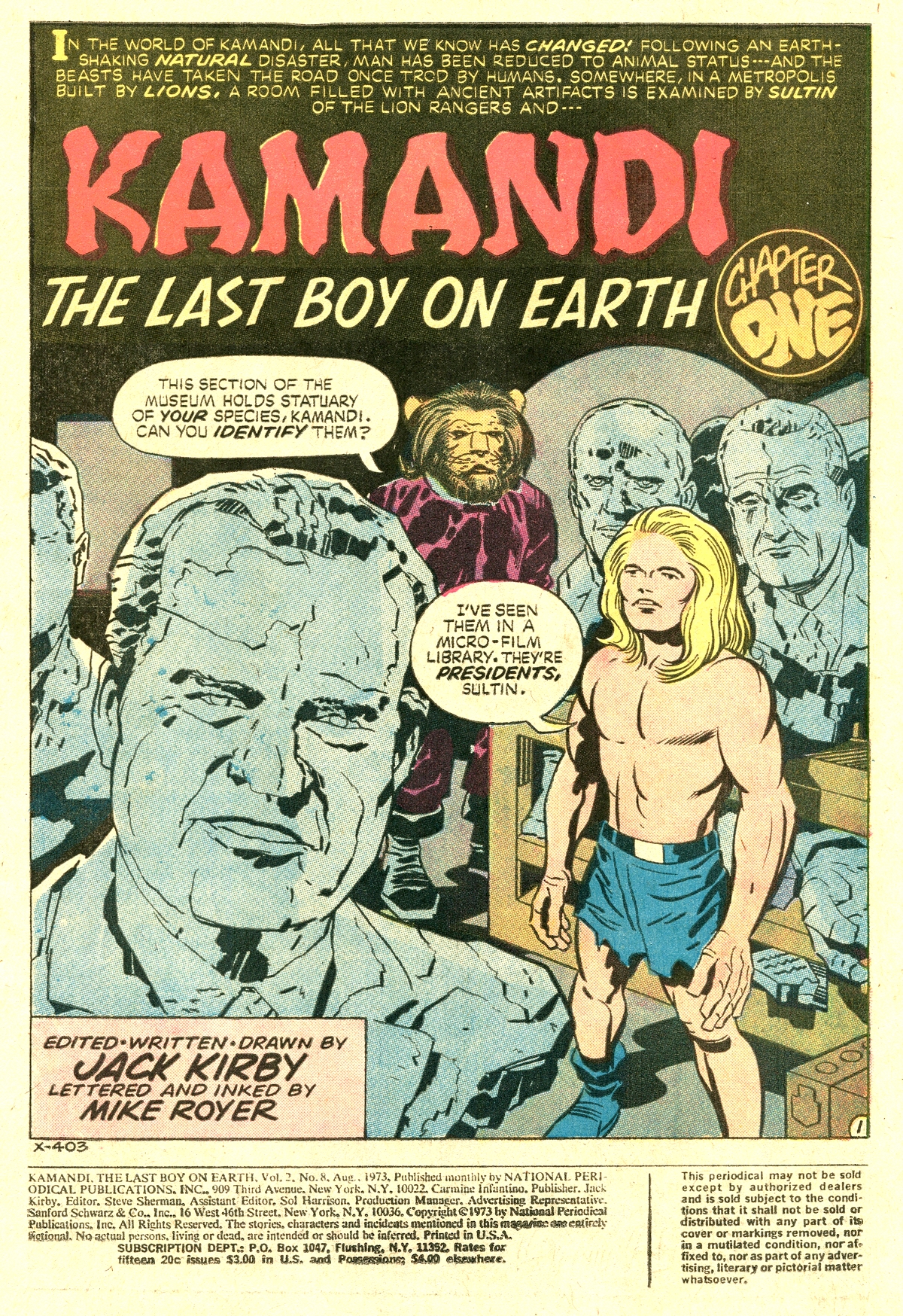
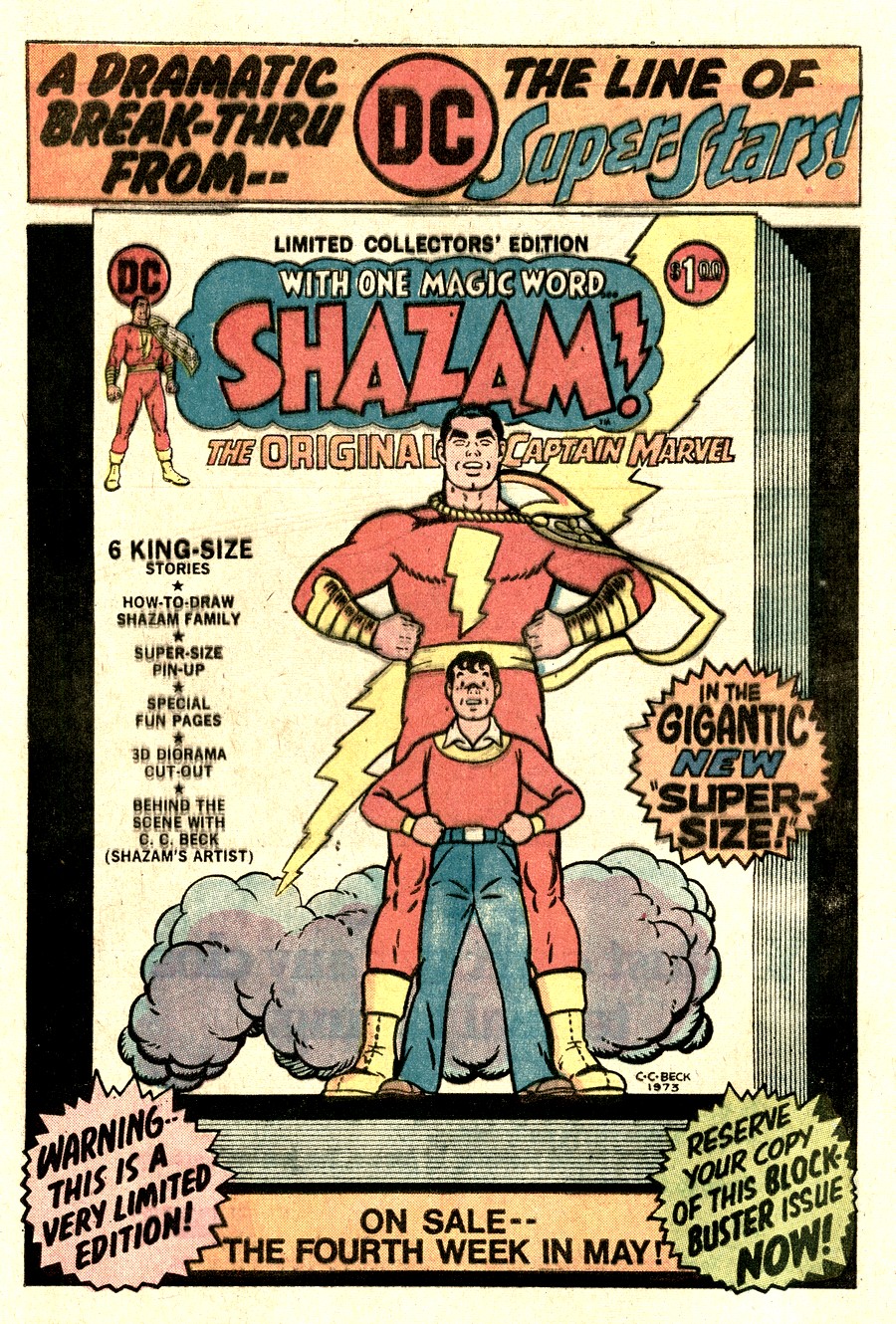
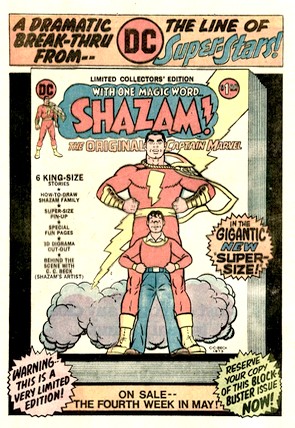
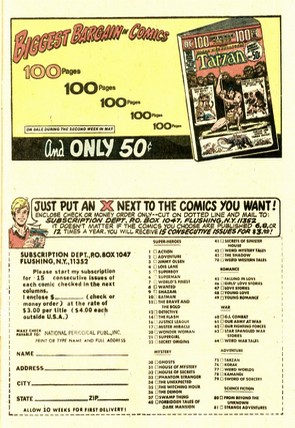
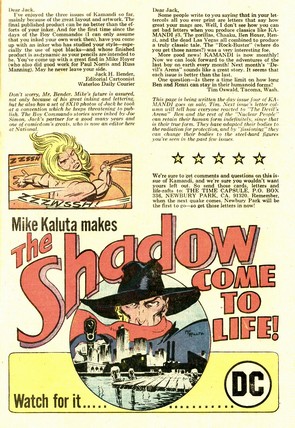
| There were
many things that set DC apart from Marvel in the early
1970s, but one very salient point was DC's lack of any
regular editorial feature across its titles through which
editors would communicate with their readership (as
Marvel and Stan Lee did with their famous Bullpen
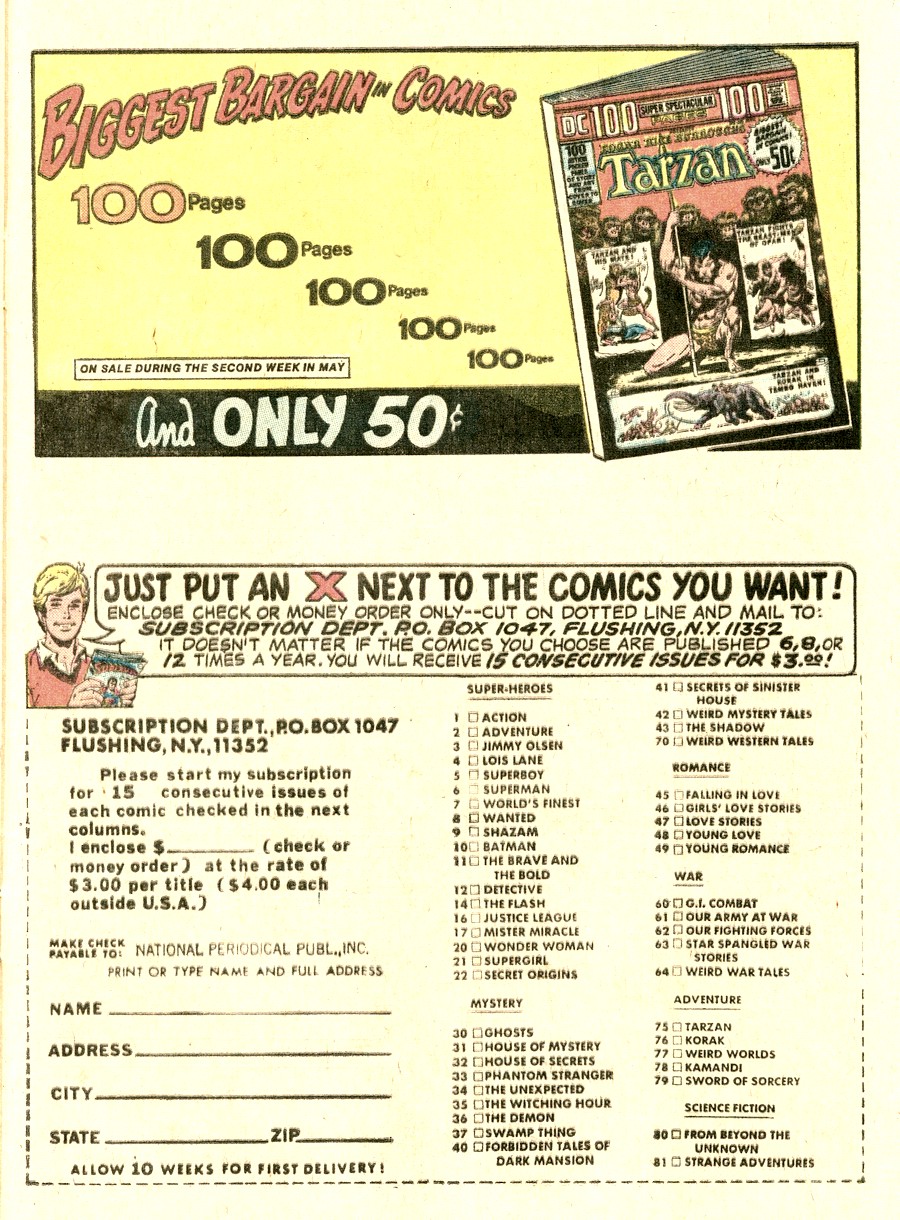
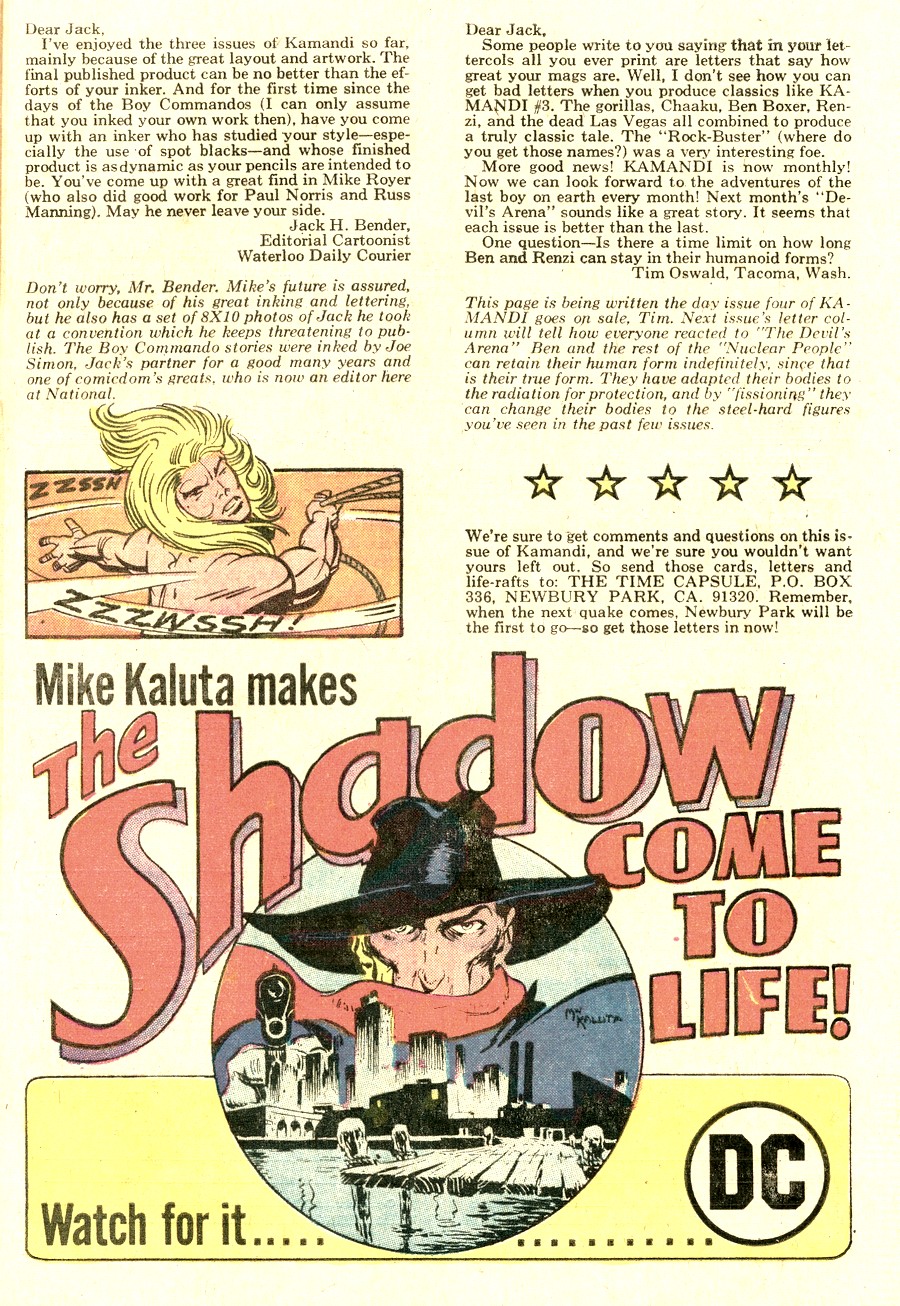
Bulletins and Soapbox). DC's interaction
with its fans and readers was mostly limited to the
letters pages, whilst plugs for other titles almost only
featured in in-house ads, as with these examples taken
from Kamandi #8. |
| |
|
| |
|
|
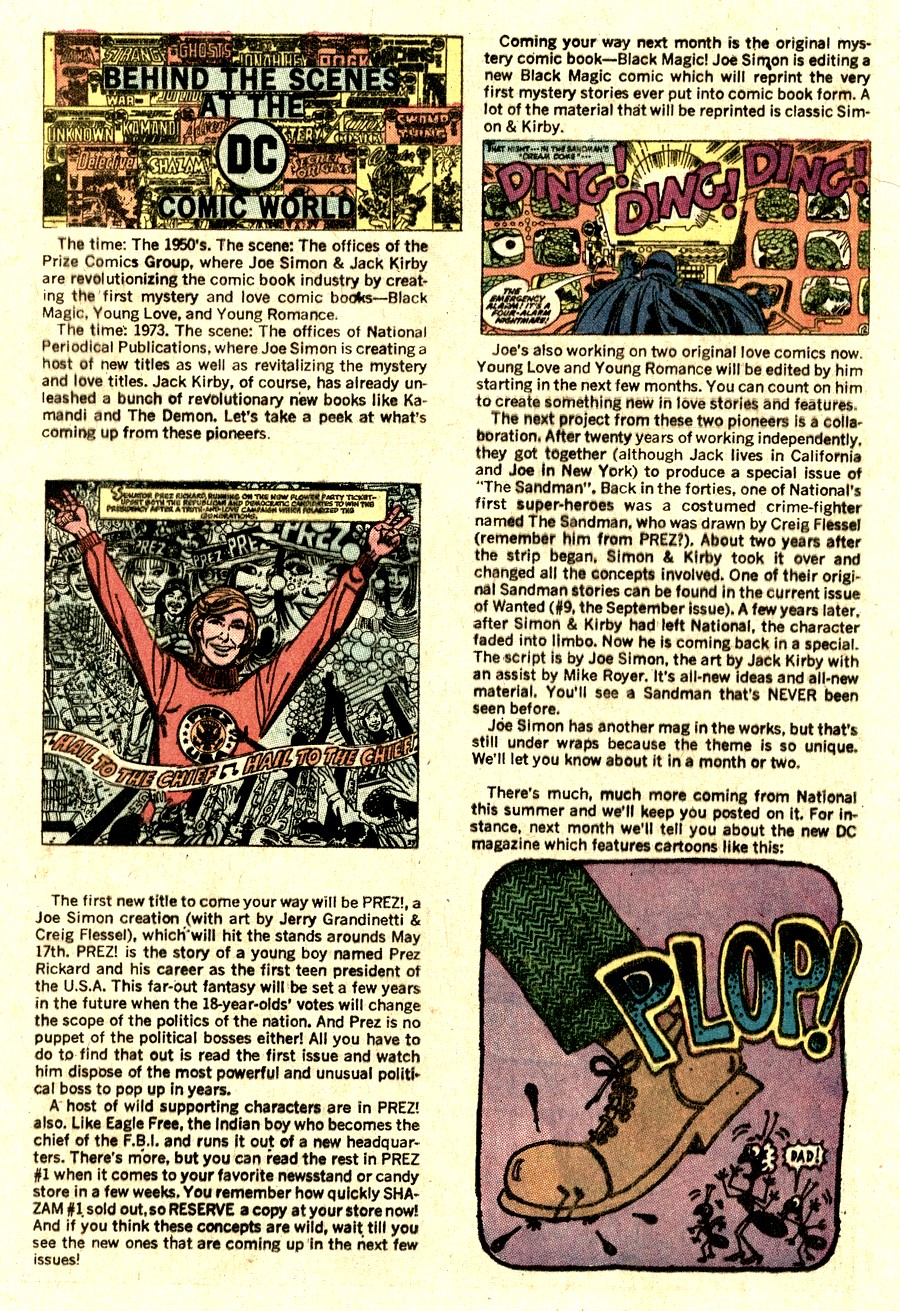
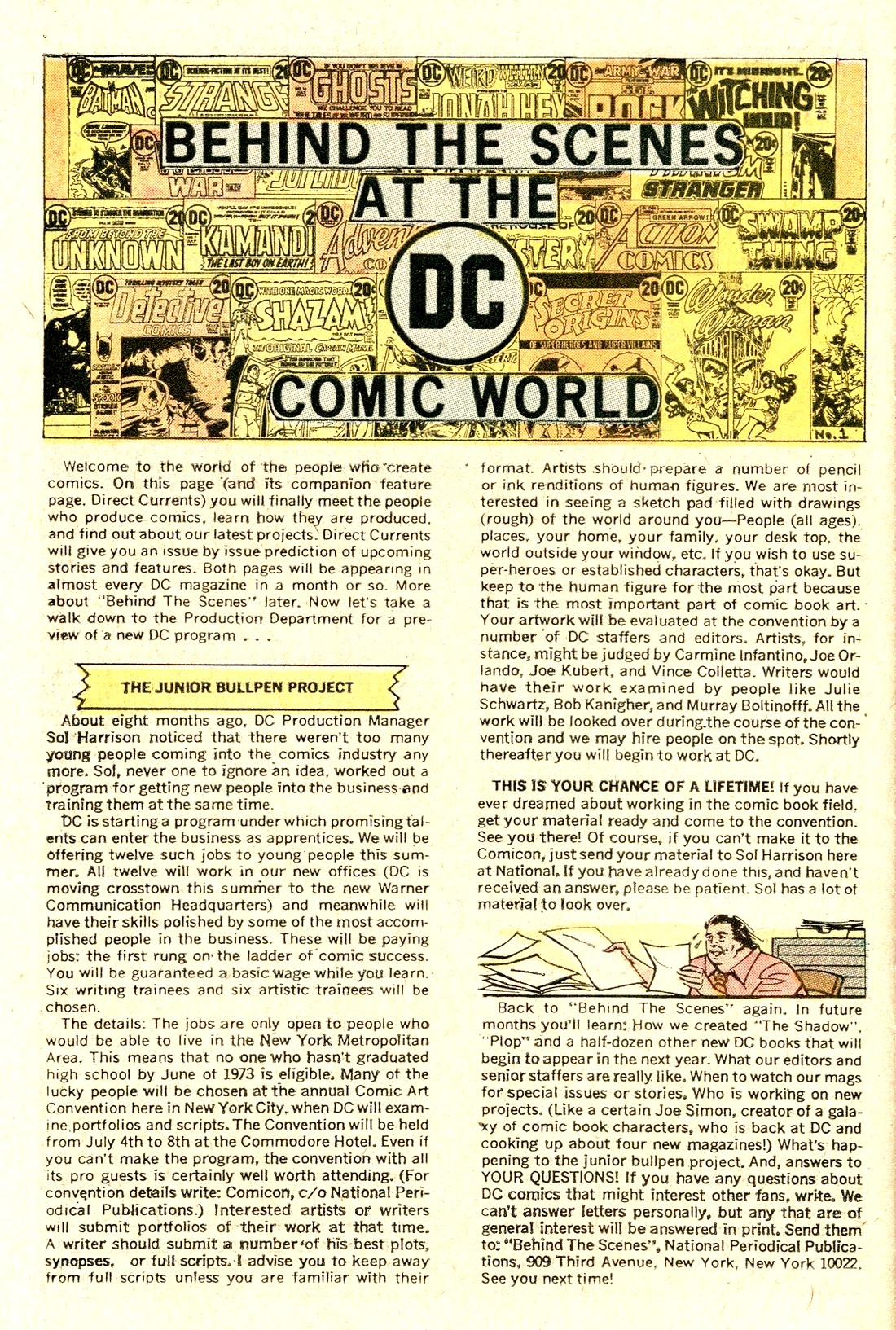
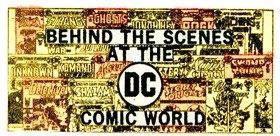
But if you picked up this
July 1973 B-7 SuperPac (or any of the
three titles it contained individually
from a news agent), things were slightly
different as you were also promised a
look "Behind the Scenes at the
DC Comic World". This was the
second appearance of this one-page
editorial feature (published in various
DC titles from the July 1973 cover date
run to the January 1974 cover date run),
which clearly was one of several attempts
made by DC at the time to catch up with
Marvel and fill the communication gap
with its readers.
|
|
|
| |
| Whereas the first
"Behind the Scenes at the
DC Comic World" featured information on DC's
"Junior Bullpen Project", this time readers
were filled in on what Jack Kirby and Joe Simon were
doing at the time, with references to titles already
published (such as Shazam, Kamandi, The
Demon, Young Love, and Young Romance) as
well as several plugs for up and coming new titles such
as Prez, Black Magic (actually a
reprint title edited by Simon, and part of DC's (futile)
attempt to hit back at Marvel during the "war of the
shelves"), and Sandman. |
| |
|
| |
| FURTHER
READING ON THE THOUGHT
BALLOON |
| |
| |
|
|
"Comic
packs" not only sold well
for more than two decades, they
also offer some interesting
insight into the comic book
industry's history from the 1960s
through to the 1990s. There's
more on their general history here. |
|
|
|
| |
|
|
An overview
and analysis of all the 1973
Super Pacs is available
here. |
|
|
|
| |
|
|
You can read
more about the 1973 "war of
the shelves" between Marvel
and DC here. |
|
|
|
| |
| |
|
| |
BIBLIOGRAPHY
| |
| BREVOORT Tom (2023)
"WC:
Superman’s Pal Jimmy Olsen #77",
tombrevoort.com, published online 4 June 2023 EVANIER Mark
(2004) "On the Passing of Bob
Haney",
published online 7 December 2004 on News from
Me
EVANIER
Mark (2007) "More on Comicpacs", News From Me,
published online 2 May 2007
EVANIER
Mark (2013) "More about Carmine
Infantino", News From Me, published
online 6 April 2013
EVANIER
Mark (2022) "Team-Up
Comics and Kamandi", News From Me, published
online 3 October 2022
LEVITZ
Paul (2010) 75 Years of DC Comics - The Art
of Modern Mythmaking, Taschen
PARKER John (2011) "Comics we love: 'Kamandi, the
last boy on Earth'", Comics
Alliance, published online 28 September 2011
SACKS Jason & Keith
Dallas (2014) American Comic Book Chronicles:
The 1970s, TwoMorrows Publishing
STUMP Greg (1996) “Infantino
Raises Questions About CBG Letters Policy
Following Kirby Controversy Flare-Up”, in The
Comics Journal #191 (November 1996)
WELLS
John (2012) American Comic Book Chronicles:
The 1960s (1960-1964), TwoMorrows Publishing
|
|
| |
|
| |
|
| |
|
| |
(c) 2026
uploaded to the web
24 October 2026
|
| |
|
| |
|