|
 |
|
BATMAN,
SUPERMAN & SHAZAM
BACK
TO BACK IN THE
JUNE
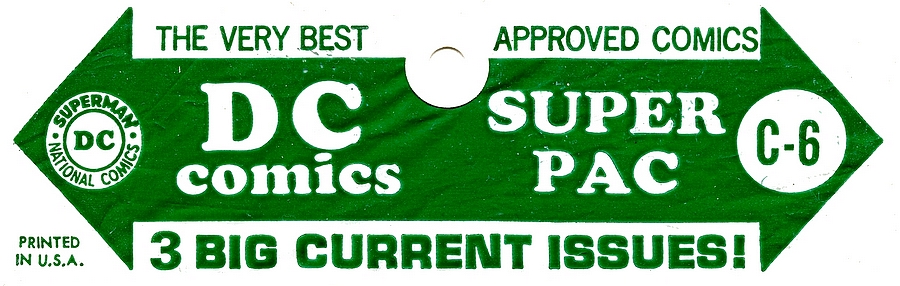
1973 C-6 DC SUPER PAC
|
|
|
|
| |
|
| |
|
| |
|
| |
| At the same
time as the superhero genre was enjoying a hugely
successful comeback in the early 1960s, the comic book
industry was rapidly losing its traditional sales points.
Small stores that had carried comic books were being
pushed out of business by larger stores and supermarkets,
and newsagents started to view the low cover prices and therefore
tiny profit margins comics
had to offer as a
nuisance. Comic book
publishers desperately needed to open up new sales
opportunities and tap into new customer bases, and some
of these potential buyers could be found at the very
supermarkets and chain stores that were threatening the
traditional sales points. But in order to be able to sell
comic books at these locations, the product had to be
adjusted. |
| |
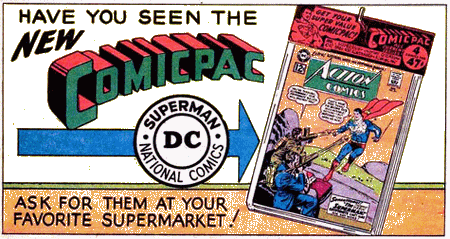
| Handling
individual issues clearly was no option for these
outlets, but by looking at their logistics and
display practices, DC Comics found that the
answer to breaking into this promising new market
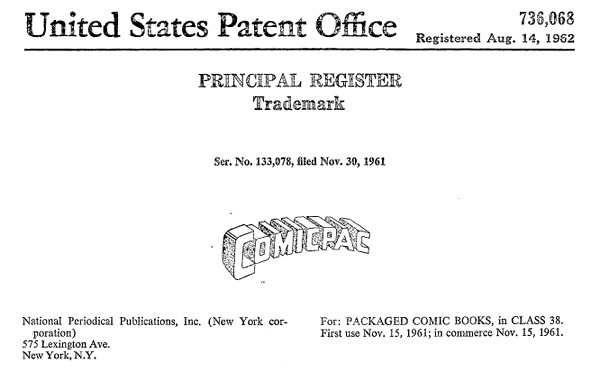
was to simply package several comic books
together in a transparent plastic bag - so they
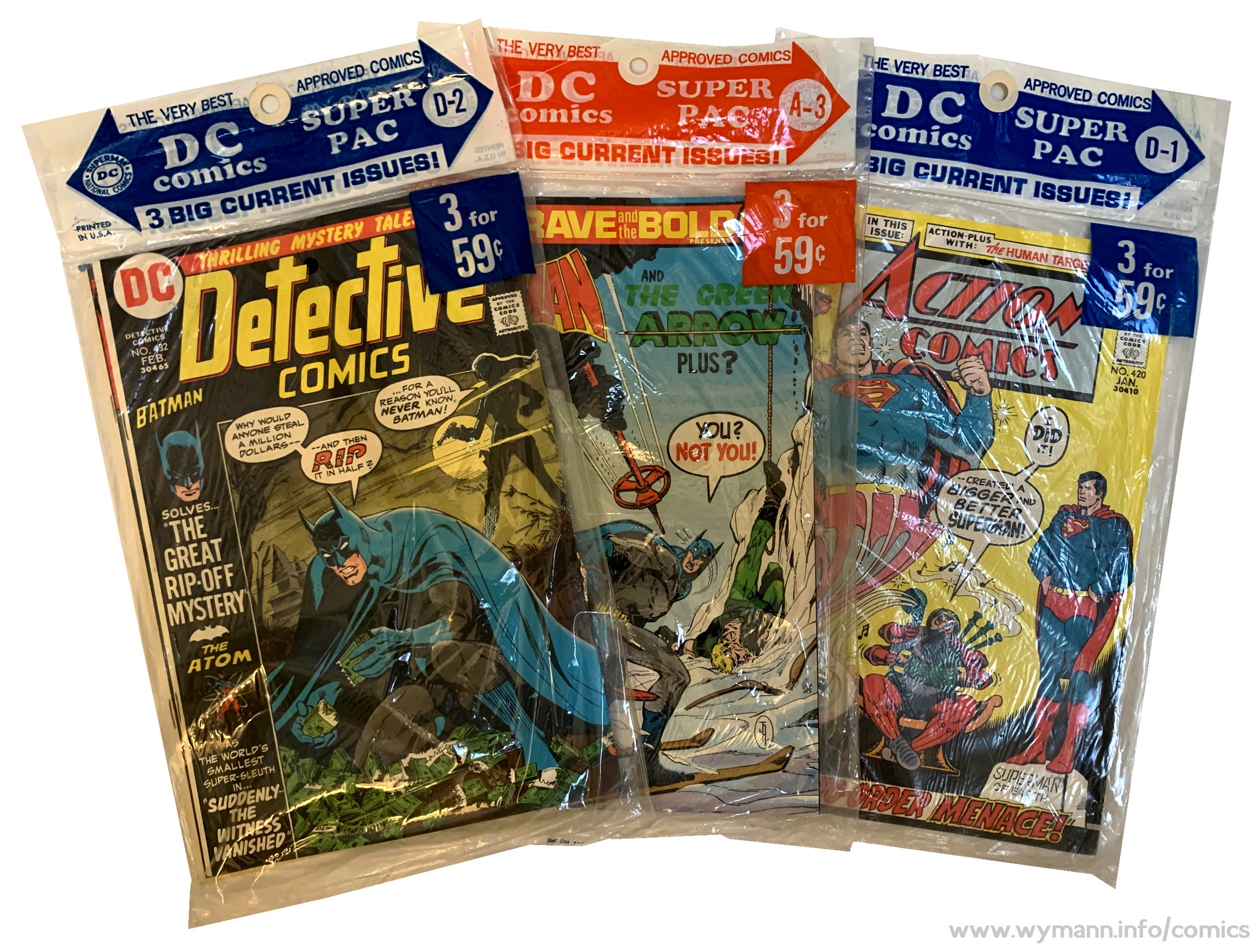
came up with the Comicpac concept in 1961). This resulted in a higher price
per unit on sale, which made the whole business
of stocking them much more worthwhile for the
seller. The simple packaging was also rather
nifty because it clearly showed the items were
new and untouched, while at the same time
blending in with most other goods sold at
supermarkets, which were also conveniently
packaged.
|
|
 |
|
| |
| Supermarkets were even supplied
with dedicated Comicpac racks, which enhanced
the product appeal even more since the bags containing
the comic books could be displayed on hooks in an orderly
and neat fashion. |
| |
|
|
It almost
became an entirely different class of
commodity, and offered parents
(and their kids) the
opportunity and convenience to pick up a
few comics at the same time they were
doing their general shopping.
"DC's focus
[for the Comicpac] was on both the
casual reader and the parents and
grandparents who were looking for
gifts." (Wells, 2012)
DC's
"comicpacks" were a success,
and other publishers quickly started to
copy the concept.
"The
DC [comic packs] program lasted well
over a decade, with pretty high
distribution numbers."
(Paul Levitz, in Evanier 2007)
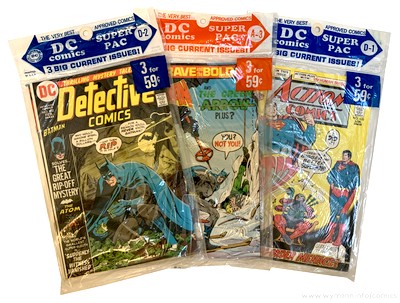
By the early
1970s, DC relaunched their comic packs,
calling them DC Super Pacs, and
they continued to sell well, containing
regular news stand editions.
|
|
|
| |
|
| |
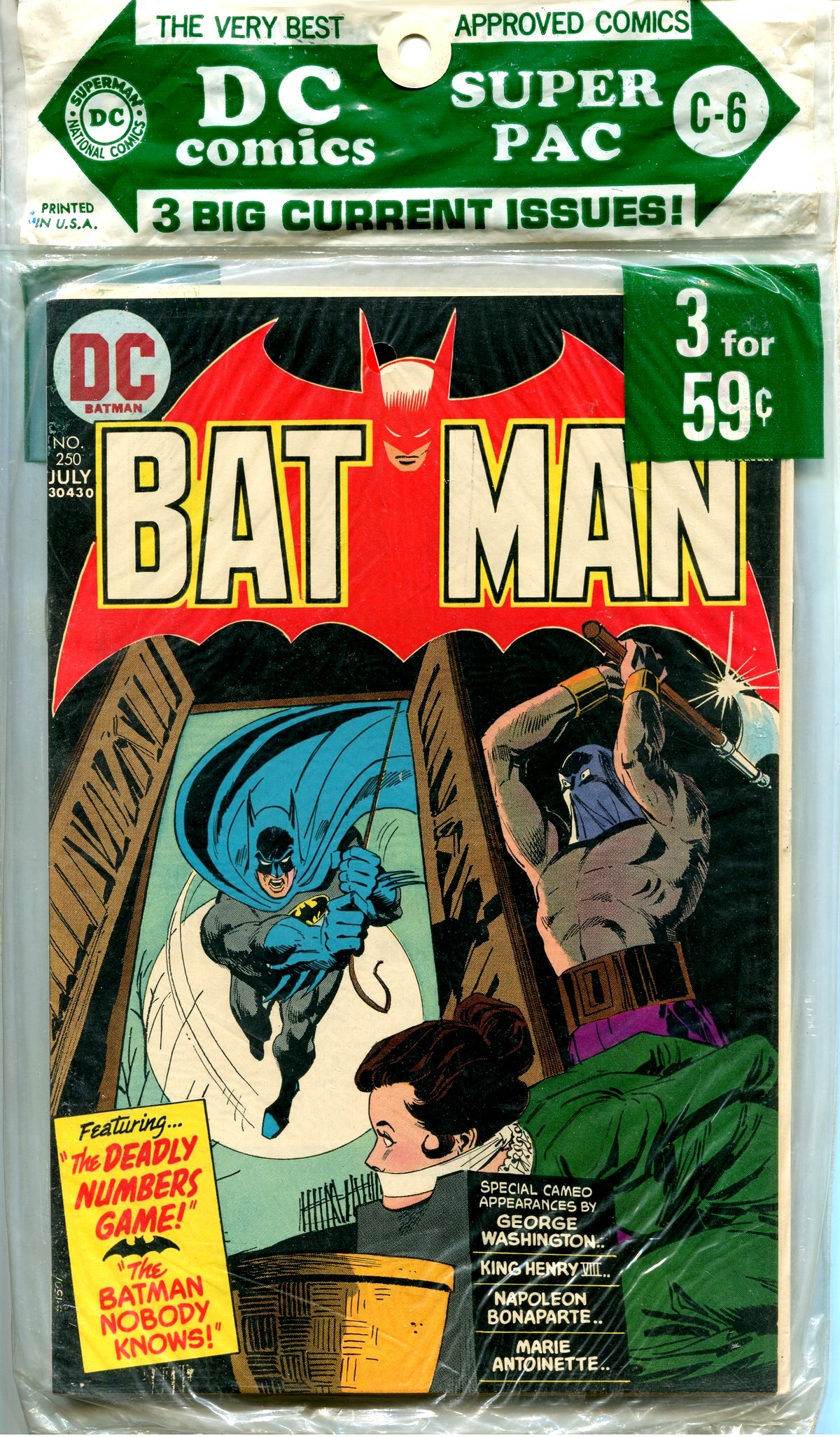
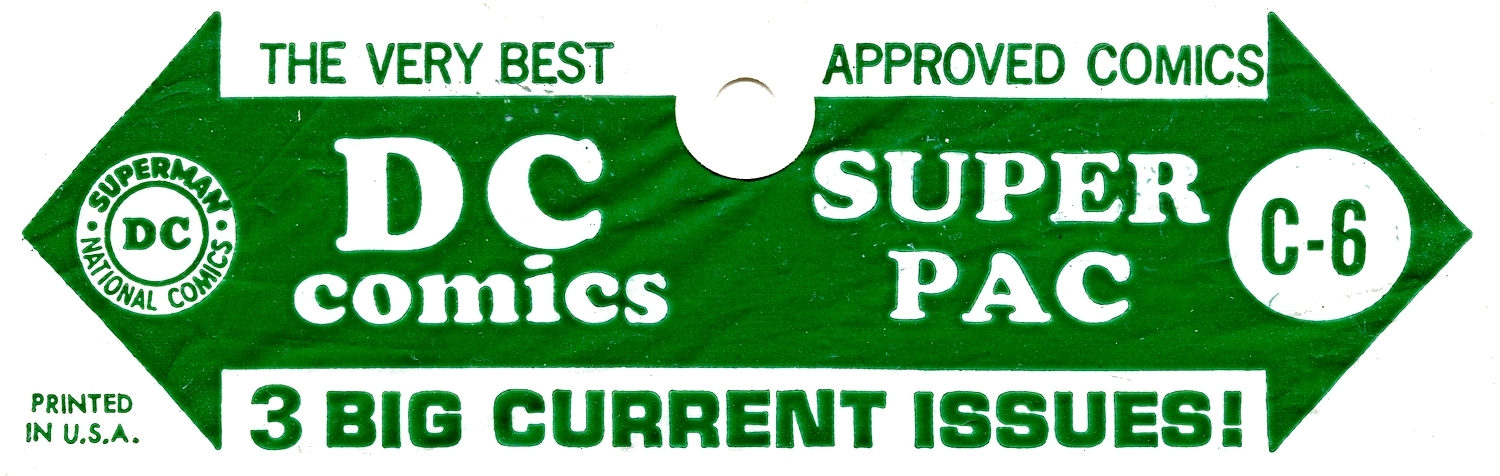
| DC handled
its multi-comic packs in a very structured and organised
manner, and a specific pack would always carry the same
titles and issues no matter where or when it was sold
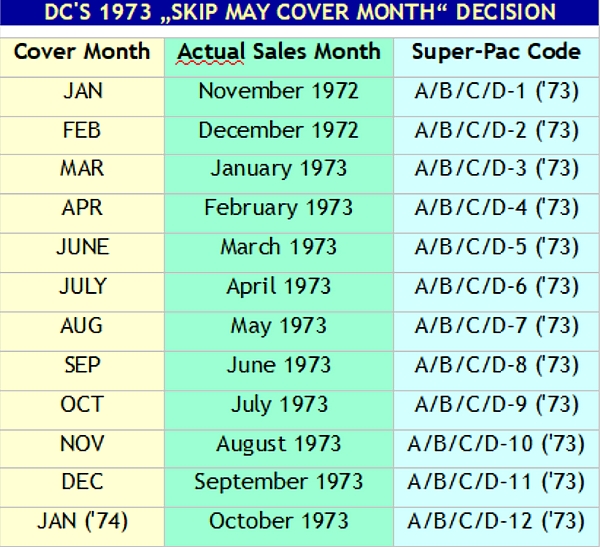
(rare packaging errors aside). The digits (1-12) referred
to the month and the letters (A through D) marked the
four different packs produced each month. "C-6"
therefore denotes the third June SUPER PAC, in this case
from 1973, and would normally contain comic books with a
June cover date. However, the 1973 C-6 SuperPac was
different - it contains Batman #250 and Shazam
#4, both with a cover date of July 1973, and World's
Finest #218 with a cover date of (July-)August 1973,
being a bi-monthly title. |
| |
Cover dates had always
been a tricky thing, being around two to three
months ahead of the actual month of publication
in order to provide a longer shelf life at the
newsagents, but things got even more confusing at
DC for the May 1973 production run.
"Cover dates on comics didn't
match magazine dating norms, and by 1973
Marvel's cover dates made them appear newer
than DC's, so DC decided to skip using May
1973 and go straight to June."
(Levitz, 2010)
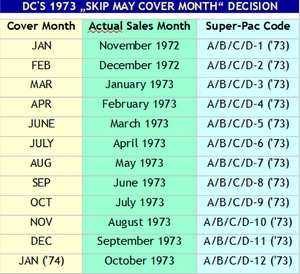
By dropping May
cover dates completely DC extended the gap
between cover month and actual sales month from
two to three months (as was the case with
Marvel's titles). This little tweaking procedure
of course meant that there were only 11 monthly
cover date slots for 1973 titles - the SuperPac
coding, however, continued without any change and
thus made it fall out of sync with the
cover months as of SuperPacs A/B/C/D-5..
|
|
 |
|
| |
| The SuperPac coding sequence was
in fact never adjusted, creating a continuous ripple
effect which meant that as of the May 1973 SuperPacs the
code referring to the month was off by one month - a
situation that would continue until April 1975, when DC,
after a four month hiatus, relaunched its SuperPac
comicpacks as "DC Super Stars". |
| |
| No
titles had permanent slots in the SUPER PACs, although
there was a high level of consistency with DC's flagship
characters (the SUPER PACs of 1973 contained complete runs
of Superman and Batman as well as the
Batman team-up title Brave and the Bold). But since sales points could vary a
lot with regard to their supplies and selection of SUPER
PACs, the availability of specific titles was never
guaranteed - but that was something many comic book readers in the 1970s had
to put up with anyway, whether their comic books came
packaged in a plastic bag or as single issues from a
display or spinner rack. But since DC's editorial at
large still very much embraced the "single issue,
done in one" storyline principle during the early
1970s (rather unlike their major competitor Marvel), it
often didn't even matter in which sequence you read your
copies of Batman or Superman. |
| |
|
| |
|
|
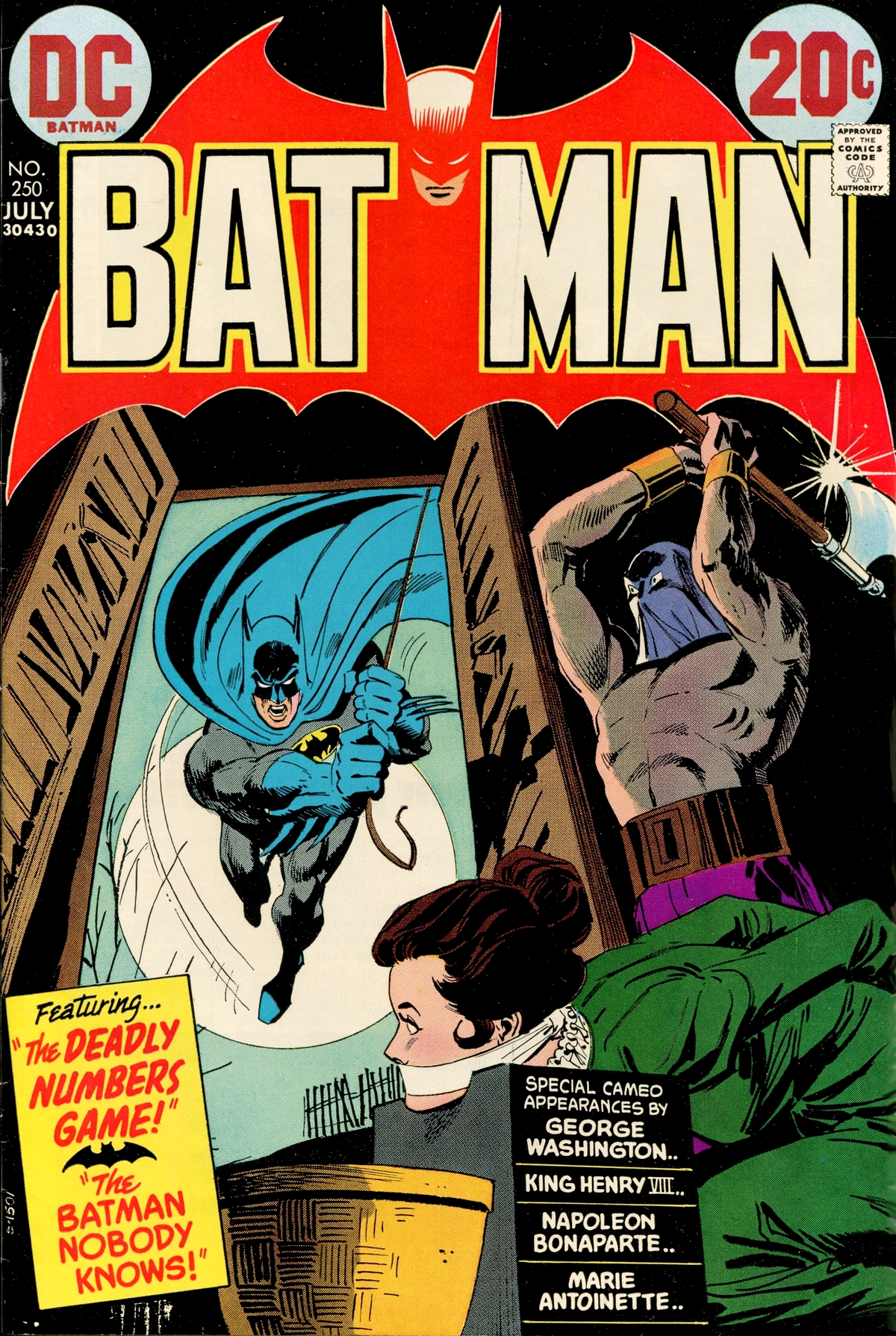
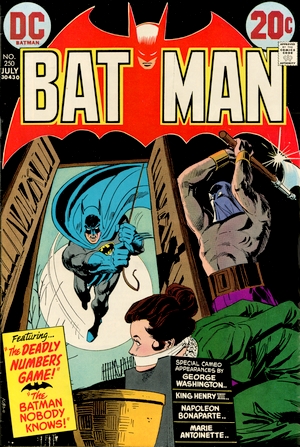
BATMAN
#250
July 1973
(monthly,
with the exception of March, May,
August and December)
On Sale:
17 April 1973
Editor
- Julius Schwartz
Cover - Dick Giordano (pencils &
inks)
Batman
"The
Deadly Numbers Game!" (11
pages)
Story -
Frank Robbins
Pencils - Irv Novick
Inks - Dick Giordano
Robin
"Return
Of The Flying Grayson!" (6
pages)
Story -
Elliott Maggin
Pencils - Irv Novick
Inks - Frank McLaughlin
Batman
"The
Batman Nobody Knows!" (6 pages)
Story -
Frank Robbins
Pencils & Inks - Dick Giordano
|
|
|
| |
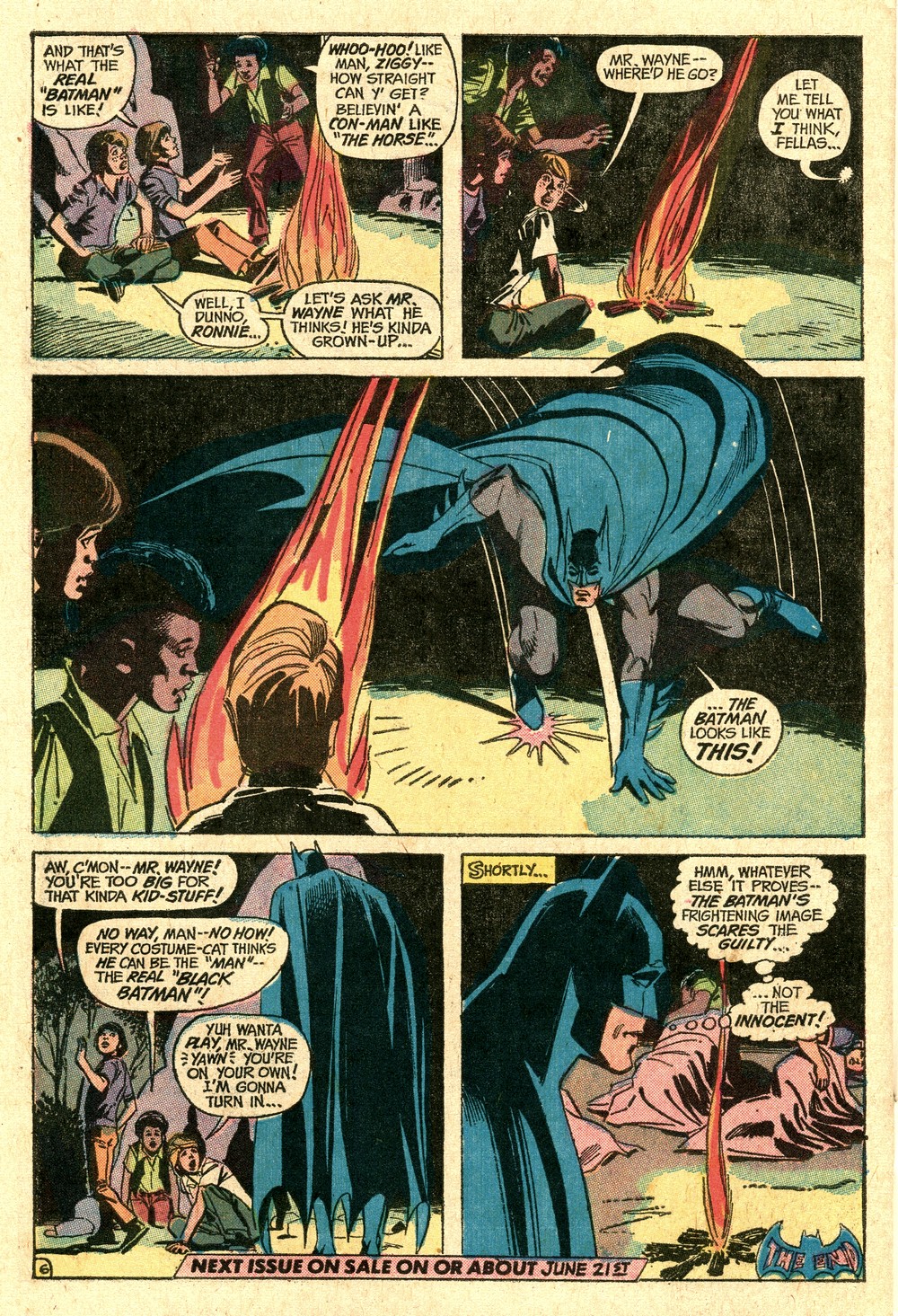
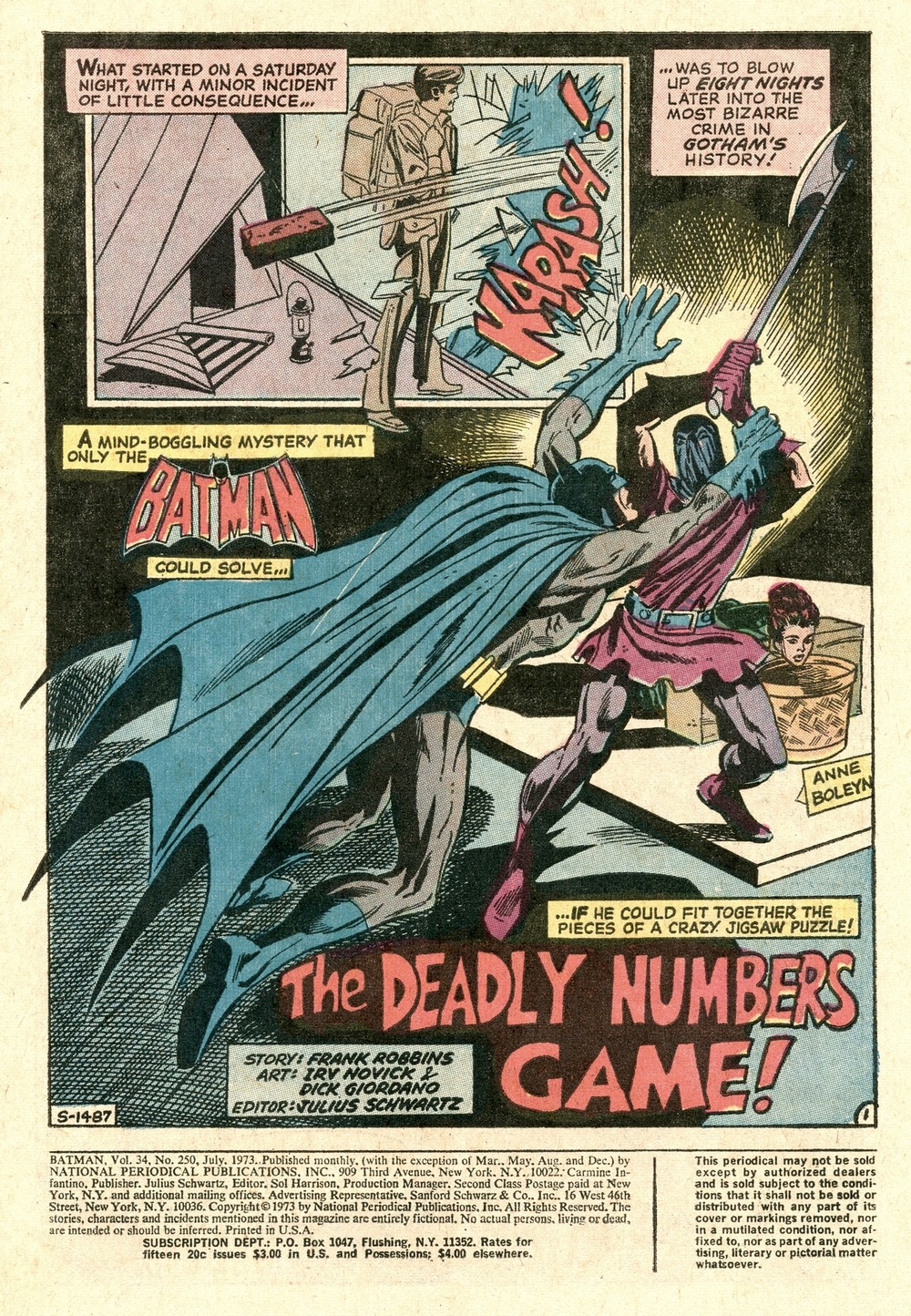
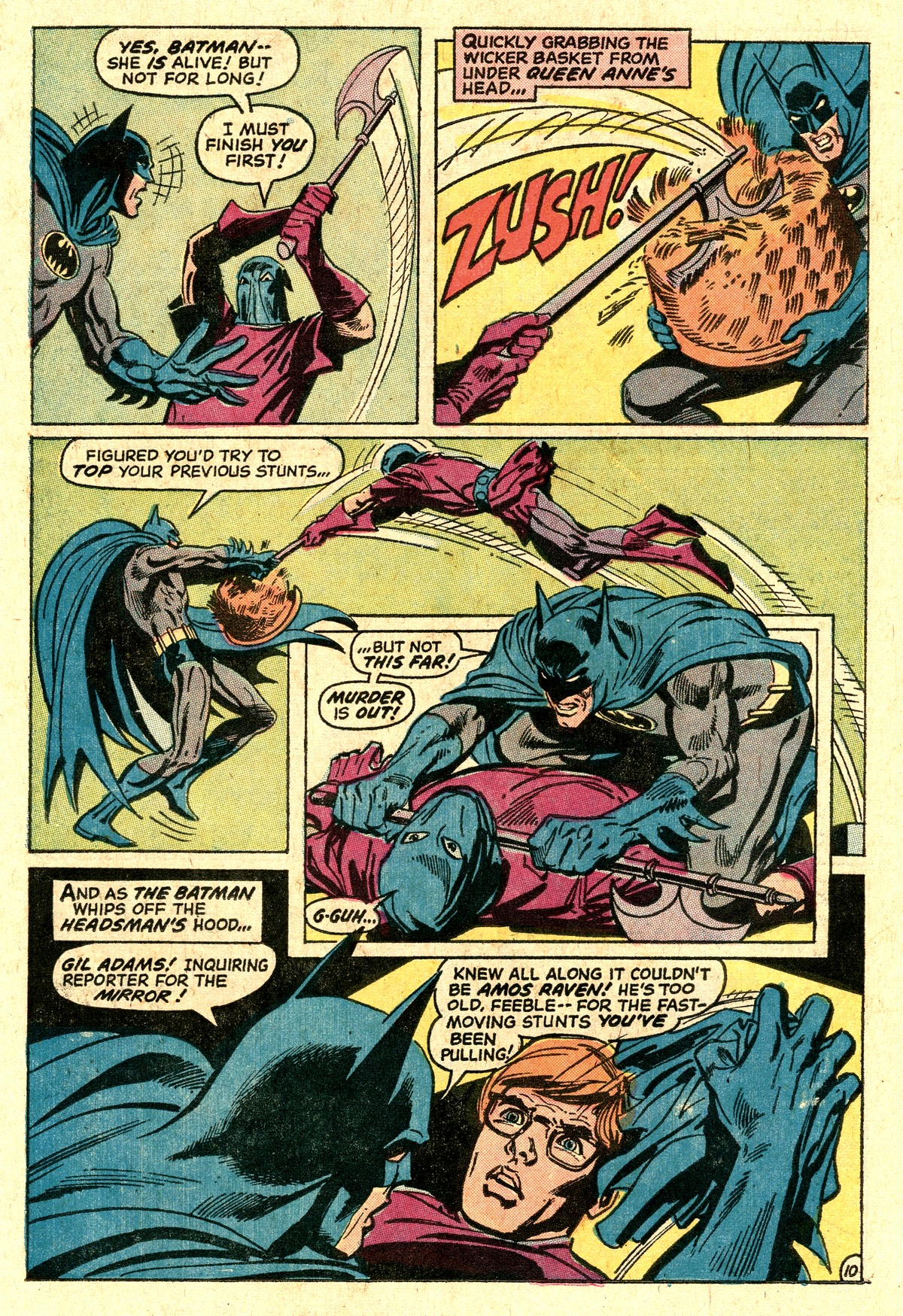
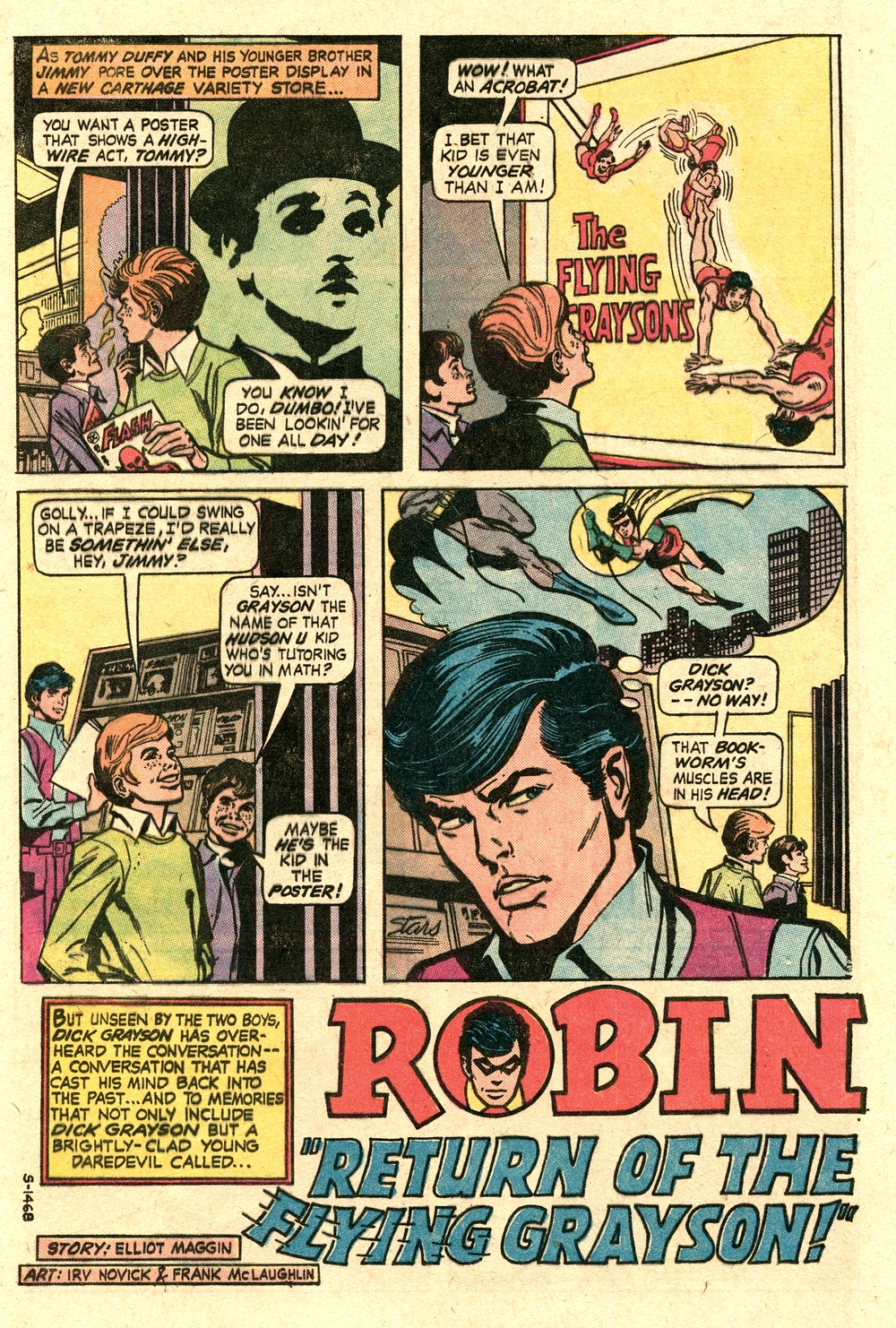
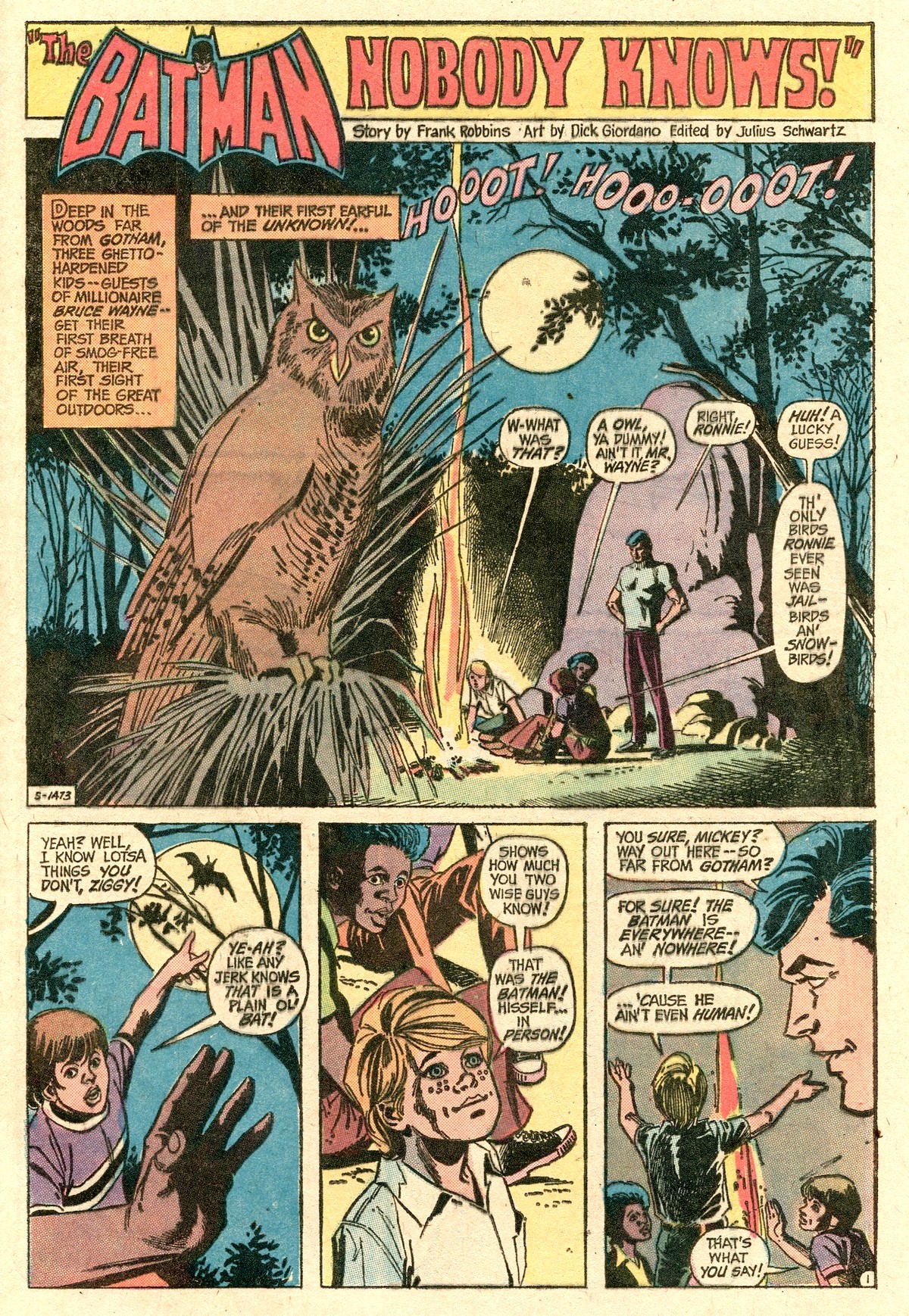
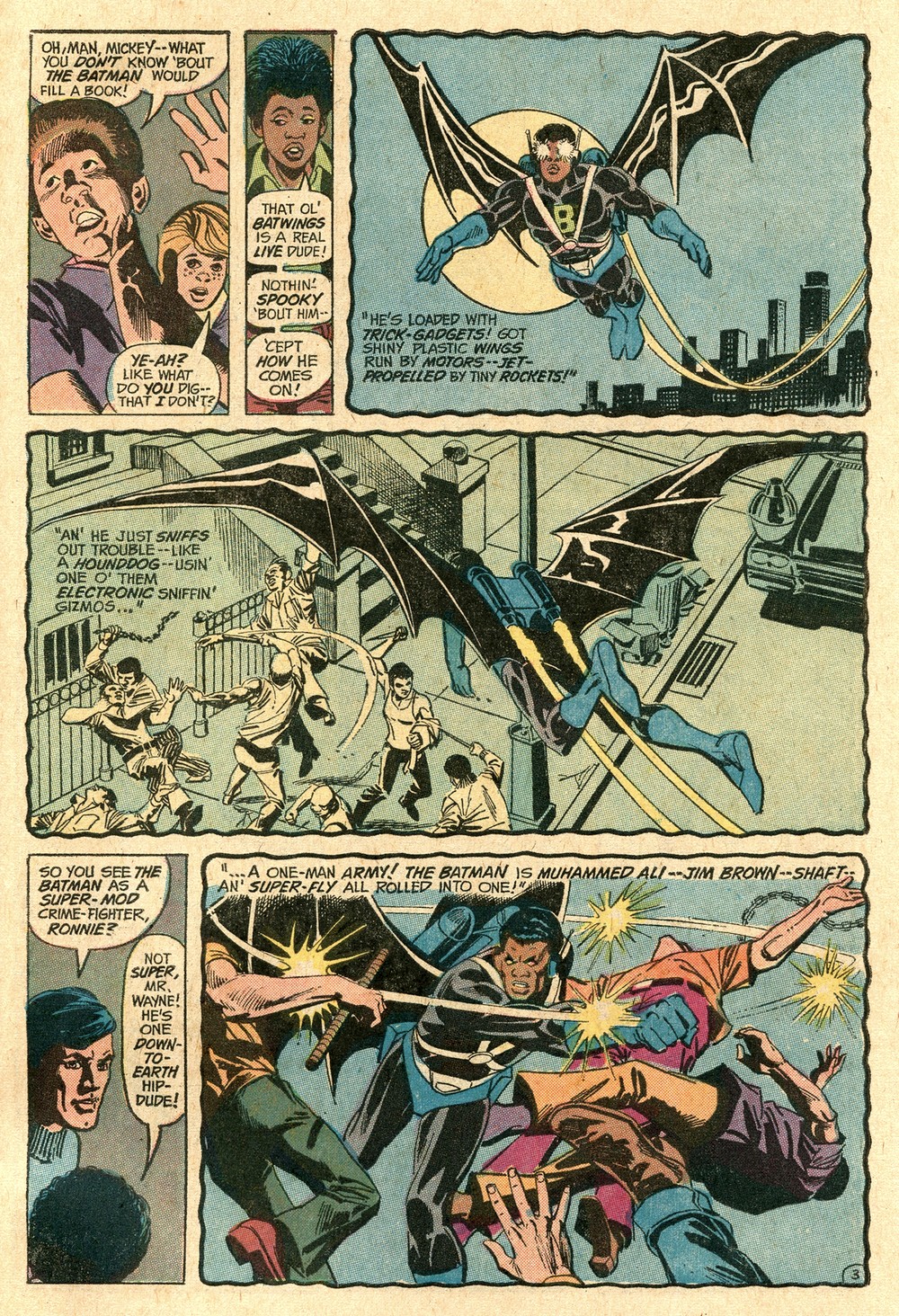
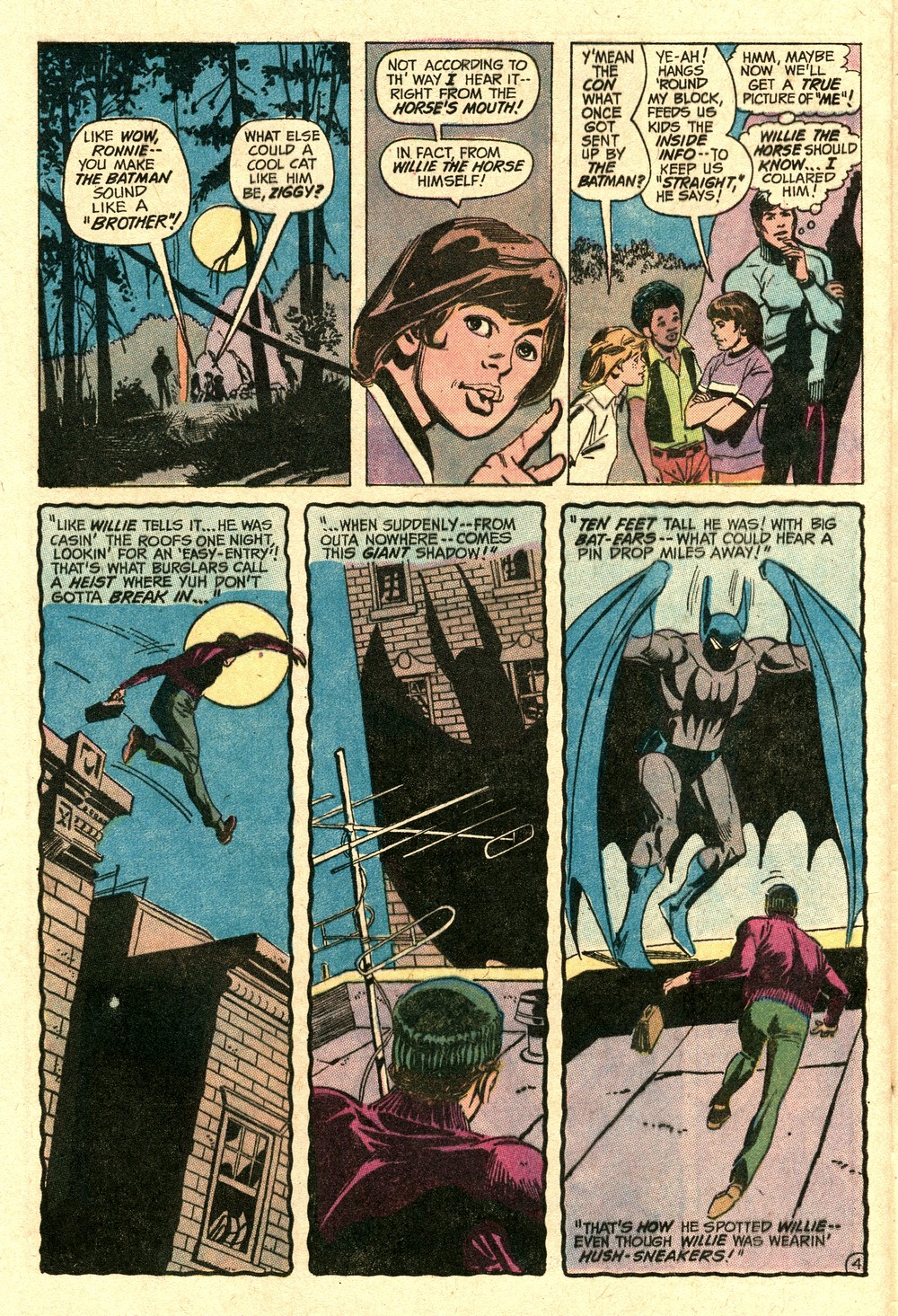
| PLOT SUMMARIES - (1) Batman looks into a
series of strange thefts based upon number-associated
objects that end up in the hands of wax dummies in a
museum. After a lengthy investigation, Batman learns that
the young man responsible for the thefts has been trying
to improve the ticket sales of the wax museum. (2) Seeing
a poster of his parents doing their circus act triggers a
flashback to their death for Robin. (3) Bruce Wayne takes
a group of children out on a camping trip and learns from
them three different images they have of the Batman.
After listening to all their stories, Bruce decides to
surprise them by appearing as Batman, but the kids
dismiss Bruce's attempt as a playful joke. |
| |
|
| |
By 1973, the Batman's return to his darker, more
gothic roots, had been firmly established for a few
years, and with this came a clear distinction that Dennis
O'Neill had initially brought to the Caped Crusader's two
main titles.
"When I took over the franchise I said
okay, this is the way we do it. Batman comics will be
about superhero stuff with a lot of action, and
Detective Comics is about the same character
functioning as a detective." (O'Neil, in
Handziuk 2019)
|
| In
general, this meant that costumed
villains would feature in Batman
whereas Detective Comics
focussed more on plain clothes
thugs and evil-doers. |
| |

Frank Robbins
(1917-1994)
|
|
Frank
Robbins, who was both an artist
and a writer, started working for
DC in 1968 and almost immediately
took over scripts for both Batman
and Detective Comics. Together
with Dennis O'Neil and Neal
Adams, Frank Robbins - along with
artist Irv Novick - was at the
centre of the Batman to his
darker roots by making him a more
brooding character.
"When Robbins
stopped trying to [copy Stan
Lee], he turned out to be a
pretty good writer. In fact,
he became my favorite Batman
writer of the period and I
was pretty fussy about Batman
writers." (Evanier,
2023)
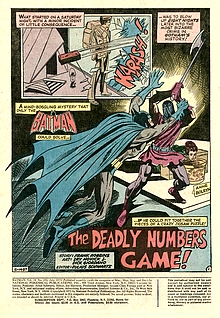
For "The Deadly Number
Games", he teamed up with
Irv Novick, whose pencils
(embellished by Dick Giordano in
this case) always feel fresh and
dynamic.
|
|
|
 |
|
|
| |
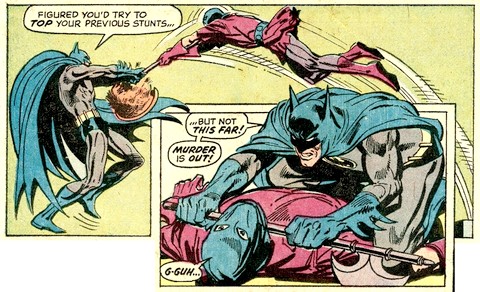
| Novick spent almost his entire
career in the comic book industry after graduating from
the National Academy of Design in New York City. In the
mid-1960s DC Comics offered him an unprecedented
freelance contract which guaranteed him the highest
artist's rate plus a steady amount of work. In essence,
this meant that as soon as Novick had finished a job he
was to immediately receive another assignment - resulting
in a substantial body of artwork for DC over the years. |
| |
 |
|
| When Carmine Infantino
joined DC's management in 1968 he made
sure that Novick became a full-time
superhero penciller for most of DC's top
titles of the genre, including numerous
contributions to Batman and Detective
Comics which shaped the visuals of
Batman during the late 1960s and all
throughout the 1970s. |
|
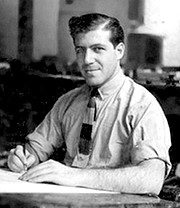
Irv Novick
(1916-2004)
|
Novick left
a lasting contribution to the hallmark appearance
of the Darknight Detective which remains iconic
to this day.
|
|
| |
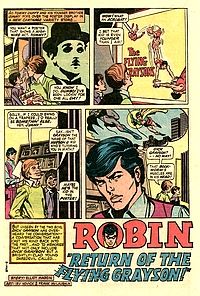
| During the
early 1970s, Batman would either feature
a 20+ pages single or two shorter stories
featuring the Caped Crusader, before the second
story slot began to host Robin as of Batman
#227 (December 1970). This arrangement would last
until Batman switched to DC's "100
Pages Super Spectacular" format as of issue
#254 (January/February 1974), which then featured
multiple reprints including Robin "the Boy
Wonder"; that format also excluded Batman
titles from appearing in any Super-Pac from
January 1974 to March 1975."The Return of
the Flying Graysons!", penned by Elliot Maggin and
illustrated by Irv Novick and Frank McLaughlin, is
essentially a trigger-story that provides a
flashback to the origin of Robin by means of the
somewhat cliché formula of the superhero and his
alter ego never being seen in the same place. In
this case it's two kids (one of which is seen
reading an issue of The Flash) wondering
who might be better - the kid from the Flying
Graysons or Robin - but they ultimately conclude
that they can't know for sure since nobody has
ever seen them together in action. Robin would
stop being the backup feature in Batman
#344 (February 1982), which officially reunited
Batman and Robin as a permanent team. As a
consequence, Catwoman became the back-up feature
as of Batman #345 (March 1982).
|
|
|
|
| |
| But there was more in store for
readers of this issue. Surprisingly, DC made no mention
at all of the fact that this was the 250th
issue of Batman, but the short story "The Batman Nobody Knows!"
could be seen as a worthy tribute even without any ado at
all from the publisher or editor Julius Schwartz.
However, Frank Robbins and Dick Giordano used the space
of a mere six pages to come up with a Batman extravaganza
that is still considered a classic today - and rightly
so. |
| |

|
| |
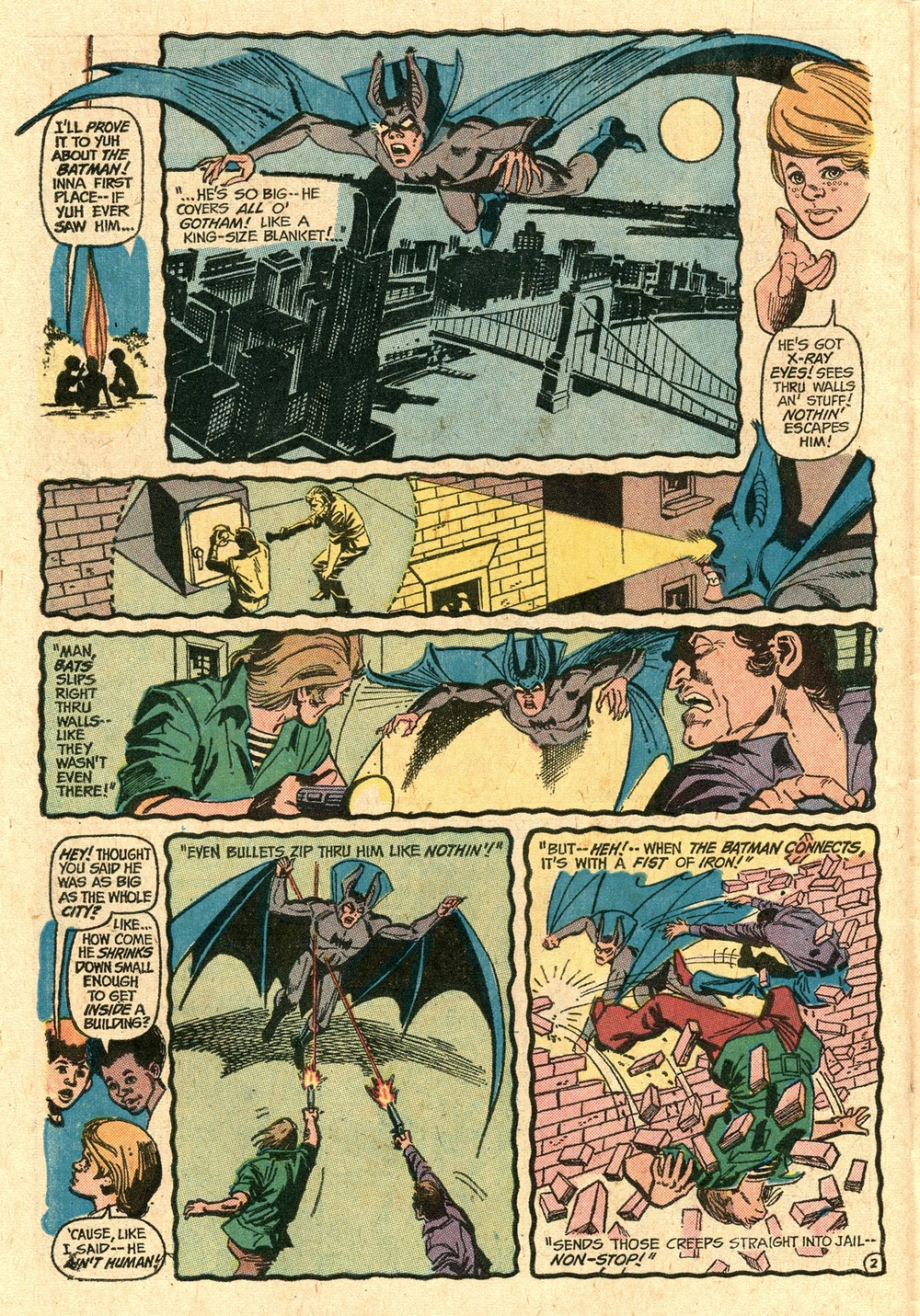
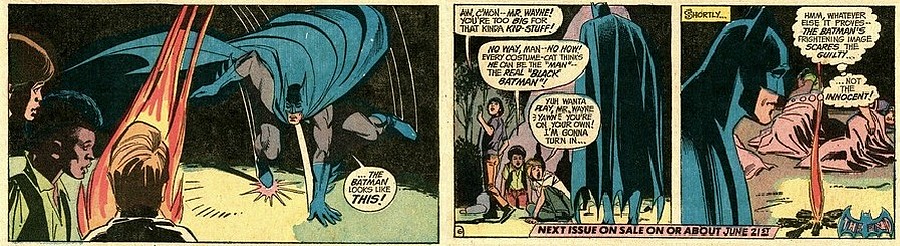
| The setting is simple - Bruce
Wayne takes a group of "ghetto-hardened" kids
on a camping trip on the outskirts of Gotham to provide
them with "their first sight of the great
outdoors" - but as everyone is sitting around a
campfire, the youths see a bat in the night sky and then
start to share wildly different interpretations of what
the Batman looks like and who he actually is. |
| |
|
| |
| However, the children simply take
this to an attempt at a playful joke, and let Bruce Wayne
know inj no uncertain terms that they could not ever
believe their hero to be just a normal man under the
cowl. |
| |
 |
| |
| For Frank Robbins,
it's not just a playful "what
if" scenario - he rounds it off
brilliantly (and in his very own style of
writing the character) with a pensive
Bruce Wayne who reflects on one of the
pillars of the Batman's reason for being:
his frightening appearance only scares
the guilty, not the innocent. And for
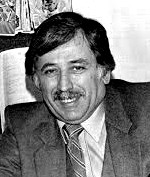
Dick Giordano it was an opportunity to
show both his mastery at bringing the
Darknight Detective to life and his
creativity in depicting the three
alternative versions - of which many
visual details would ultimately find
their way into actual characters (such as
Batwing and Blackwing) decades down the
road.
"The
Batman Nobody Knows!" is
clearly reflected in the 1998 Batman
The Animated Series episode
"Legends of the Dark Knight",
although Bruce Timm (who wrote that
episode's story together with Robert
Goodman) seemingly had no knowledge of it
when he submitted the idea and, according
to the DC Animated Universe Wiki, was
subsequently nagged endlessly about it by
the rest of the crew.
|
|
Dick Giordano
(1932-2010)
|
|
|
| |
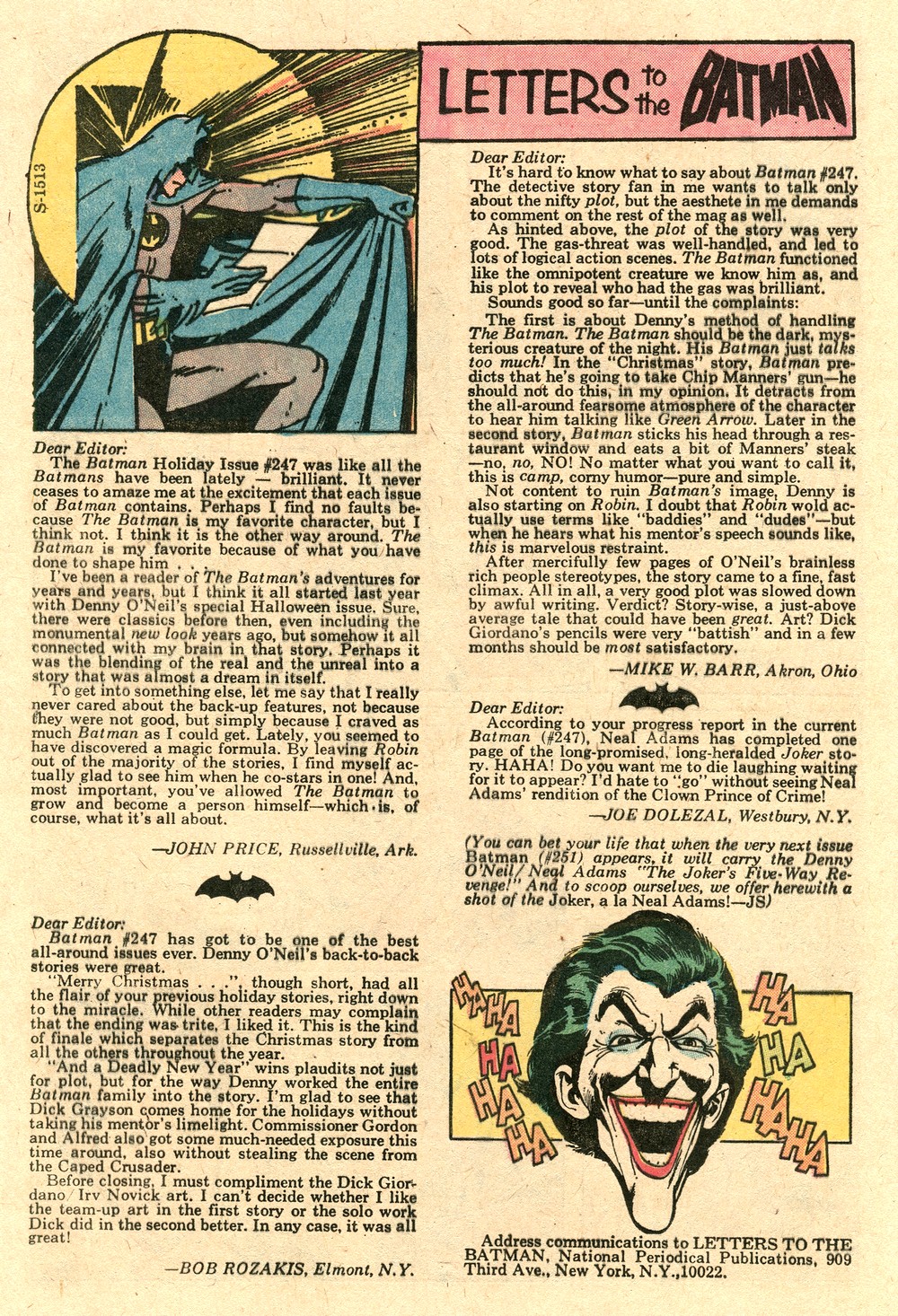
| But these weren't the only
pointers to the future to be found in hindsight in this,
the 250th issue of Batman,
since it also published letters sent in by Bob Rozakis
and Mike W. Barr. |
| |
|
|
Rozakis
became DC's "Answer Man"
(replying to trivia questions from
readers in the Daily Planet
promotional page throughout the
late-1970s) before running DC's
production department between 1981 and
1998. Barr started working for DC with
a debut story (for the back-up feature
Elongated Man) featured in Detective
Comics #444 (December 1974). By 1980
he was writing regularly for both DC and
Marvel but is especially known for the
many Batman-related comic titles he
wrote, including Batman & the
Outsiders (which he co-created), Batman:
Son of the Demon, The Outsiders, and
the storyline Batman: Year Two.
|
|
|
| |
|
| |
|
|
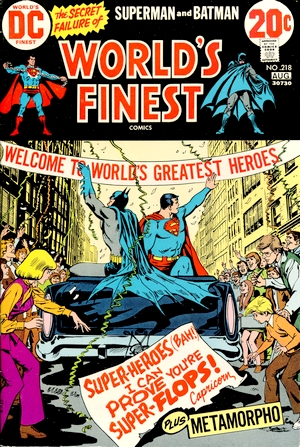
WORLD'S
FINEST #218
July/August
1973
(bi-monthly)
On Sale: 17 April 1973
Editor - Murray
Boltinoff, E. Nelson Bridwell
Cover - Nick Cardy (pencils &
inks)
Superman
& Batman
"Who
is Capricorn?!" (13
pages)
Story
- Bob Haney
Pencils - Dick Dillin
Inks - Dave Cockrum
Lettering - Ben Oda
Metamorpho
"The
Haunted Millionaire" (8.5
pages)
Story
- Bob Haney
Pencils & Inks - John Calnan
Lettering - Ben Oda
|
|
|
|
| |
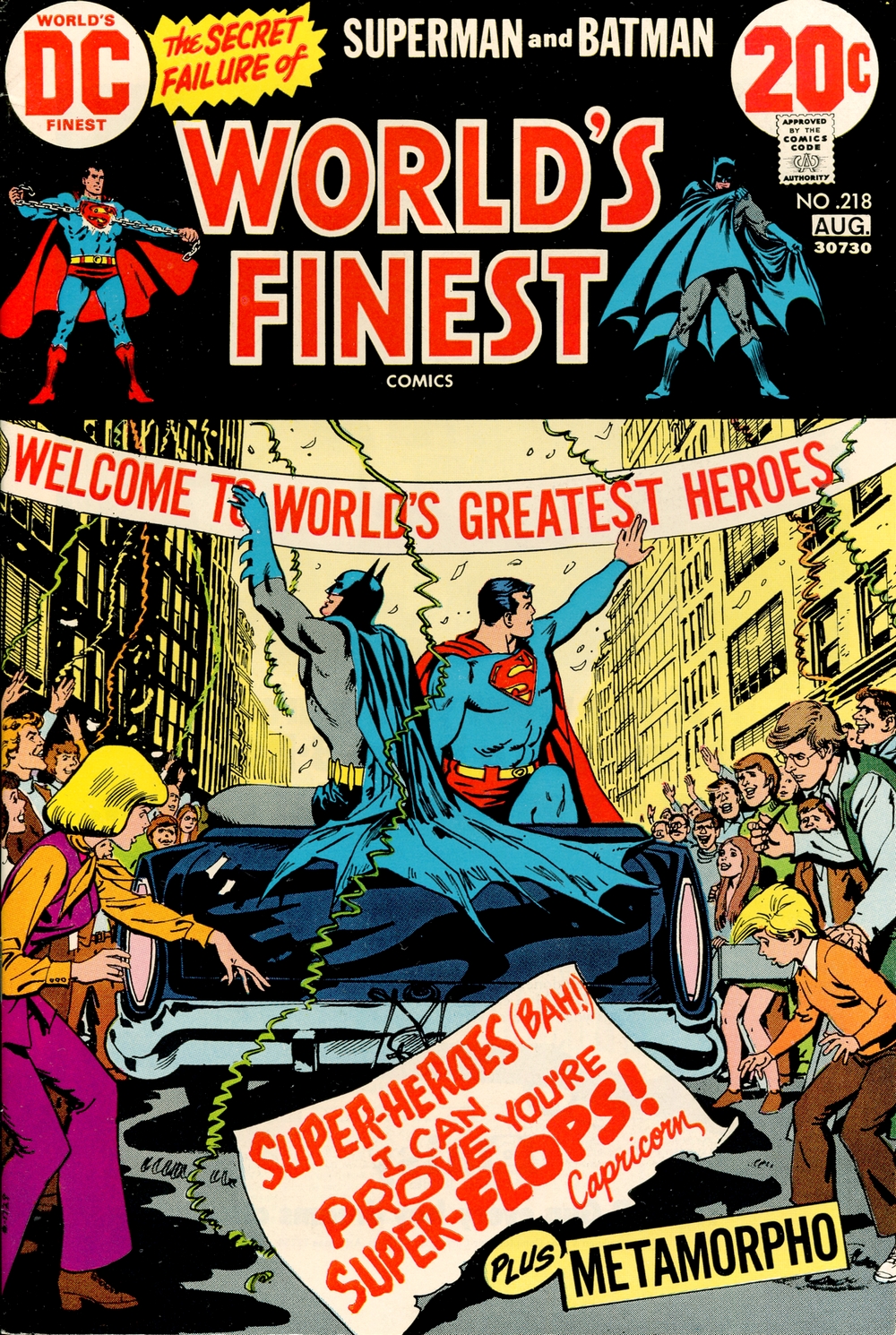
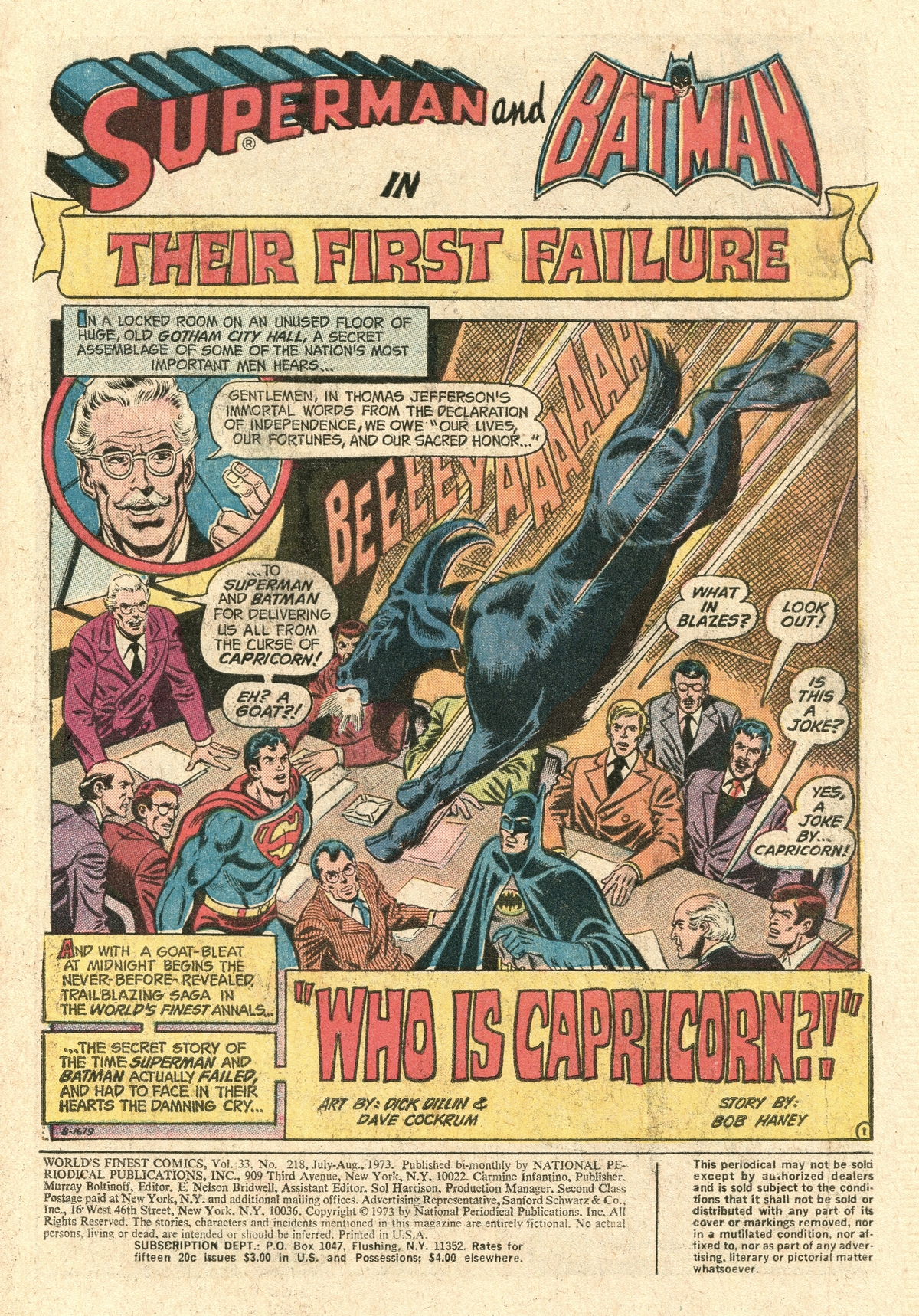
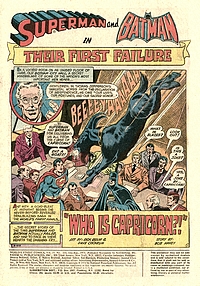
| PLOT
SUMMARY - (1) Superman and
Batman are baffled by the little-known criminal called
Capricorn who is blackmailing Gotham's notable citizens
thanks to his mind reading ability, and their inability
to capture the criminal is only masked by the death of
Capricorn from an incurable disease. (2) Metamorpho faces
a ghostly appearance that is revealed to be an evil
humanoid. |
| |
|
| |
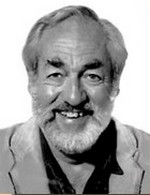
Bob Haney
(1926-2004)
|
|
Robert G. "Bob"
Haney started working in the comic book
industry in 1948 and joined DC in 1954,
where over the next 30 years he scripted
just about every sort of comic book DC
published (Evanier, 2004). Sometimes
called "Zany" Haney, he was in
actual fact one of the few people at DC
in the mid-1960s who
"understood
that Marvel was successfully
reinventing the super-hero comic for
the current generation"
(Evanier, 2004)
Haney almost
desperately tried to bring some of that
"Marvel flavour" to the stories
he was writing for DC, and that included
his very own (and sometimes completely
off-beat) version of Stan Lee's
hyperbole. But most importantly he
understood that readers expected the
writers of the comic books they were
buying to connect with them.
|
Whilst he could not make DC
look like an exclusive secret club the way Marvel
portrayed itself, addressing readers as
"faithful ones" was definitely a step
in the right direction.
|
|
 |
|
| |
| He was also keenly aware of the
fact that the content itself had to change, and as a
result his stories often cared very little about the
conventionalities of the DC Universe and would sometimes
even write stories which outright contradicted them. |
| |
|
|
In doing so, Haney could whip
up tightly plotted scripts (e.g. his classic Brave
and the Bold stories illustrated by Neal
Adams) just as easily as throwing out extremely
loose plots with lots of holes and very little
overall sense.
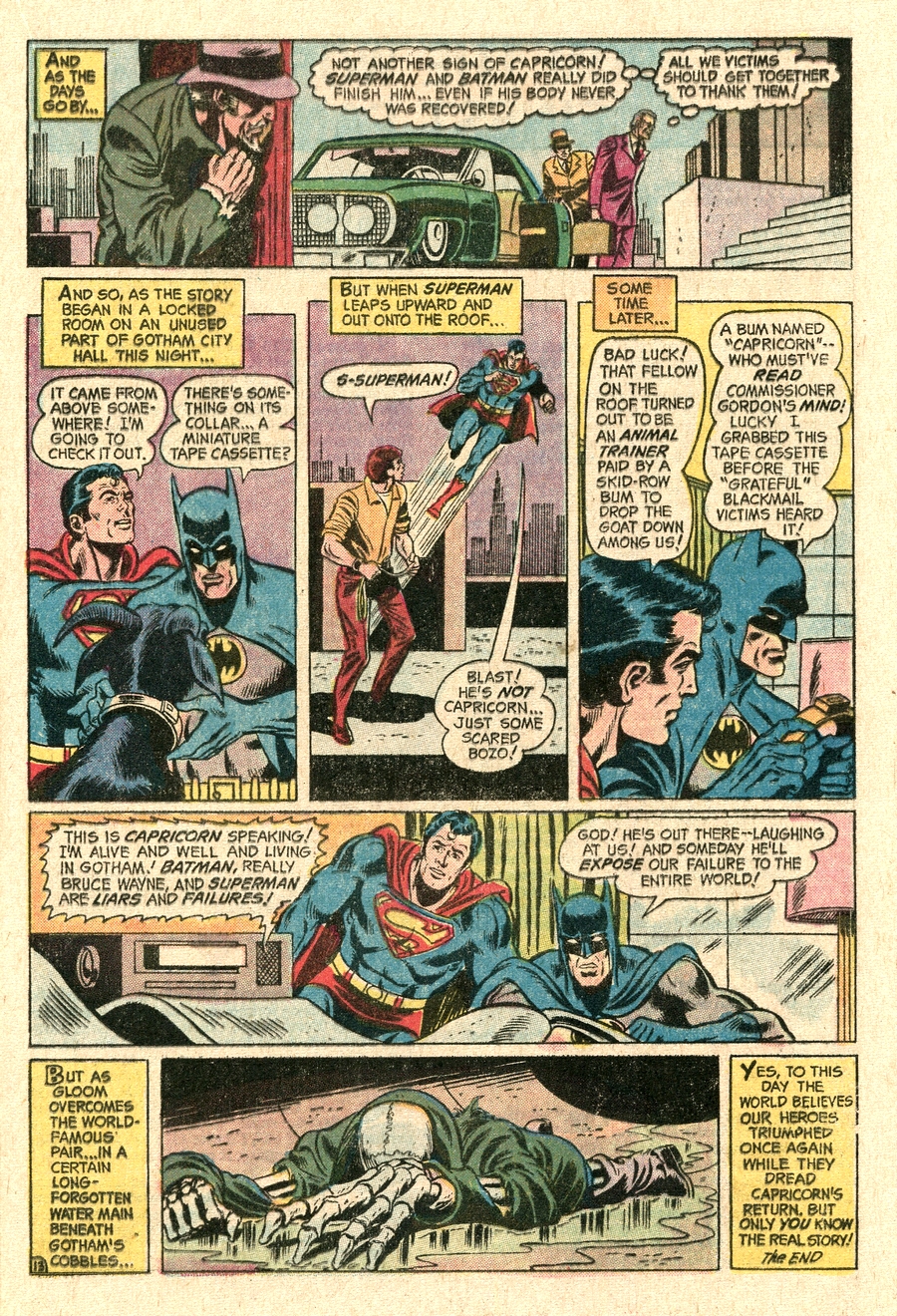
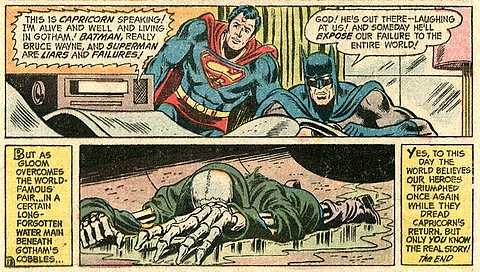
The Capricorn
story presented in World's Finest #218
sits somewhere between those two poles, but is
certainly interesting and anything but standard
DC fare for the simple fact that both Superman
and Batman are portrayed as being unable to bring
down the villain and even as misleading the media
and the public by claiming they have - and in the
end, the impending threat of the mind-reading
Capricorn exposing the heroes (including Batman's
secret identity) is dispatched only by the
villain's death.
|
|
| |
| And whilst
Superman and Batman dread Capricorn's
return, Haney pulls the readers aside and
points out to them that "only
you know the real story!" -
making them feel they are part of a big
secret. It was very close indeed to
Marvel's approach to its readers. Richard
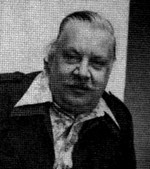
Allen "Dick" Dillin was in
charge of pencils, inked by Henry Scarpelli (who is
better known for his work for Archie
Comics), and the resulting artwork has a
conventional layout and a very clean look
to it - even in the dynamic renderings of
the action sequences. Clearly, DC's
antiquated house style was starting to
give way to what was still a very
conservative style but one that at least
could be seen as being in step with its
time.
The back-up feature of
World's Finest ran on something of a
revolving door schedule at the time, and
Metamorpho only appeared as such
in four issues (#218–220 and #229).
|
|
Dick Dillin
(1928-1980)
|
|
|
| |
 |
|
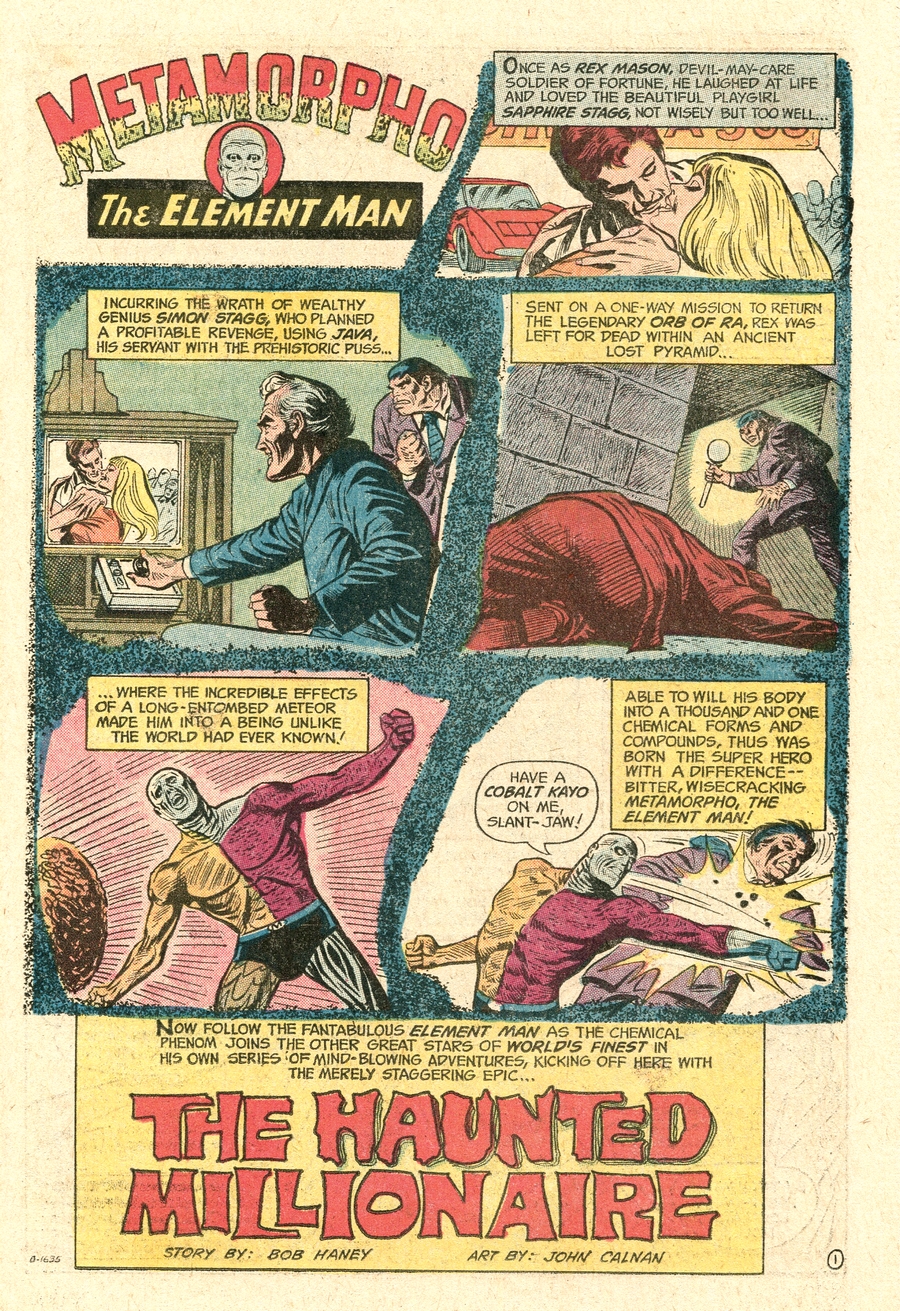
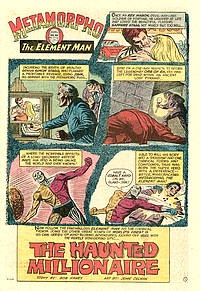
Regular readers of World's
Finest could therefore not be expected to
know anything about Meatmorpho - but in true Bob
Haney (who also penned this story) fashion we get
a splash-page that explains the character's
backstory in five easy panels. The short story
itself doesn't throw up too much comic book
magic, but Haney's approach to it all is
top-notch - possibly not too surprising since he
and artist Ramona Fradon created Metamorpho
(first featured in Brave and the Bold
#57, January 1965). Originally an adventurer, he
turned into a meta-human made of several
different elemental substances after being cursed
by an ancient artifact.
|
|
| |
|
| |
|
|
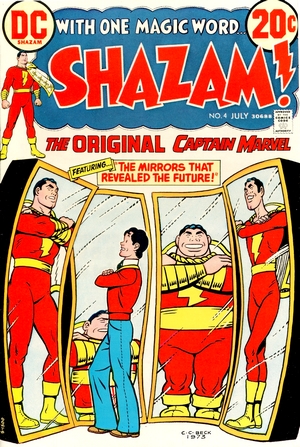
SHAZAM #4
July
1973
(monthly)
On Sale: 17 April 1973
Editor -
Julius Schwartz
Cover - C.C. Beck(pencils &
inks)
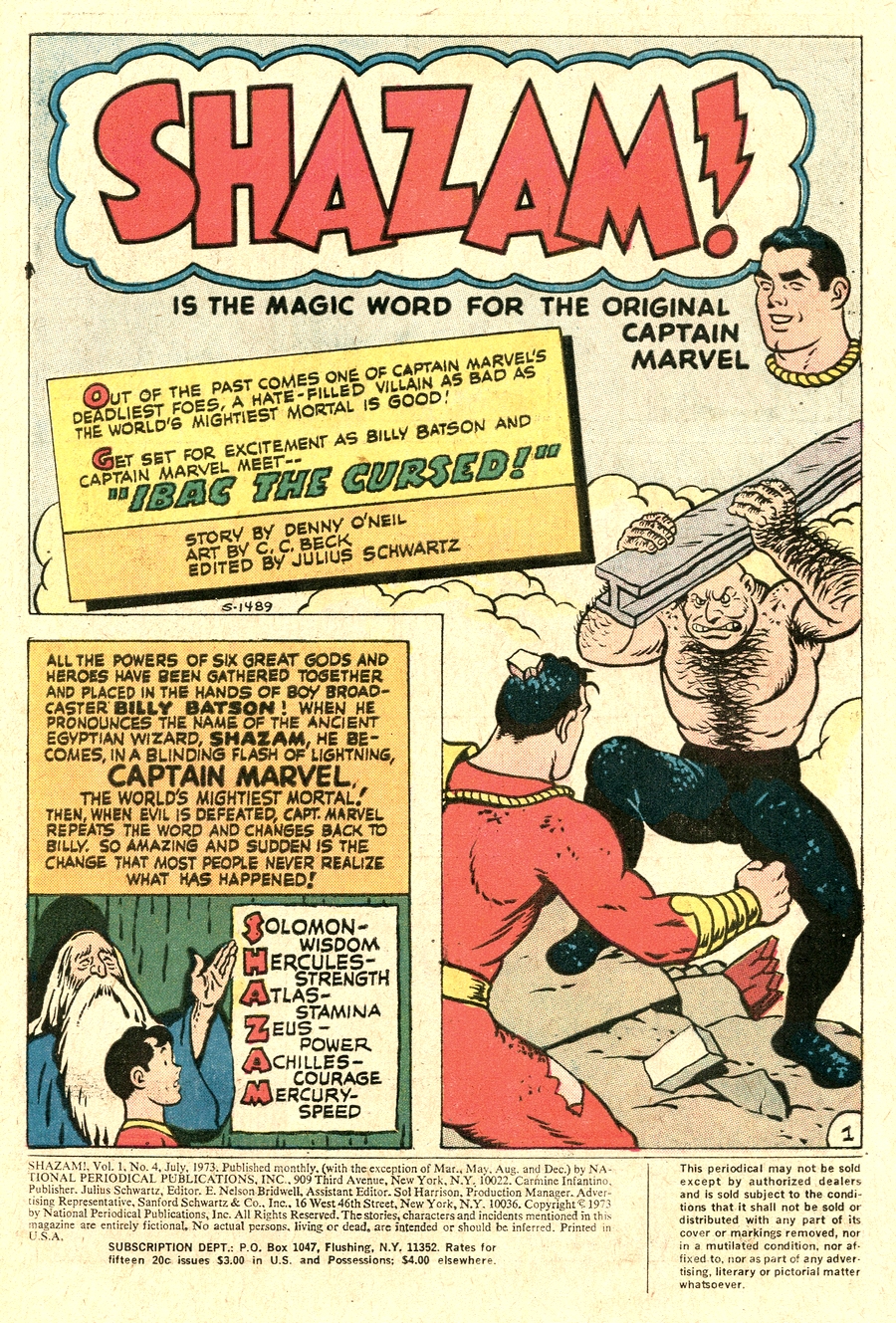
SHAZAM:
"Ibac The Cursed!"
(8 pages)
Story - Denny O'Neil
Pencils, Inks, Lettering - C.C.
Beck
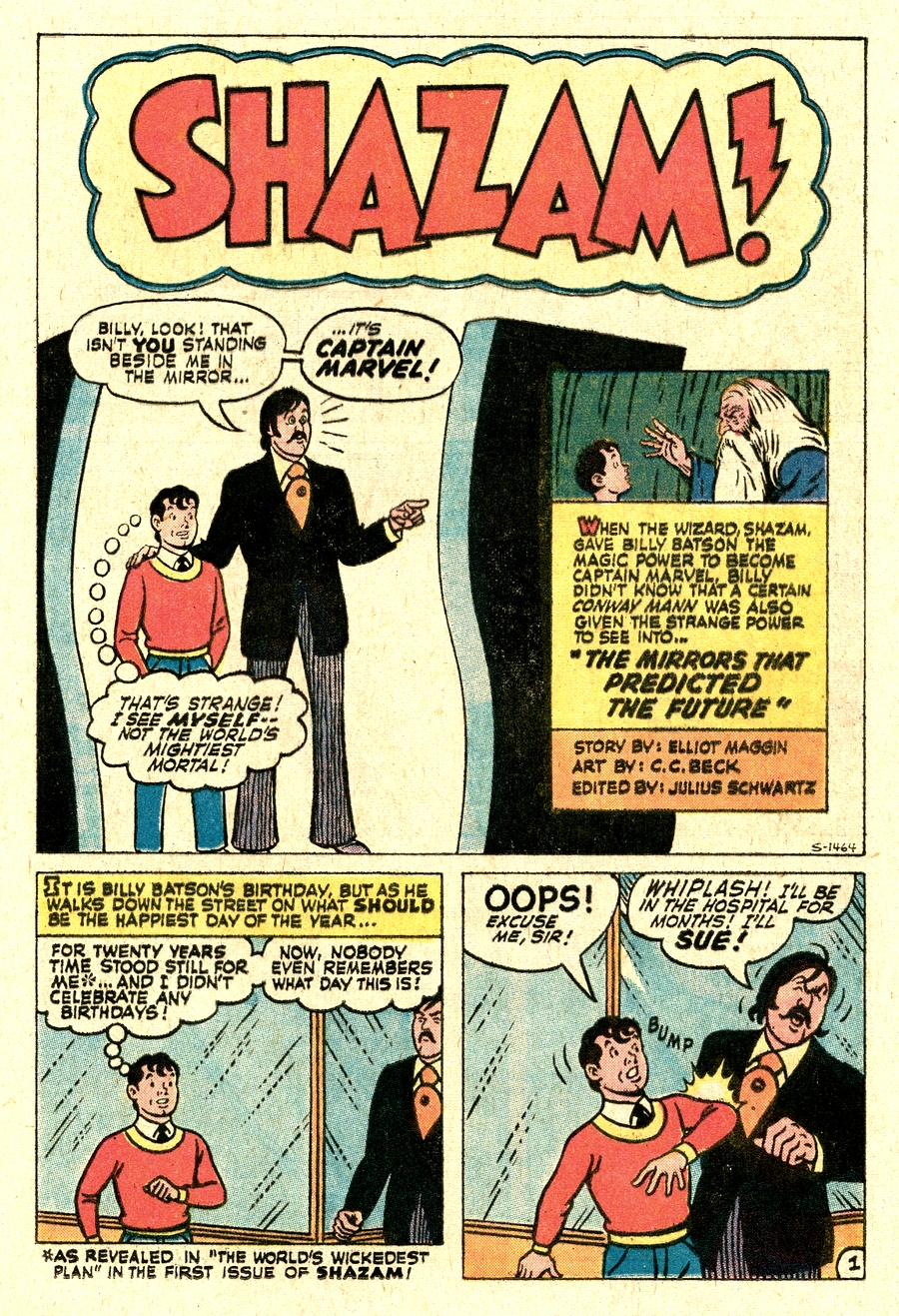
SHAZAM:
"The Mirrors That Predicted
The Future" (8 pages)
Story - Elliot Maggin
Pencils, Inks, Lettering - C.C.
Beck
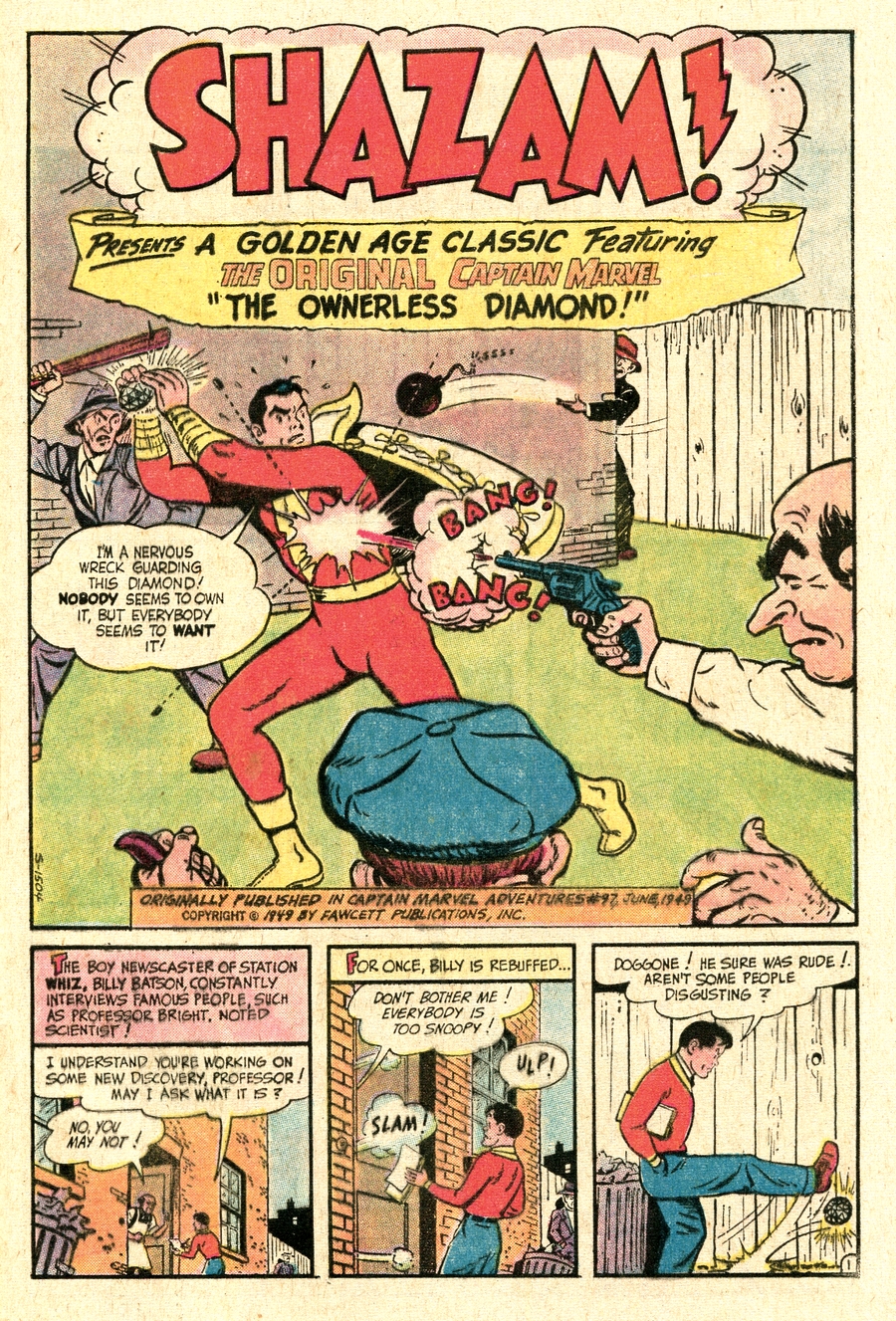
SHAZAM:
"The
Ownerless Diamond!"
(6 pages)
Story - Otto Binder
Pencils - C.C. Beck
Inks - Pete Costanza
(reprinted from Captain
Marvel Adventures #97, June
1949)
|
|
|
|
| |
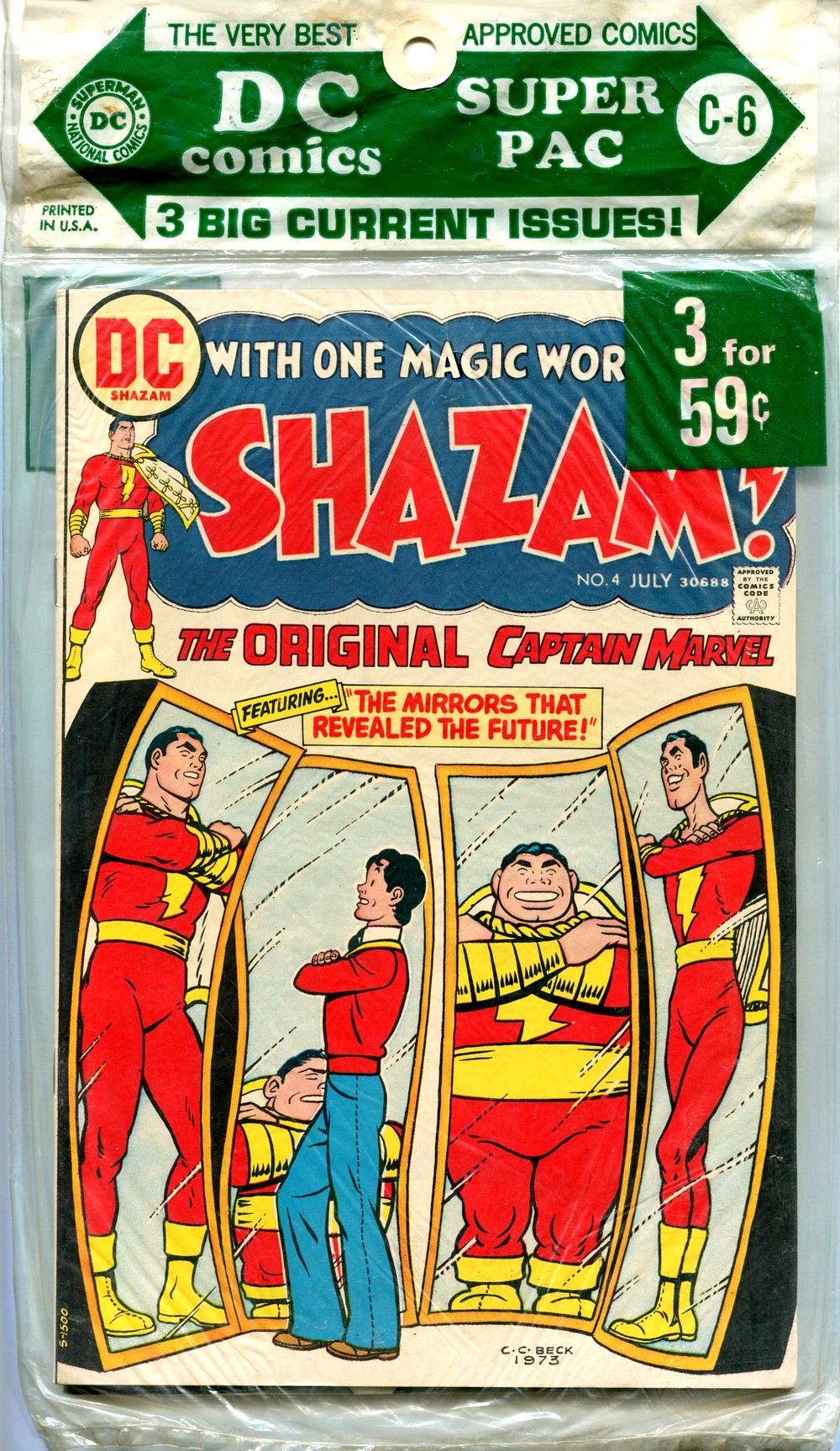
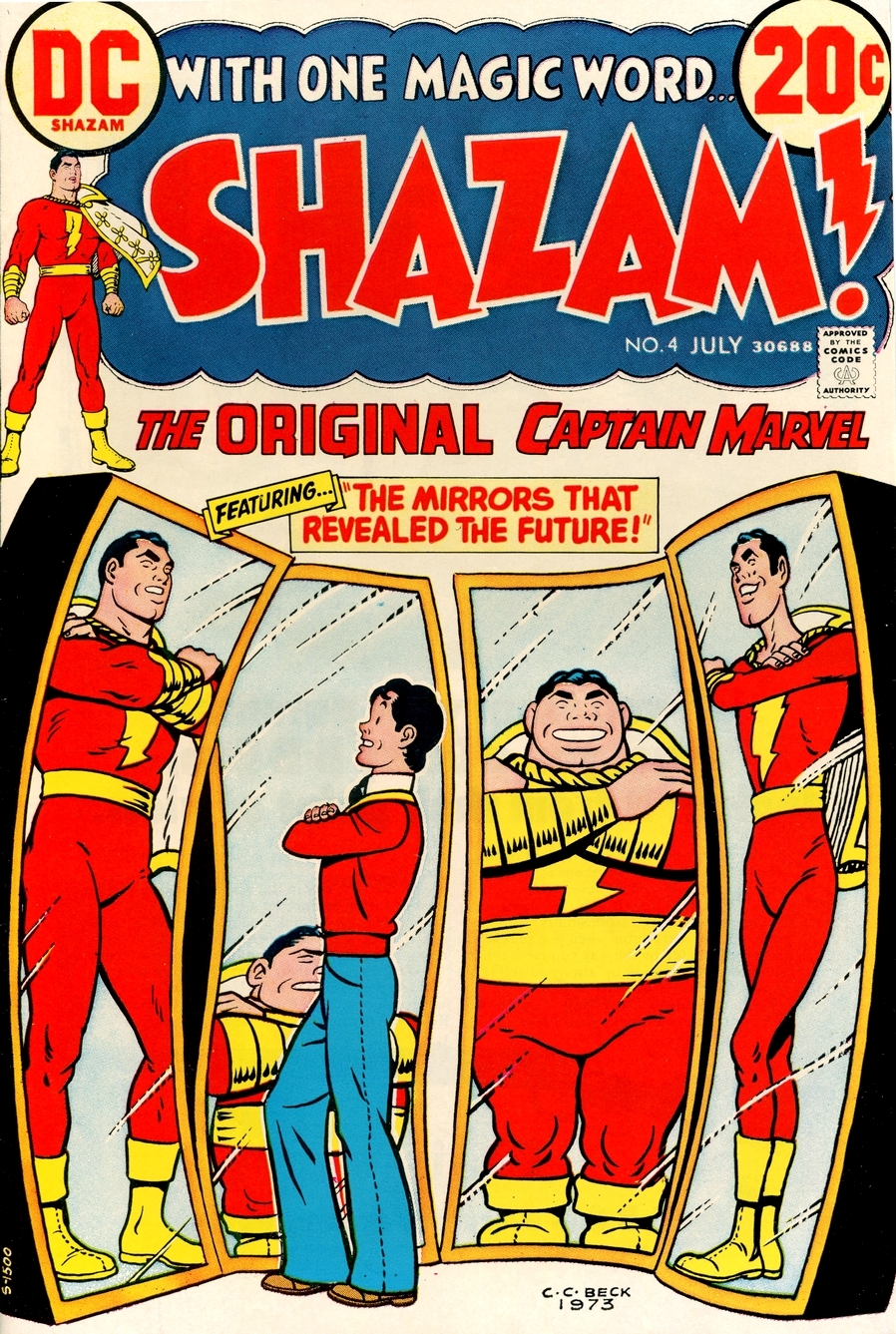
| PLOT
SUMMARIES -
(1) Mr. Printwhistle has reformed but the
villains who give him his powers convince him to change
to Ibac one more time. (2) Conway Mann can see into the
future in a mirror and tries to use Billy to make some
money but is ultimately thwarted. (3) When Billy Batson
finds a large diamond in the street, Captain Marvel gets
the task of trying to find its owner. |
| |
|
| |
| DC launched several
titles in 1973 in order to try and push back
Marvel's numerical, visual and commercial
dominance at comic book points of sale. Most of
these featured reprint material, but Shazam!,
launched in early 1973, featured mostly new
content as DC decided to bring back Fawcett's
Golden Age Captain Marvel after a publication
hiatus of nearly 20 years. However, unable to use
the original title as Marvel had gained the
copyright to the name back
in 1967, DC went with the magic word that
transforms adolescent radio
news reporter Billy Batson into the
"World's Mightiest Mortal". A
"continual drumbeat" from fans for the
character's return along with a built-in fanbase
(Sacks, 2014) seemed too good an opportunity to
be missed, and DC went all out in hyping up the
return of Captain Marvel in Shazam
(officially the title came with an exclamation
mark). |
| |
|
Veteran editor Julius Schwartz added some
major oomph to the launch by bringing in the
original artist, Charles Clarence (C.C.) Beck,
giving DC’s revival an added boost of fan
credibility - and even more publicity (Smith,
2010). This move also settled other matters:
"The question
we had at the time was whether we should do
what they had before and see if it worked.
They decided to go that route, and promoted
the hell out of it!" (Elliot Maggin
in Smith, 2010)
|
|
|
"It was an
anachronism (...) The audiences were in a
process of getting older quicker. The more
successful comic books were beginning to
adapt to that, to cater to that college-age
audience and older. And I think Captain
Marvel got caught in the wrong age at the
wrong time, and it was not working for the
people who were buying comic books." (Michael
Uslan in Smith, 2010)
|
|
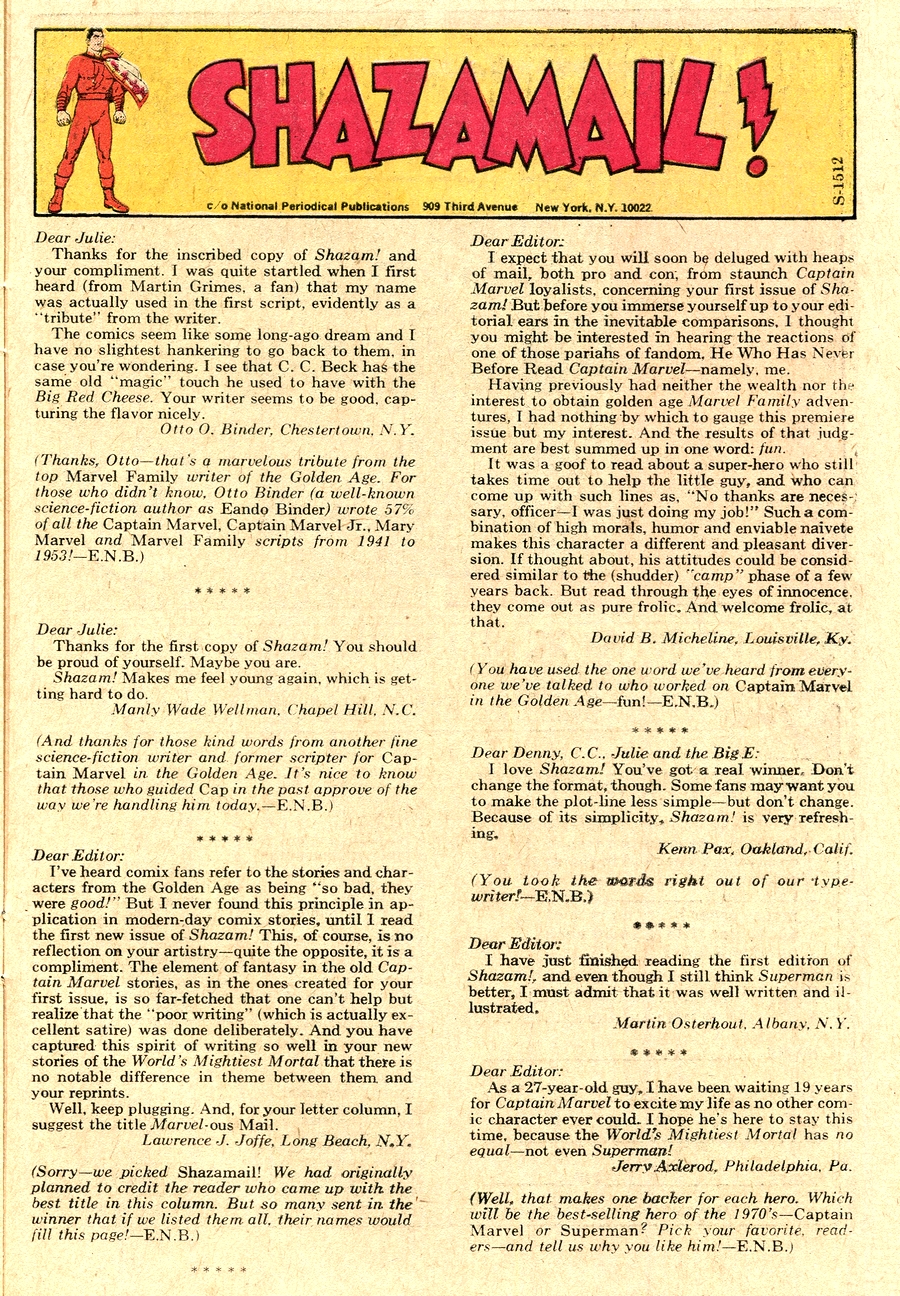
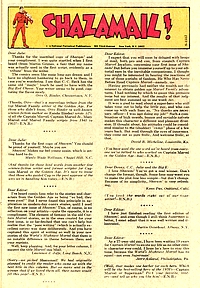
| Shazam
#4 was the first issue to
feature letters from
readers, published under
the heading of
"Shazamail!",
and starting out with a
few lines from Otto
Binder, the original main
writer of the character
who, according to E.
Nelson Bridwell's
comment, had been responsible
for 57% of all the
Captain Marvel related
titles from 1941 to 1953. Binder
had kind comments for
both the writing ("your
writer seems to be good,
capturing the flavor
nicely") and
the art ("I see
that C.C. Beck has the
same old
"magic" touch
he used to have"),
but on the whole also
seemed to think that the
title had somewhat run
its course ("the
comics seem like some
long-ago dream and I have
no slightest hankering to
go back to them, in case
you're wondering").
Rather
unsurprisingly, the tone
of the remainder of the
letters published was
(very) positive. One that
stands out is from a
certain David B.
Micheline from Louisville
KY; 25 years old at the
time of writing his
positively gleaming
feedback, he would that
very same year (1973)
join DC's paid
apprenticeship program
for teaching would-be
writers and artists the
business at their New
York offices
(Delporte-Fontaine,
2018). Micheline would
ultimately go on to write
the second longest run on
Amazing Spider-Man
from 1987 to 1994, second
only to Stan Lee himself.
|
|
|
|
|
|
| |
| Shazam sold well
initially, but sales dropped precipitously before
long (Sacks, 2014). Matters were further
complicated by C.C. Beck's interference in the
creative process, leading to frustration amongst
writers (who saw their script changed without
notice) and ultimately also with editor Julius
Schwartz. The conflict reached a bliling point
when Beck refused to draw the scripts for Shazam
#10; DC had enough, and Beck was out. As of issue
#12 (May 1974), Shazam was reduced to a
bi-monthly publication schedule, periodically
only featured reprints, and finally got cancelled
in May 1978 with issue #35. During all of that
time, Beck was essentially at war with the
contemporary creators and publishers of comic
books (Hamerlinck, 2000), advocating a distinctly
old school approach to comic books - something
that just didn't sell any more. |
|
| |
 |
|
DC's
(initial) drive to push Shazam
any which way they could
can also be felt in their
SUPER-PACs of 1973 and
1974, where the title was
included frequently,
starting with Shazam
#1. |
|
|
|
|
| |
|
| |
| There were many things that set
DC apart from Marvel in the early 1970s, but one very
salient aspect was DC's lack of any regular editorial
feature across its titles through which editors would
communicate with their readership (as Marvel and Stan Lee
did with their famous Bullpen Bulletins); DC's
interaction with its fans and readers was limited to the
letters pages, whilst plugs for other titles were
essentially restricted to in-house ads. But if you picked
up this June 1973 C-4 SuperPac (or any of the three
titles it contained individually from a news agent),
things were slightly different as you were also promised
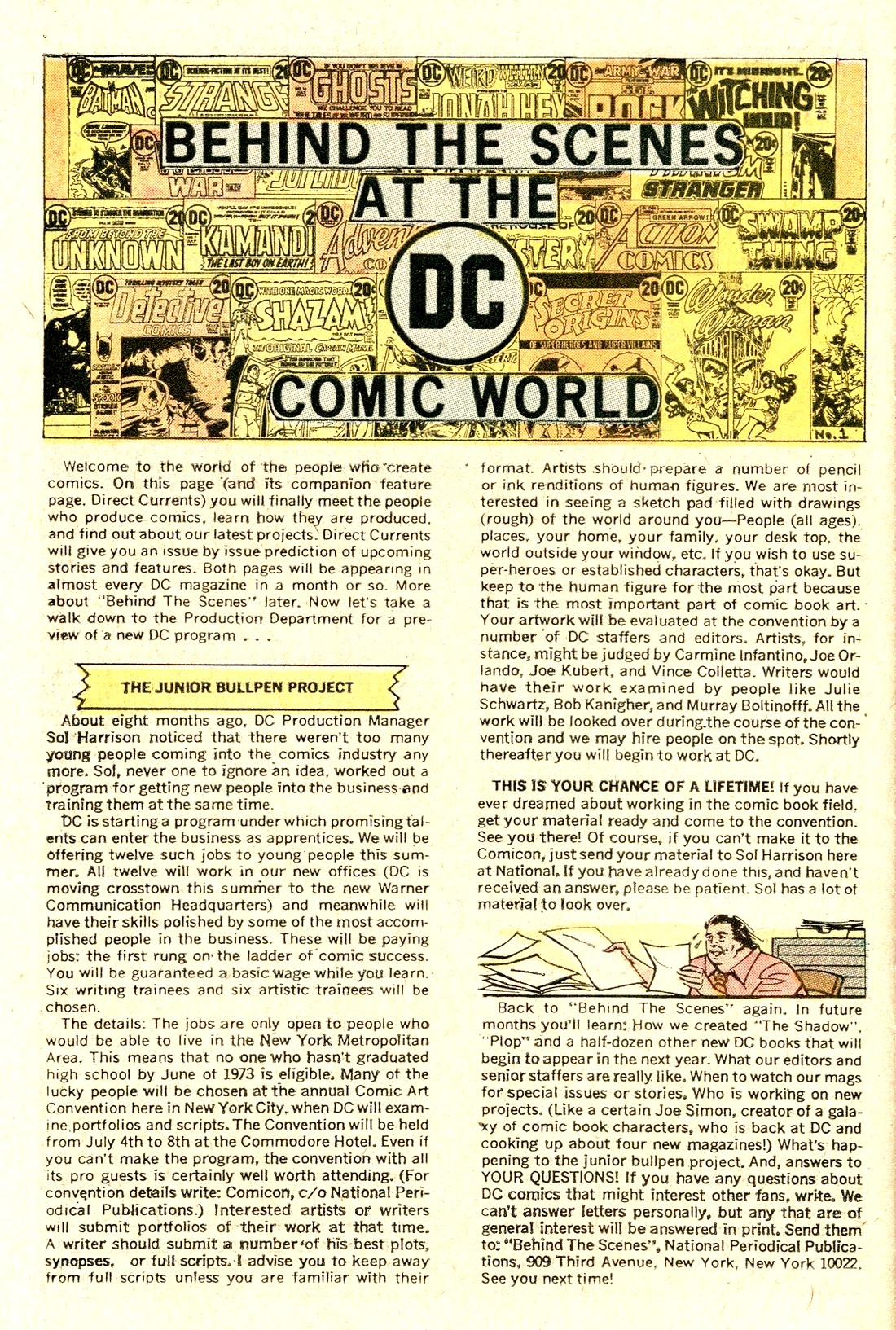
a look "Behind the Scenes at the DC Comic
World". |
| |
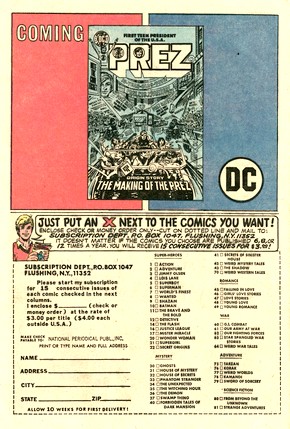 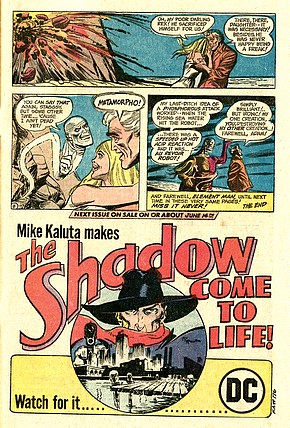 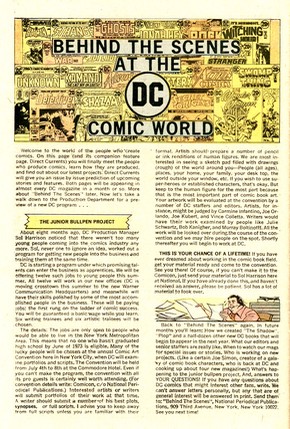
Batman
#250 (left), World's Finest #218 (center), Shazam
#4 (right)
|
| |
The first of what would eventually become 12
instalments published in various DC titles from the July
1973 cover date run to the January 1974 cover date run.
It was, to all intents and purpose, one of several
attempts made by DC at the time to catch up with Marvel
and fill the communication gap with its readers.
"On this page (and
its companion feature page, DC Currents) you will
finally meet the people who produce comics, learn how
they are produced, and find out about our latest
projects (...) both pages will be appearing in almost
every DC magazine in a month or so."
|
| |
| In this first "peek behind
the scenes", the spotlight belonged to what DC
called "The Junior Bullpen Project" - which
again had a distinct Marvel sound to it (since Stan Lee
would refer to the "bullpen" as early as 1962
when talking about the stable of in-house creators who
produced the company's comics). The idea was simple - and
clever: open up job opportunities for fanboys and train
them to be the next generation of creative talent. Also
known as DC's "Junior Woodchucks", the list of
alumni of this training program includes Paul Levitz
(future DC president and publisher), Bob Rozakis (future
head of production), and many other well-known names -
some of which would feature prominently in later
instalments of "Behind the
Scenes at the DC Comic World". |
| |
|
| |
| FURTHER
READING ON THE THOUGHT
BALLOON |
| |
| |
|
|
"Comic
packs" not only sold well
for more than two decades, they
also offer some interesting
insight into the comic book
industry's history from the 1960s
through to the 1990s. There's
more on their general history here. |
|
|
|
| |
|
|
An overview
and analysis of all the 1973
Super Pacs is available
here. |
|
|
|
| |
|
|
You can read
more about the 1973 "war of
the shelves" between Marvel
and DC here. |
|
|
|
| |
| |
|
| |
BIBLIOGRAPHY
| |
| DELPORTE-FONTAINE
Arnaud (2018) "Interview “Shakespeare’s
language” with David Michelinie!", Chroniques des
Fontaines, published online 25 September
2018 EVANIER
Mark (2004) "On the Passing of Bob
Haney",
published online 7 December 2004 on News from
Me
EVANIER Mark (2007)
"More on Comicpacs", News From Me,
published online 2 May 2007
EVANIER
Mark (2023) "About Frank Robbins – Part 1 of
Three",
News From Me, published online 29
September 2023
HANDZIUK
Alex (2019) "An Interview with Legendary
Creator Denny O'Neil - The father of Modern Day
Batman", cgmagonline.com,
published online 16 March 2019
LEVITZ
Paul (2010) 75 Years of DC Comics - The Art
of Modern Mythmaking, Taschen
WELLS
John (2012) American Comic Book Chronicles:
The 1960s (1960-1964), TwoMorrows Publishing
|
|
| |
|
| |
|
| |
|
| |
(c) 2026
uploaded to the web
25 June 2026
|
| |
|
| |
|